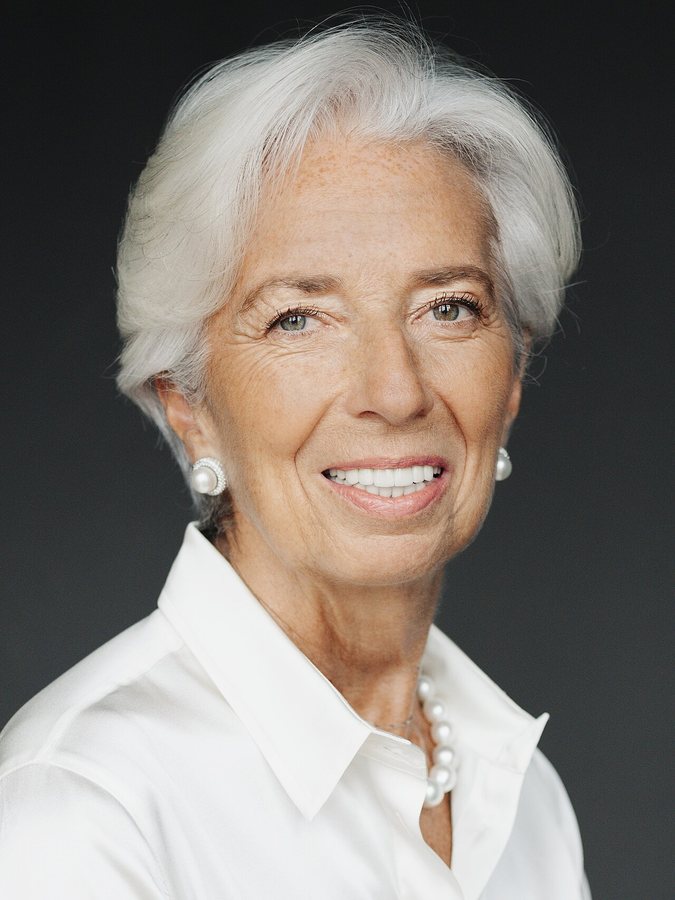
Christine Lagarde, president of the European Central Bank, used a closed-door meeting in Bangkok to confront Russia's representative directly, telling Moscow that the global economy requires peace. The message was aimed squarely at Vladimir Putin, according to accounts of the encounter, and focused on the damage the war in Ukraine is inflicting on worldwide economic stability and prosperity.
The exchange took place on the sidelines of an international gathering in the Thai capital, where finance officials and central bankers had convened. Lagarde's intervention turned a routine diplomatic and economic session into a moment of direct confrontation, underscoring how far the war has moved from a regional security crisis into a central concern for global monetary policymakers.
Her central argument was blunt: a functioning world economy depends on peace. War disrupts trade routes, drives volatility in energy and food markets, unsettles investor confidence and complicates the task of central banks trying to control inflation. For the ECB, which sets interest rates for the euro area, those pressures have been a persistent complication since Russia's full-scale invasion of Ukraine.
The confrontation reflects a broader shift in how economic institutions treat the conflict. Central banks are not diplomatic bodies, but the war's consequences — higher energy costs, supply chain disruption and elevated inflation — have forced monetary authorities to factor geopolitics into their calculations. Lagarde's decision to raise the issue face to face with a Russian official signals that the ECB views the war as an economic problem that cannot be separated from its core mandate.
Russia's representative at the meeting did not publicly respond to the substance of Lagarde's remarks. The closed nature of the session meant the exchange became known through briefings rather than an open public statement, but its significance lies in the directness of the message: the head of the eurozone's central bank used a multilateral forum to tell Moscow that its war carries costs for the entire global economy.
The setting in Bangkok placed the exchange within a wider diplomatic context. International economic meetings have become venues where the divisions created by the war play out, with Western officials increasingly willing to challenge Russian counterparts in person. Lagarde's intervention fits that pattern, turning a technical gathering into a moment of political and economic pressure.
For European policymakers, the message also carries an internal dimension. The euro area has spent recent years grappling with the economic fallout of the conflict, from energy price shocks to weakened growth. Lagarde has consistently argued that stability at home is tied to stability abroad, and her remarks in Bangkok reinforced that view by linking the war directly to the prosperity of ordinary households and businesses.
The encounter is unlikely to change Moscow's position, but it adds to the record of Western economic officials confronting Russia over the war's global costs. Lagarde's message was simple and unyielding: the economy needs peace, and the war is a burden borne far beyond the battlefield.