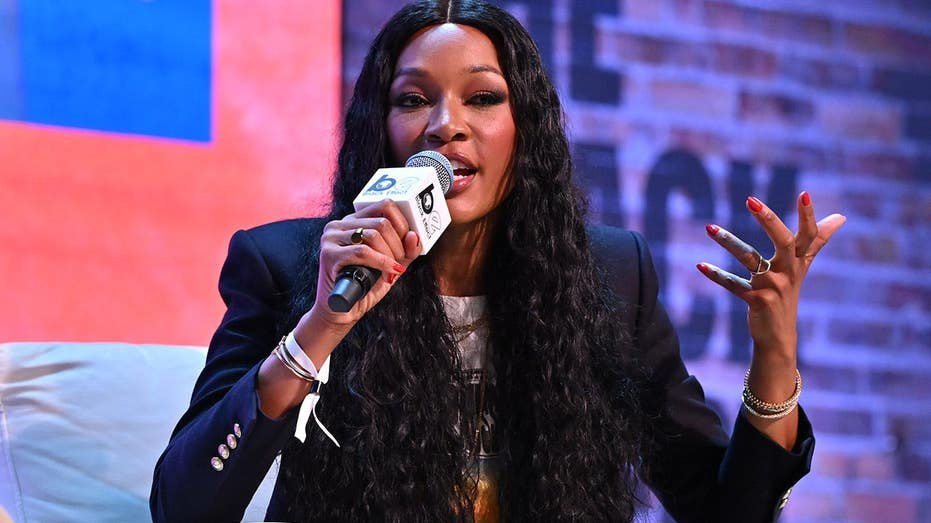
Former ESPN anchor Cari Champion is facing a wave of criticism after making sweeping claims about Caitlin Clark's fan base, arguing that the Indiana Fever star has become an avatar for people who want to spread hate and that her supporters are largely middle Americans who simply want to see a white woman succeed in a sport traditionally associated with Black athletes.
Champion made the remarks across separate podcast appearances with Jemele Hill and Bakari Sellers, where she also argued that Clark has not done enough to highlight Black players and that the WNBA is coddling the Fever guard and her so-called MAGA fans at the expense of the broader league.
The commentary has been widely challenged, with critics pointing out that Clark's rise to stardom is rooted in a playing style unlike any seen before in women's college basketball. She set the all-time NCAA scoring record while leading the country in assists for three consecutive seasons, routinely pulling up from well beyond the three-point line. That combination, not her race, is what drew record crowds and television audiences.
Critics of Champion's argument note that several white No. 1 overall picks and Wooden Award winners before Clark, including Sue Bird, Diana Taurasi, Breanna Stewart, Sabrina Ionescu and Kelsey Plum, did not sell out arenas or transform the sport's popularity. The difference, they argue, is Clark's unprecedented style of play rather than her background.
Champion's assertion that Clark's fans are driven by racial resentment also drew scrutiny because of the diverse group of prominent figures who have publicly supported Clark. LeBron James posted that anyone who does not appreciate Clark's game is a flat-out hater, and Tyrese Haliburton has been a regular courtside presence at Fever games.
The claim that Clark supporters cannot accept other players' queerness or Blackness has likewise been questioned. While online vitriol directed at WNBA players certainly exists, critics argue it has not been quantified in a way that distinguishes Clark fans from the general internet troll population, and no concrete evidence has been presented that Clark supporters have crossed from online noise into real-world harassment.
In 2024, Brittney Griner said she did not appreciate new fans yelling racial slurs at her, her teammates and opponents, but she provided no specifics or evidence, and she did not single out Fever fans. Similarly, Angel Reese claimed in May of last year that Fever fans directed racist comments at her during a game, but after a review involving fans, team and arena staff and audio and video from the game, the WNBA said it could not substantiate the allegation.
Champion also suggested that Clark being heterosexual, white and Catholic helped bring a new fan base that the league is coddling for business reasons. Critics countered that Clark being the most entertaining women's basketball player in the world is what brought in those new fans, and that the inverse statement about coddling a gay, Black and Muslim fan base would be met with instant cancellation.
Champion further argued that Clark should do more to highlight Black players in a league that is roughly 70 percent Black, pointing to Wings point guard Paige Bueckers, who used her 2021 ESPY speech to say Black women's basketball players were being overlooked. Critics responded that every women's basketball player was being overlooked before Clark arrived, and that her presence has elevated the popularity of Black and white players alike.
The episode has become the latest flashpoint in a broader debate over how the media frames Clark's impact on the WNBA, her fan base and the racial dynamics of a league that has seen a surge in attention since her arrival.