An Australian tunnel safety expert assisting rescue operations in Nepal has urged teams not to abandon hope of finding survivors inside the Upper Trishuli-3A hydropower project, where scores of workers remain feared trapped underground days after a devastating flash flood. Arnold Dix, who is supporting the operation remotely, said the mission should still be treated as a rescue rather than a recovery effort.
Writing on LinkedIn, Dix said footage recorded around the time of the August 26 flood shows roughly 30 people moving toward the power station tunnels and seeking shelter there. He argued that tunnels can remain comparatively stable even when the surface above has been devastated, and may preserve breathable air and survivable spaces for those inside. «Silence is not evidence of death. It is only the absence of a signal,» he wrote, citing past rescues in Chile, Thailand, and India where people survived underground for days without making contact.
Rescue teams are still trying to reach workers at more than a dozen hydropower sites along the Bhote Koshi-Trishuli corridor. At Trishuli-3A, a 93-member team is working alongside Chinese tunnel specialists, while teams from India and South Korea are assisting operations at other locations. The Nepali Army has been recovering bodies from the Langtang tunnel, with footage of the operation shared on social media this week.
Nepal's National Disaster Risk Reduction and Management Authority reported on Thursday that 1,252 people have died and 4,216 remain missing. Around 900 people working at hydropower projects are among those still unreachable, while 11,993 people have been rescued so far. More than 21,000 security personnel have been deployed across the affected areas as rescue teams clear mud, rocks, and damaged roads to reach isolated communities.
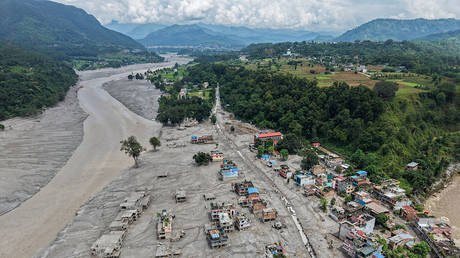
The flood swept away settlements near Nepal's border with China, and authorities estimate that around 20,000 homes will have to be rebuilt in safer locations. The scale of destruction has overwhelmed local response capacity, prompting international assistance and drawing comparisons to previous major disasters in the Himalayan nation.
Dix previously advised the 2023 Silkyara tunnel rescue in northern India, where all 41 workers trapped after a collapse were brought out alive after 17 days. He described the scale of Nepal's current operation as being like «23 Silkyaras going on at the same time,» underscoring the complexity and danger facing rescue teams working across multiple sites simultaneously.
The disaster has raised urgent questions about flood warning systems and safety protocols at hydropower projects built along Nepal's fast-flowing rivers. With the monsoon season still ongoing and further rainfall forecast, authorities face the dual challenge of continuing search operations while preparing for potential new flooding in the region.