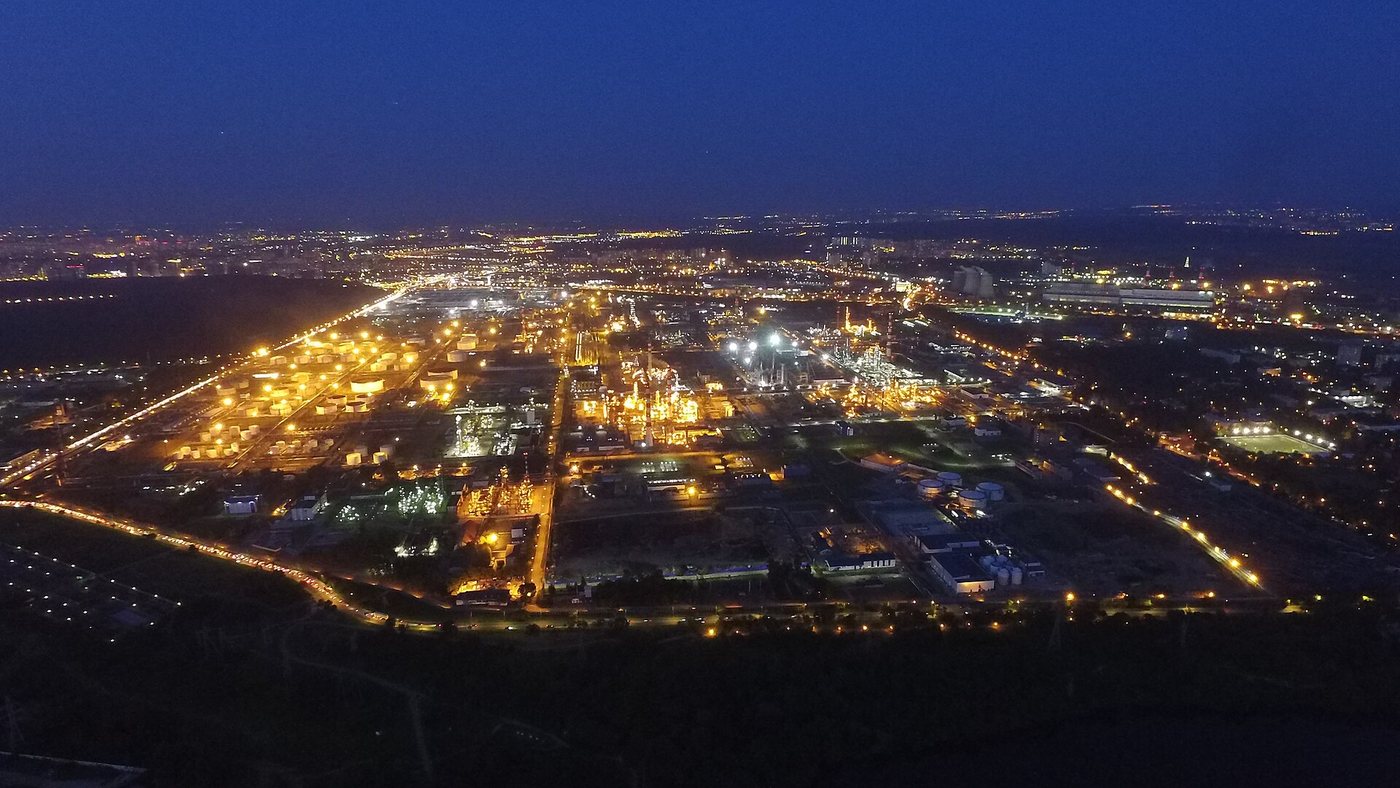
A fire reported at the Saratov oil refinery after a drone attack on September 8 adds another layer of operational risk to Russia’s fuel system, although the scale of damage remains unclear. Footage from the city was geolocated by the independent Russian project Astra and indicated a fire on the refinery’s territory. There has been no public technical assessment establishing a prolonged shutdown or quantifying lost processing capacity.
That uncertainty is central to the business story. Refineries are complex sites where the economic effect of an incident depends on which unit is hit. Damage to a storage area can be disruptive but comparatively contained. Damage to a major processing unit can require specialist equipment, extended repairs and changes to crude and product flows. Without that detail, production-loss estimates would be speculation.
The attack also affected the wider city. Saratov regional governor Roman Busargin said ten people were injured, including three children, and six were hospitalised. Buildings were damaged. Those civilian consequences are distinct from the question of what happened at the industrial site and should not be blurred into an assessment of the refinery’s strategic value.
For Russia, the broader economic issue is the growing cost of defending fixed energy infrastructure during the war against Ukraine. Refineries cannot be moved, and their large footprints make them difficult to protect completely from low-flying drones. Even when an attack causes limited physical damage, operators and the state face recurring expenditure on air defence, electronic warfare, physical barriers, fire protection, spare parts and emergency response.
The pressure is cumulative rather than necessarily dramatic in a single night. A refinery that returns quickly to service may have little immediate effect on national fuel supply. But repeated threats across multiple regions force companies to keep more redundancy in the system and can make maintenance planning harder. Insurance and financing decisions also become more complicated when physical assets remain exposed to wartime risk.
The Saratov incident therefore matters less as a standalone headline than as another test of Russia’s ability to keep its refining network stable. If key units were damaged and repairs take time, product flows may need to be adjusted and supply sourced from other refineries. If the fire was limited to secondary infrastructure, the impact could be modest. Market consequences should be judged against actual production data rather than images of flames alone.
There is also a strategic allocation problem for the Russian state. Air-defence resources are finite. Protecting refineries, airports, military facilities and major urban areas far from the front competes with the need to cover forces and logistics closer to Ukraine. Each additional site that requires more protection increases the cost of maintaining the war economy.
For Ukraine, Russian energy infrastructure is tied to a larger effort to raise the cost of Moscow’s invasion. The economic effect, however, depends on sustained disruption rather than symbolic damage. A refinery fire becomes strategically meaningful when it reduces throughput, complicates distribution or forces expensive repair and protection measures over time.
The next useful evidence will be operational. Reports of unit shutdowns, lower refinery runs, changes in regional fuel flows or satellite imagery showing damage would clarify whether Saratov suffered a temporary incident or a more serious interruption. Until then, the most defensible conclusion is narrower: geolocated footage indicated a refinery fire, civilian injuries were reported in the city, and the extent of industrial damage remains unknown.
That is still significant for investors and policymakers watching Russia’s wartime economy. The cost of war is not confined to military procurement or sanctions. It increasingly includes the expense of keeping ordinary industrial systems working under the threat of long-range attack.