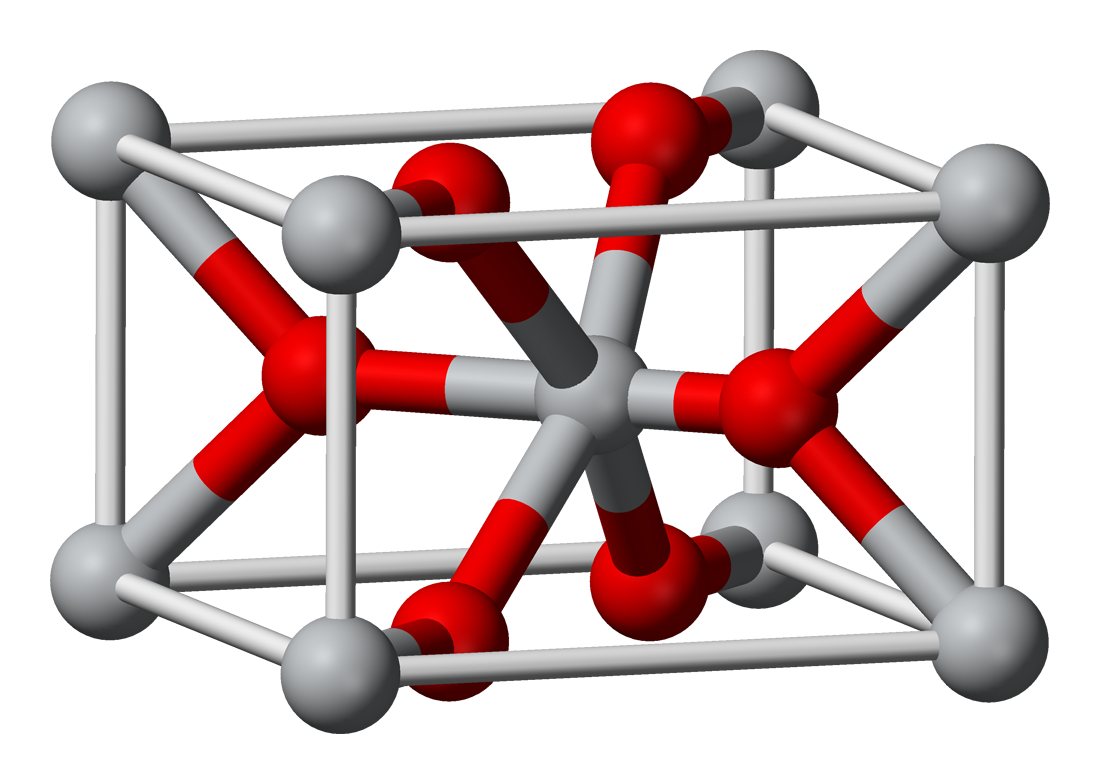
Titanium dioxide, one of the most widely used white pigments on Earth, is not a single material but two distinct crystal forms with radically different behaviors. The same chemical formula and the same white powder appearance can produce either a light-scattering pigment that withstands decades of sun exposure or a photocatalytic material that breaks down pollutants. This duality has become a foundation of modern materials science, with implications for construction, environmental remediation, and product durability.
The two forms are anatase and rutile. Anatase has an open, spacious crystal lattice that allows light and electrons to move freely, enabling photocatalytic activity. Rutile has a dense, tightly packed structure that scatters light with high efficiency and resists environmental degradation. When titanium dioxide was first manufactured in the late nineteenth century, researchers did not recognize that they were working with two different crystal frameworks. As applications multiplied, a pattern emerged: some batches produced brilliant white paints that lasted for years, while others yellowed and cracked within months. Some samples showed unusual photocatalytic properties that appeared to clean surfaces, while others remained inert.
By the mid-twentieth century, X-ray crystallography revealed the underlying cause. The atoms in titanium dioxide can arrange themselves in two fundamentally different ways, and the resulting properties depend on which structure dominates. This discovery transformed the field from guesswork into a matter of deliberate crystal selection, allowing scientists to choose the right form for each application.
The industrial journey from raw mineral to finished product is equally complex. Titanium dioxide must be extracted and refined through processes such as the sulfate route or the chloride route, each with its own advantages and challenges. The critical step, however, is controlling the crystal structure. Anatase is the metastable form, kinetically favored at lower temperatures. When heated above roughly 600 degrees Celsius, it undergoes an irreversible transformation into rutile. Once formed, rutile remains rutile permanently. This one-way transition shapes the entire industry: manufacturers seeking photocatalytic activity must carefully manage temperatures to prevent premature conversion, while those needing durability and hiding power deliberately drive the transformation to completion.
Anatase's photocatalytic power is particularly notable. When exposed to ultraviolet light, it generates electron-hole pairs that react with water and oxygen to produce highly reactive species such as hydroxyl radicals and superoxide ions. These species break down organic pollutants, kill microorganisms, and decompose volatile organic compounds. The open crystal structure of anatase allows photogenerated charge carriers to reach the surface more readily than in other titanium dioxide forms, enabling faster reactions and better performance in real-world conditions.
This property has been harnessed in coatings applied to building facades, where anatase continuously breaks down nitrogen oxides from vehicle exhaust and helps reduce smog formation in urban environments. It is also used in self-cleaning glass that remains transparent while degrading organic dirt. Rutile, by contrast, serves applications that demand long-term stability and optical performance, including paints, plastics, and paper.
Some manufacturers now produce mixed-phase materials that combine the best of both forms. Gas-phase synthesis methods can create nanoparticles in which anatase and rutile coexist within the same particle, requiring nanometer-level control over temperature, residence time, and precursor concentration. This capability represents a sophisticated level of materials engineering, allowing producers to tailor titanium dioxide's behavior to specific applications rather than accepting the limitations of a single crystal form.
The story of titanium dioxide illustrates how a single chemical compound can yield radically different technologies depending on atomic arrangement. As researchers continue to refine production methods and explore new applications, the two-faced crystal remains a model for understanding how structure governs function in materials science.