Carbonates and silicates dominate very different parts of everyday geology, but at the enormous pressures near Earth's core-mantle boundary their chemistry can change. Researchers have synthesized a previously unknown compound, CaSiC2O7, that combines silicate and carbonate structural units in the same crystal.
The material formed at about 122 gigapascals and roughly 2,800 kelvin, conditions comparable to the deep lower mantle. Its structure contains silicon coordinated by oxygen in octahedral units alongside carbon-oxygen groups arranged in an unusual high-pressure framework. The compound provides direct evidence that carbonate and silicate chemistry can merge in ways that are not stable near Earth's surface.
That matters for the deep carbon cycle. Carbon is carried into the mantle in subducting rocks, including carbonate minerals formed at or near the surface. What happens to that carbon as pressure and temperature rise determines whether it remains locked in minerals, melts, reacts with surrounding silicates or eventually returns toward the surface through volcanism.
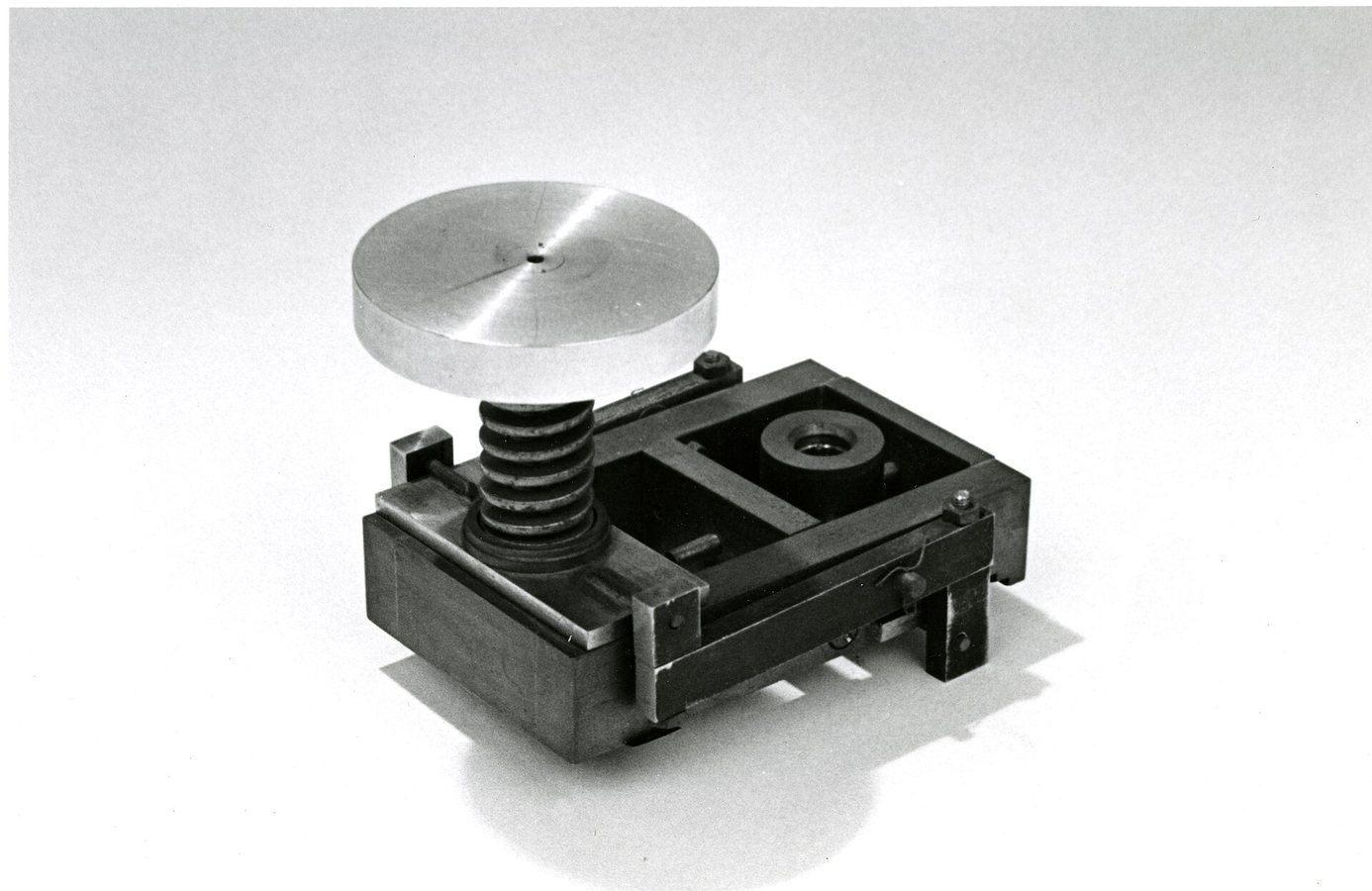
Near the core-mantle boundary, the problem becomes especially difficult because both mineral structures and chemical valence states can change. Laboratory experiments have to recreate pressures more than a million times atmospheric pressure while heating microscopic samples to thousands of degrees. The phases produced can be tiny and may exist only while the pressure is maintained, making structural identification technically demanding.
CaSiC2O7 offers a new pathway for modelling those reactions. If related compounds are stable over meaningful ranges of temperature and composition, they could affect how carbon is distributed in the deepest mantle. Their density and elastic properties might also contribute to seismic anomalies — regions where earthquake waves move at speeds that standard mantle compositions do not fully explain.
The discovery does not establish that large quantities of CaSiC2O7 exist naturally inside Earth. The mantle contains iron, magnesium and many other elements that can change phase stability, and laboratory starting materials simplify that complexity. Researchers will need to test broader compositions and calculate the mineral's properties under varying conditions before connecting it to specific seismic structures.
Still, high-pressure mineral physics advances by identifying what chemistry is possible. At 122 gigapascals, familiar categories can converge into an entirely new crystal, expanding the catalogue of materials that may participate in Earth's deep carbon cycle.