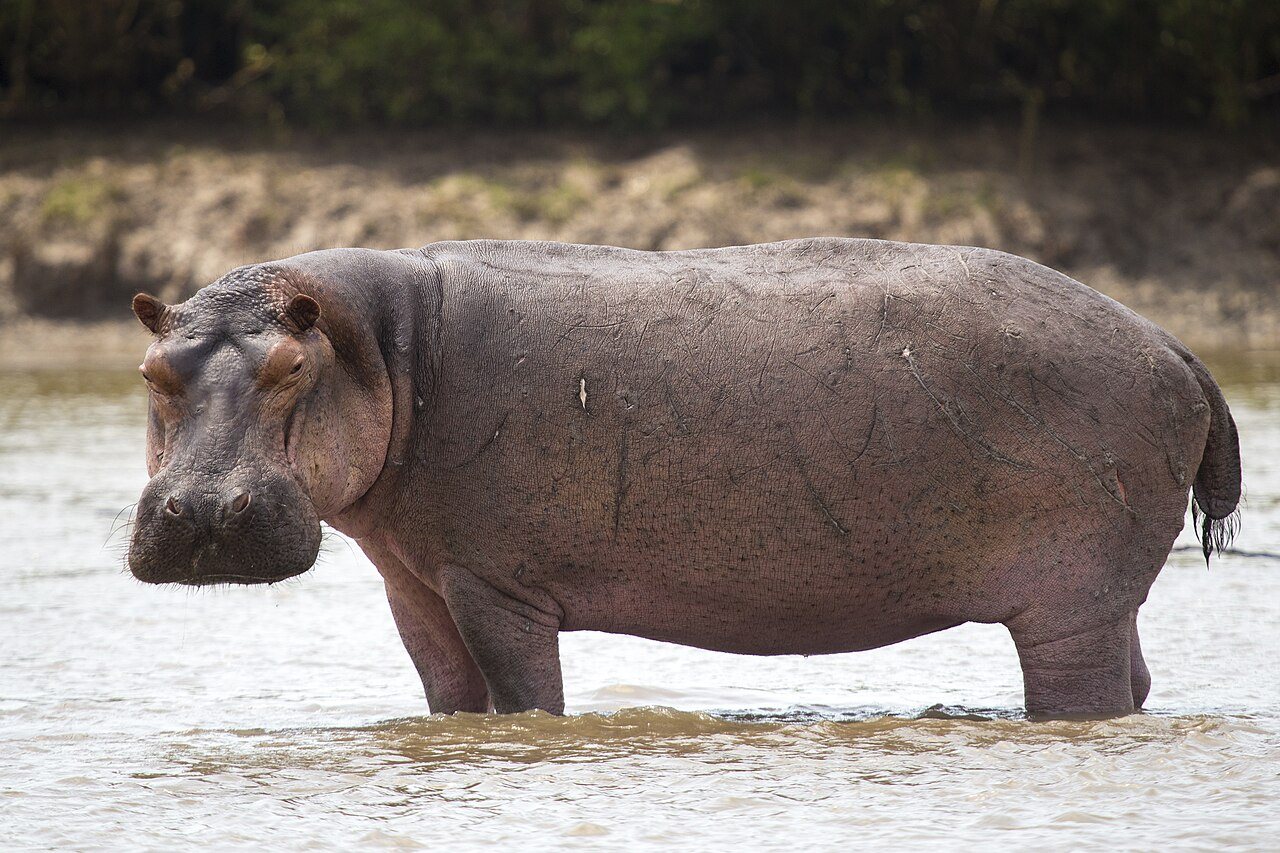
The hippopotamus holds a distinction unmatched among Africa's large land mammals: it is the only one known to mate in water. While the species spends its days submerged in rivers and lakes, its reproductive behavior also unfolds in the aquatic environment, a trait that separates it from elephants, rhinos, giraffes, and other terrestrial giants.
This unusual adaptation is tied to the hippo's semi-aquatic lifestyle. Hippos spend the hottest hours of the day in water, emerging at night to graze on grass. Their mating rituals, including courtship and copulation, take place in shallow water, where males compete for access to females. The behavior is rarely observed in full because it happens largely out of sight, beneath the surface or in murky shallows.
For a land mammal of its size, the hippo's reliance on water for reproduction is exceptional. Most African land mammals mate on dry ground, and even those that spend time in water, such as crocodiles, are reptiles rather than mammals. The hippo's closest living relatives are cetaceans and other aquatic mammals, a lineage that split from other even-toed ungulates millions of years ago. That evolutionary history helps explain why the hippo retains a strong aquatic component in its social and reproductive life.
Conservationists note that understanding hippo reproduction is important for managing populations in the wild and in captivity. Hippos are classified as vulnerable by the International Union for Conservation of Nature, with habitat loss, drought, and human-wildlife conflict among the main threats. In some regions, populations are declining as rivers and lakes shrink or become fragmented by development and agriculture.
The species' dependence on water makes it especially sensitive to environmental change. Droughts can force hippos into crowded pools, increasing stress and sometimes leading to conflict. Researchers studying hippo behavior say the aquatic mating habit is one more reason healthy freshwater systems are essential to the animal's survival.
Wildlife documentaries have long featured hippos as icons of African rivers, but their underwater lives remain less documented than those of many other large mammals. Camera technology and long-term field studies have gradually revealed more about how hippos communicate, fight, and reproduce in water. Each new observation adds to a picture of a species that is far more aquatic than its land-mammal classification suggests.
For viewers and readers interested in African wildlife, the hippo offers a reminder that even familiar animals can surprise. Its mating behavior is not merely a curiosity; it reflects millions of years of adaptation to a life lived at the boundary between land and water. As pressures on Africa's freshwater ecosystems grow, the hippo's future may depend on whether those habitats remain intact enough to support its unusual way of life.