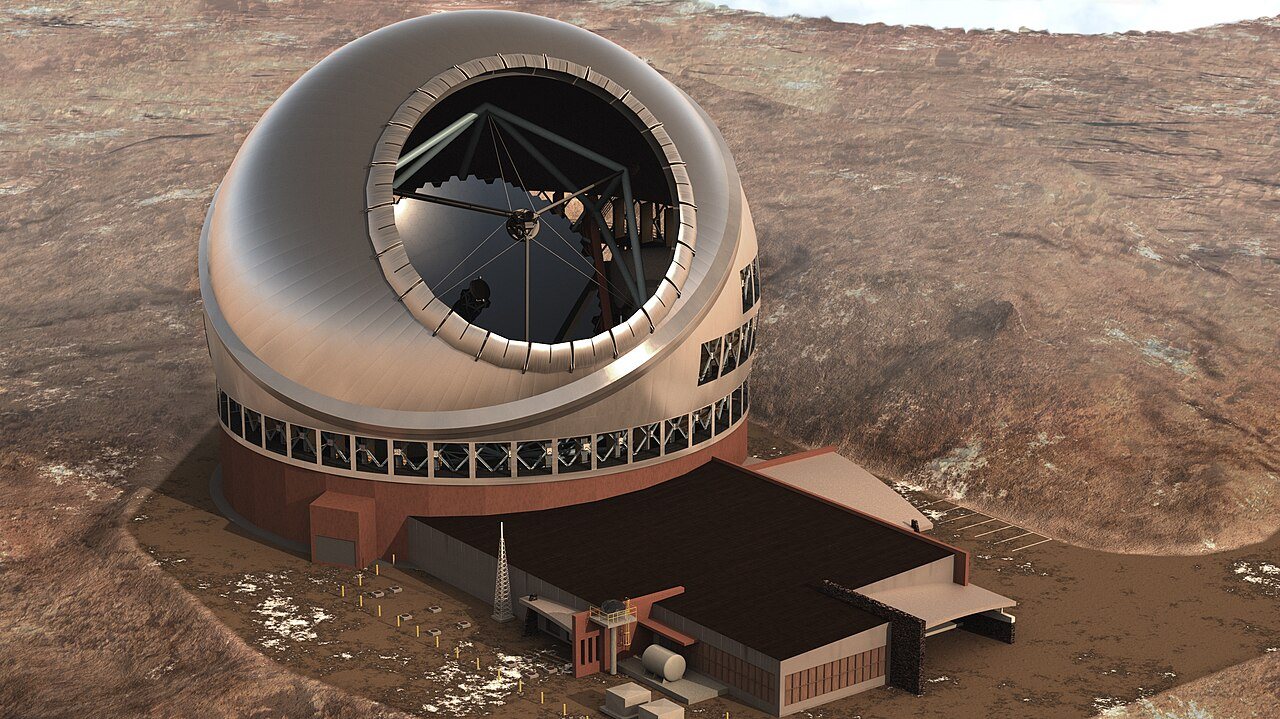
The Thirty Meter Telescope, one of the most ambitious ground-based astronomy projects ever conceived, has had a proposed site rejected, according to a weekly science quiz that highlighted the development. The decision adds another layer of uncertainty to a project that has already faced years of delays, protests, and regulatory hurdles.
The Thirty Meter Telescope, commonly known as TMT, is designed to be a next-generation observatory with a primary mirror nearly 30 meters in diameter. It would be three times wider than the largest existing optical telescopes and would collect more light than any ground-based instrument currently in operation. Astronomers expect it to revolutionize the study of exoplanets, black holes, galaxy formation, and the early universe.
The project was originally planned for Mauna Kea in Hawaii, a site considered one of the best locations on Earth for astronomical observation. However, construction was halted in 2015 after protests from Native Hawaiians who consider the mountain sacred, and the project has been tied up in legal and regulatory battles ever since. A proposed alternative site in the Canary Islands, specifically on the island of La Palma, has been under consideration as a backup.
The rejection of a site for the telescope, as highlighted in the quiz, suggests that the project continues to face significant obstacles in securing a location. Without a confirmed site, the telescope cannot move forward with construction, and the international partnership behind the project — which includes institutions in the United States, Canada, Japan, China, and India — must decide how to proceed.
The TMT is not the only giant telescope facing difficulties. The Giant Magellan Telescope, planned for Chile, and the European Extremely Large Telescope, also in Chile, are both under development. The Thirty Meter Telescope would be the only one of the three planned for the Northern Hemisphere, giving it a unique role in surveying the northern sky.
For astronomers, the delay is costly. The telescope was originally expected to see first light in the 2020s, but that timeline has slipped repeatedly. Each year of delay increases costs and postpones the scientific discoveries that the instrument was designed to deliver. The project's total cost is estimated at over $2 billion.
The rejection of a site also raises questions about the future of the partnership. If the project cannot find a suitable location, some partners may reconsider their commitments. The TMT International Observatory, the governing body for the project, has not announced a new timeline or alternative plan.
In Hawaii, the debate over Mauna Kea has broader implications for science and cultural heritage. The mountain is home to more than a dozen observatories, and the conflict has sparked a wider conversation about the relationship between scientific research and indigenous rights. Some astronomers have called for a moratorium on new construction on the summit, while others argue that astronomy can coexist with cultural preservation.
The Thirty Meter Telescope remains a symbol of both the promise of modern astronomy and the complex social and political challenges that can arise when science intersects with land, culture, and sovereignty. For now, the project's future remains uncertain, and the rejection of another site only deepens that uncertainty.