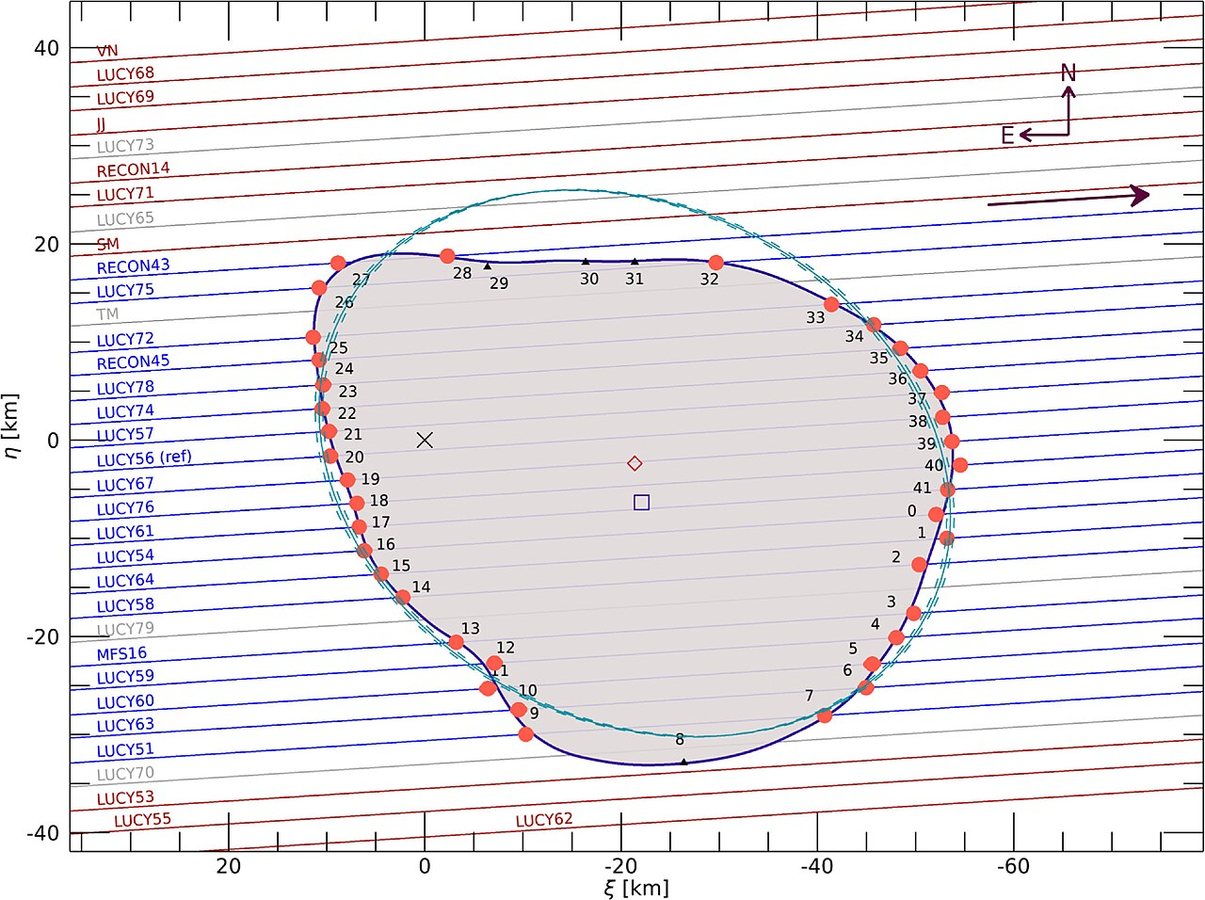
The United Arab Emirates is advancing a seven-asteroid mission that will include a lander set to deploy in 2028, with the red asteroid 269 Justitia as a primary target. The effort marks a significant expansion of the country's space science ambitions and places it among a small group of nations pursuing multiple-asteroid exploration.
The mission is designed to visit seven asteroids, a scope that goes well beyond typical single-target missions. The 2028 lander will attempt to touch down on one of these bodies, collecting data from the surface that orbiting spacecraft cannot easily obtain. The red asteroid 269 Justitia is a central focus because of its unusual color, which has drawn scientific interest and may indicate a composition different from most asteroids studied to date.
Studying multiple asteroids in one mission allows researchers to compare objects that formed in different parts of the early solar system. Each asteroid preserves a record of the conditions and materials present when planets were taking shape. By visiting several targets, the UAE mission could help scientists understand how water, organic compounds, and other volatile materials were distributed across the inner and outer solar system.
The 2028 lander adds a new dimension to the mission. A surface landing requires precise navigation, communication, and engineering, and it offers the chance to measure properties such as surface strength, composition, and texture directly. These measurements can be compared with remote-sensing data from orbit, improving the interpretation of asteroid observations more broadly.
Asteroid 269 Justitia stands out because of its reddish appearance. That color has led scientists to consider whether the object originated farther from the Sun than typical main-belt asteroids, possibly in a region where different chemical conditions prevailed. Confirming or ruling out such an origin would require detailed compositional analysis, which the mission may provide through both remote sensing and, if the opportunity arises, lander data.
The UAE has been building its space science portfolio in recent years, and this mission represents a step toward more complex, multi-target exploration. Success would depend on international collaboration, advanced instrumentation, and reliable deep-space operations. The mission also has the potential to strengthen the UAE's research institutions and train a new generation of scientists and engineers.
If the 2028 lander succeeds, it would be a notable achievement for a national space program still relatively young compared with those of the United States, Russia, Europe, Japan, and China. The scientific return could extend beyond asteroid science, informing planetary defense, resource studies, and future human exploration planning.
For now, the mission remains in development, with the 2028 lander deployment as a key milestone. The coming years will determine how many of the seven asteroids can be fully characterized and what the red asteroid 269 Justitia ultimately reveals about the early solar system.