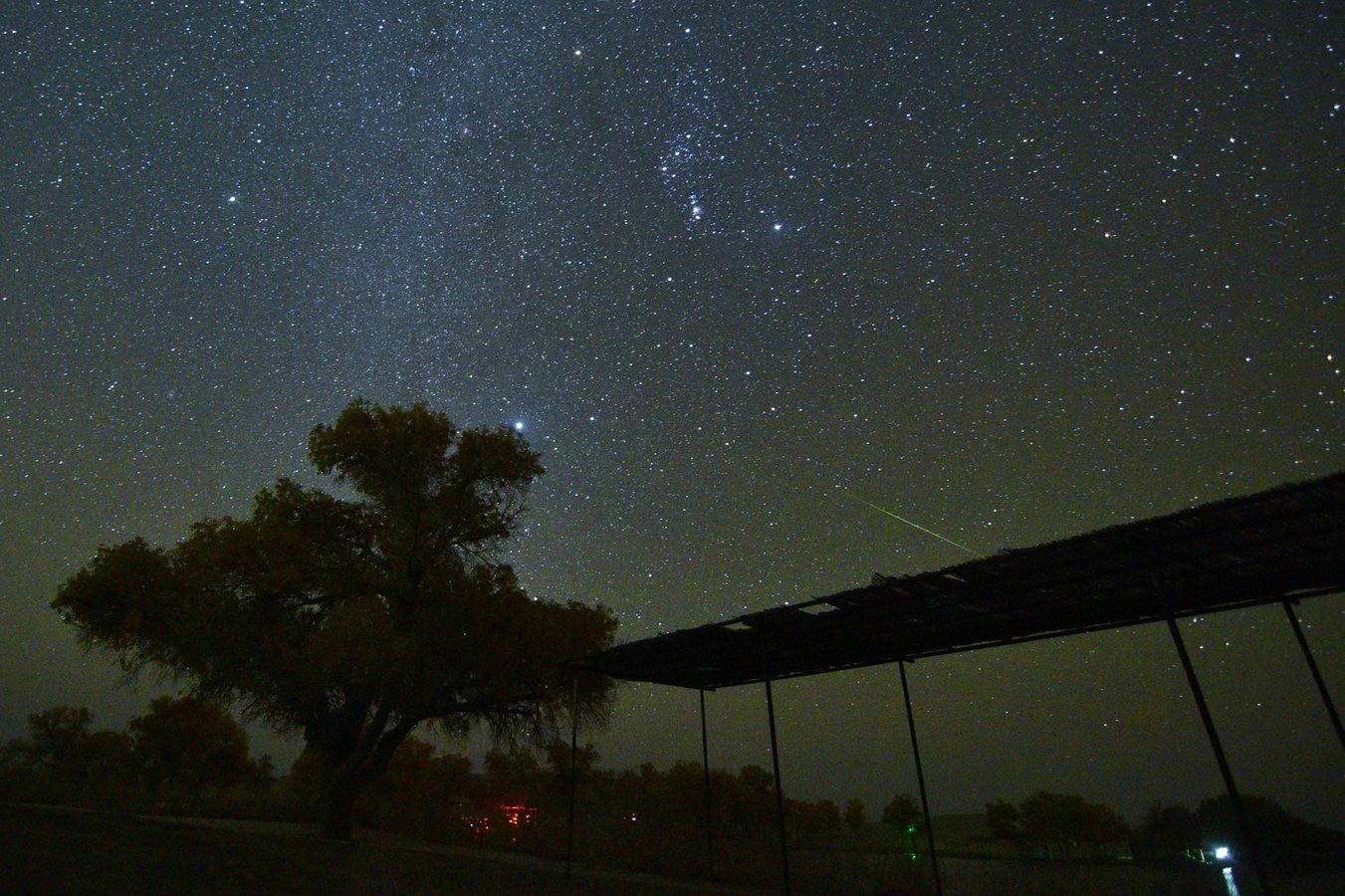
The Orionid meteor shower is expected to reach its peak overnight from 21 to 22 October, giving skywatchers in Britain and around the world one of the year's most striking celestial displays. According to NASA, the shower delivers shooting stars known for their brightness and speed, with meteors entering Earth's atmosphere at roughly 41 miles per second.
The Orionids occur every year when Earth passes through a trail of debris shed by 1P/Halley's Comet. Each time the comet returns to the inner solar system, its nucleus releases ice and rocky dust into space. By October, those dust grains become the Orionids, colliding with the atmosphere and disintegrating to create fiery, colourful streaks across the night sky.
Because of their velocity, Orionid meteors can leave behind glowing trains — incandescent bits of debris in their wake that may last from several seconds to minutes. Some are bright enough to qualify as fireballs, producing exceptionally intense flashes. The shower is viewable from both the northern and southern hemispheres, with the best viewing window falling after midnight.
For the best experience, experts recommend heading to a dark location well away from city lights and streetlamps. Observers in the Northern Hemisphere should lie flat on their backs with their feet pointing southeast, while those in the Southern Hemisphere should point their feet northeast, taking in as much of the sky as possible. Allowing the eyes 20 to 30 minutes to adjust to the darkness is advised before the display begins in earnest.
Halley's Comet itself takes about 76 years to orbit the sun. It was last visible from Earth in 1986 and is not expected to return until 2061, which makes the annual Orionids a rare chance to see material from one of the most famous comets in history. The shower takes its name from the constellation Orion, the point in the sky from which the meteors appear to radiate.
Weather conditions will play a decisive role in how much of the display is visible, with cloud cover varying by region. Skywatchers hoping to catch the peak should check local forecasts before travelling to a viewing spot, as clear skies are essential for spotting fainter meteors and the glowing trains they leave behind.
The Orionids are one of several meteor showers that punctuate the autumn calendar, but their association with Halley's Comet and their capacity for fireballs give them a particular appeal. Even in less than perfect conditions, the shower rewards patience: lying still, letting the eyes adapt and watching a wide expanse of sky offers the best chance of catching a bright streak.