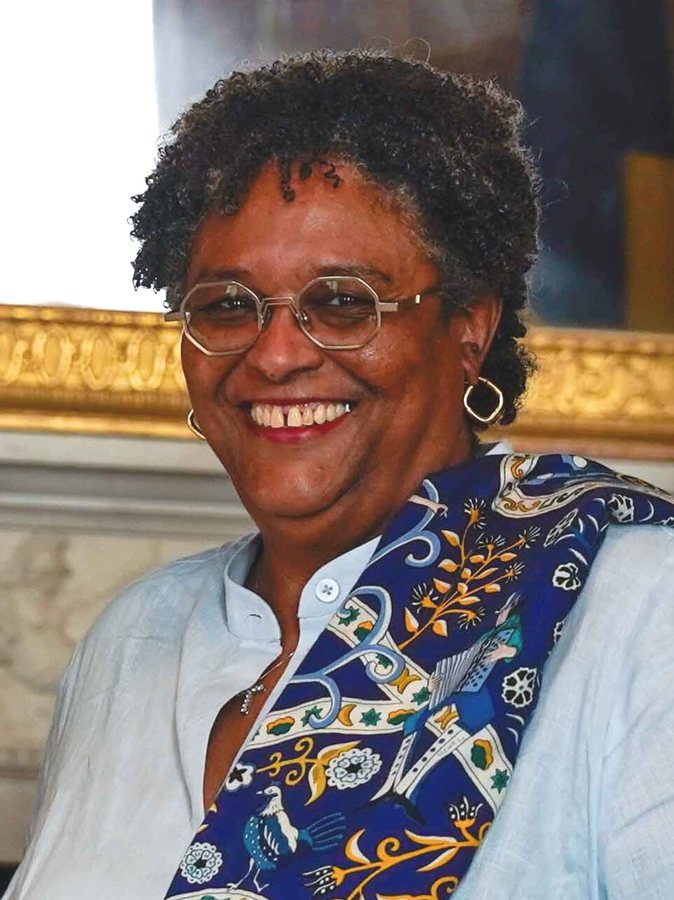
Barbados Prime Minister Mia Amor Mottley has renewed her call for greater access to capital and improved disaster financing across the Caribbean, arguing that the region's savings and talent must be put to work to build a stronger and more prosperous community.
Mottley made the remarks following a meeting at Ilaro Court with the Caribbean leadership of Scotiabank, which has operated in Barbados for 70 years. The discussions centred on how the financial sector could play a larger role in creating opportunities for Caribbean people and supporting regional development.
According to Mottley, access to capital must translate into access to opportunity. She stressed that governments should not be forced to choose between rebuilding after a natural disaster and maintaining essential services such as health, education and national security.
The Prime Minister highlighted the importance of natural disaster clauses and improved disaster-financing mechanisms, particularly as Caribbean countries remain vulnerable to hurricanes and other climate-related events. Such instruments, she suggested, are vital for protecting hard-won development gains when storms strike.
Mottley also called for more Barbadian savers to become investors, arguing that Caribbean capital should be put to work financing regional businesses, housing and infrastructure. She said the Caribbean already possesses both the savings and the talent necessary for development, and urged the region to create conditions that would allow more people to share in the prosperity being generated.
The meeting with Scotiabank's regional leadership formed part of ongoing efforts to deepen the role of financial institutions in Caribbean development. Scotiabank's seven-decade presence in Barbados was noted as a sign of long-standing ties between the bank and the region.
Mottley's comments come as Caribbean leaders continue to press for reform of the international financial system, which many argue penalises small, climate-vulnerable states by restricting their access to affordable financing. The call for natural disaster clauses has been a recurring theme in regional advocacy, aimed at allowing countries to suspend debt payments in the aftermath of catastrophic events so that resources can be directed to recovery.
For Dominica and its OECS neighbours, the issue of disaster financing is particularly acute. The island remains exposed to hurricanes and other climate hazards, and officials have consistently argued that access to concessional funding and flexible repayment terms is essential for resilience-building.
Mottley's push for greater capital access also touches on the broader goal of regional integration, where savings generated within the Caribbean could be channelled into productive investment rather than sitting idle or flowing abroad. She has long argued that the region's financial ecosystem must be reoriented to serve Caribbean people first.
The discussions at Ilaro Court did not produce specific announcements, but they signal a continued dialogue between government and the private financial sector on how best to unlock capital for development. The Prime Minister's remarks are likely to feed into wider Caribbean conversations on financing for climate adaptation and sustainable growth.
As the region prepares for the annual Atlantic hurricane season, the question of how to pay for recovery without sacrificing essential services remains at the forefront of policy debate. Mottley's intervention adds weight to calls for innovative financial tools that recognise the unique vulnerabilities of small island developing states.