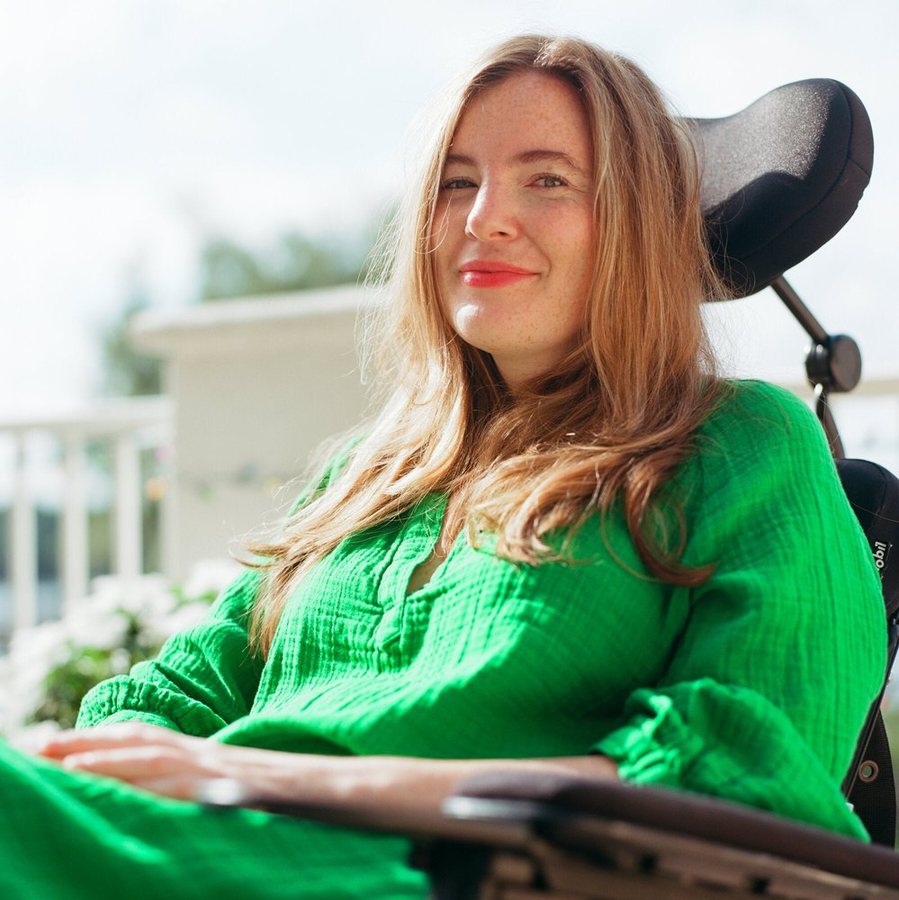
Brooke Eby, the American content creator who documented her life with motor neurone disease — known in the United States as A.L.S. — for a global audience on TikTok, has died at the age of 37. Her death was confirmed in reports published on Friday, four years after she began sharing her diagnosis publicly.
Eby was diagnosed with A.L.S. at 33. Rather than retreat from public view, she built a following by treating her illness with disarming humour, refusing the solemn register that usually surrounds terminal diagnoses. Her videos mixed frank updates on her declining mobility with jokes about dating, fashion and the indignities of a body that would not cooperate. The approach drew millions of views and turned her into one of the most recognisable voices on the platform.
Her reach extended well beyond social media. Eby used her profile to raise money for A.L.S. research and to press for faster drug development, appearing in campaigns and interviews that placed a young woman's face on a disease long associated with older patients. In one widely shared post she described the strange arithmetic of her situation: the same condition that was shortening her life had given her a platform she never expected.
Motor neurone disease is a progressive condition that attacks the nerve cells controlling voluntary movement. There is no cure, and most patients die within two to five years of diagnosis. Eby outlived that prognosis, and she was candid about the toll of watching her body change while her mind remained intact. Her posts frequently addressed the practicalities of living with a degenerative illness — equipment, accessibility, the cost of care — as well as the emotional weight of planning for a future she would not see.
Tributes described her as a rare communicator who made an unbearable subject bearable without softening it. Fellow creators and advocacy organisations credited her with widening public understanding of A.L.S. and with drawing younger audiences into a conversation they might otherwise have avoided. Her willingness to film herself at her most vulnerable, including in the final stages of the disease, was widely described as an act of generosity rather than exhibitionism.
Eby's following grew steadily across four years, and her influence was felt in the broader shift towards patient-led storytelling online, in which people with serious illnesses control their own narrative rather than being represented by institutions. She was also among a generation of creators who blurred the line between entertainment and advocacy, using comedy as a delivery mechanism for information that audiences might otherwise scroll past.
She is survived by her family and by a community of followers who followed her progress week by week. In her final months she continued to post, and her last videos were marked by the same dry wit that had defined her from the beginning. The cause was complications related to A.L.S.