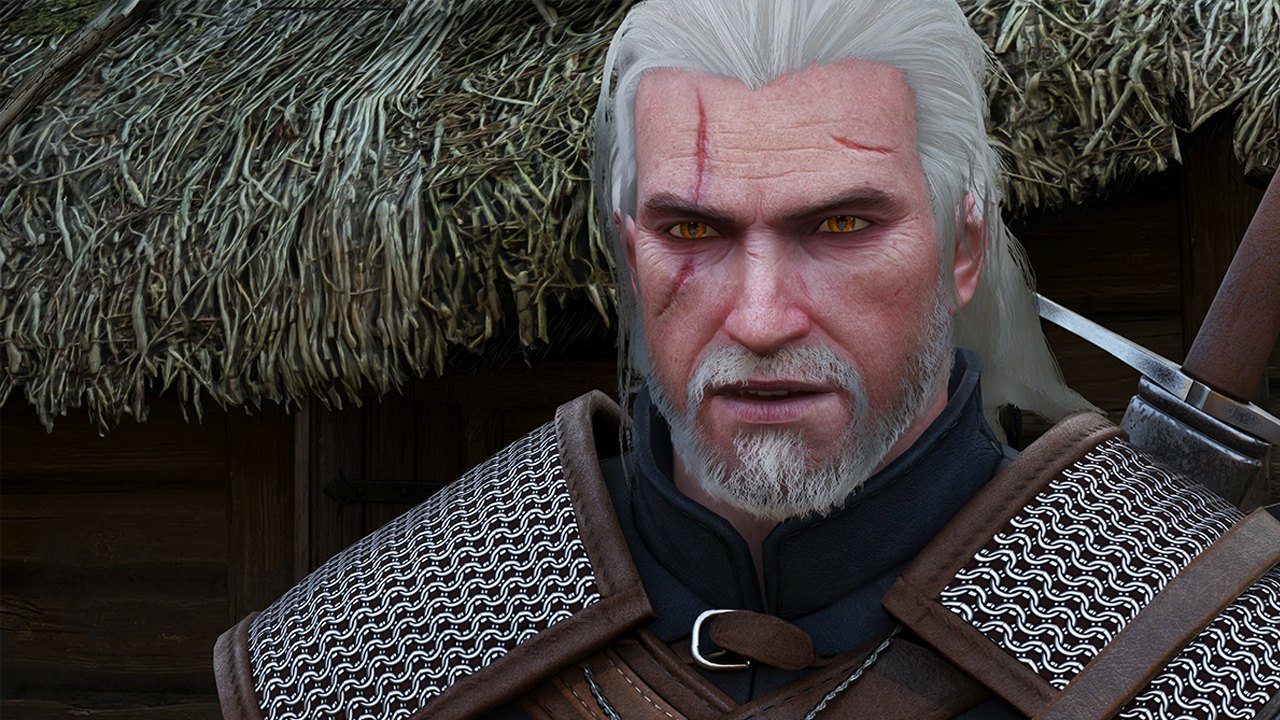
CD Projekt Red has published updated PC system requirements for The Witcher 3: Wild Hunt Remastered ahead of its release on 29 September, and the figures suggest that maxing out the eleven-year-old role-playing game with path tracing at 4K will require one of the most expensive graphics cards on the market. According to the requirements, players will need an Nvidia GeForce RTX 5080, a card currently selling for around $1,650 at the low end, alongside both DLSS upscaling and frame generation to reach 60 frames per second.
Independent testing of the RTX 5080 in The Witcher 3 Remastered appears to confirm that the demands are steep. Running the game at 4K with path tracing, hairworks and DLSS upscaling set to Performance produced an average of 30 fps during a lap around Novigrad, the city that has been notorious for performance issues since the original 2015 launch. Enabling frame generation raised the average to 59 fps, but at that low a base frame rate the image showed noticeable artifacts, particularly in ground textures.
Hairworks, the fur and hair rendering technology that has weighed heavily on The Witcher 3 since its initial release, remains a significant factor. Disabling it while keeping path tracing enabled at 4K with DLSS on Performance lifted the average to 44 fps, and switching on frame generation took that figure to 80 fps. The most practical route to smoother performance on the RTX 5080, short of upgrading to an RTX 5090, is to turn off path tracing entirely, which pushes the frame rate to 55 fps in Novigrad. Players can also disable the many other ray tracing effects available to gain further headroom.
The remaster arrives as a free update for existing owners on PC, PlayStation 5, Xbox Series X|S and Nintendo Switch 2 from 29 September. It bundles a broad set of visual and technical improvements intended to bring the game in line with current-generation hardware, and the revised system requirements indicate that the title will still scale down to lower-end machines. The trade-off for players will be deciding which settings they are willing to sacrifice to achieve a stable frame rate.
The situation highlights a broader tension in modern PC gaming, where path tracing and other advanced rendering techniques can push even flagship hardware to its limits on titles that are more than a decade old. For The Witcher 3 Remastered, the gap between the recommended specification and real-world performance in demanding locations such as Novigrad means that owners of high-end cards may still need to compromise on visual settings to avoid relying on frame generation as a crutch.