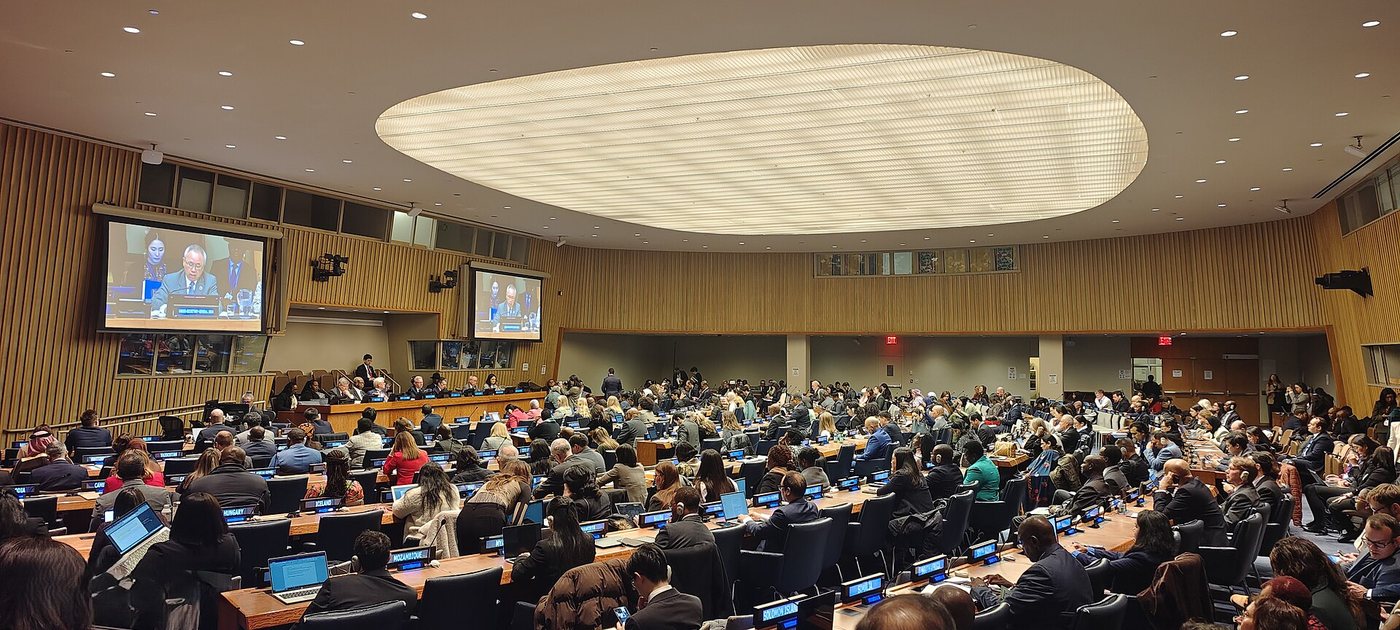
The 2026 Climate Forward conference has announced its slate of speakers, assembling a cross-disciplinary group of scientists, policymakers, business leaders, and advocates to examine how climate research informs public policy and shapes the global response to environmental change.
The conference, scheduled for September 23, 2026, is designed to bridge the gap between scientific discovery and the political, economic, and social decisions that follow from it. Organizers have emphasized that the event will not treat climate science as an isolated academic pursuit but as a field whose findings ripple through government, industry, and civil society.
The speaker roster reflects that ambition. Participants are expected to include researchers working at the frontier of climate modeling and emissions monitoring, alongside officials responsible for translating those findings into regulation and investment. The lineup also features voices from the private sector, where climate risk is increasingly factored into long-term planning, and from community organizations that contend with the local consequences of a warming planet.
For readers of Science Official, the significance of the gathering lies in its focus on the feedback loop between evidence and action. Climate research does not end with a published paper; it enters a contested arena of policy design, economic trade-offs, and public debate. Conferences such as Climate Forward serve as a checkpoint where the scientific community, decision-makers, and the public can assess what is known, what remains uncertain, and what choices are available.
The event also underscores the growing expectation that climate science be communicated beyond specialist audiences. The speakers are expected to address not only technical questions — such as the pace of emissions reductions or the reliability of climate projections — but also the ethical and cultural dimensions of the transition to a lower-carbon economy. That includes questions about who bears the costs of adaptation, how developing nations participate in global agreements, and how scientific institutions maintain public trust.
While the full agenda has not been detailed, the speaker announcement signals that the 2026 conference will continue the tradition of treating climate as a subject that sits at the intersection of research, governance, and society. The presence of figures from multiple sectors suggests an intent to move past abstract discussion toward concrete proposals and accountability.
The conference arrives at a moment when climate policy faces both momentum and resistance. International agreements have set targets, but the pathways to meeting them remain disputed. Scientific bodies continue to refine their understanding of tipping points, feedback mechanisms, and regional impacts, even as political cycles complicate long-term planning. A gathering that brings researchers and decision-makers into the same room is, in that context, more than a calendar event; it is a test of whether evidence can survive translation into action.
Further details about the conference program, including specific sessions and participants, are expected to be released as the date approaches. For now, the speaker list offers an early indication of the themes likely to dominate: the integration of climate science into economic strategy, the role of technology in reducing emissions, and the challenge of building durable public consensus around difficult choices.