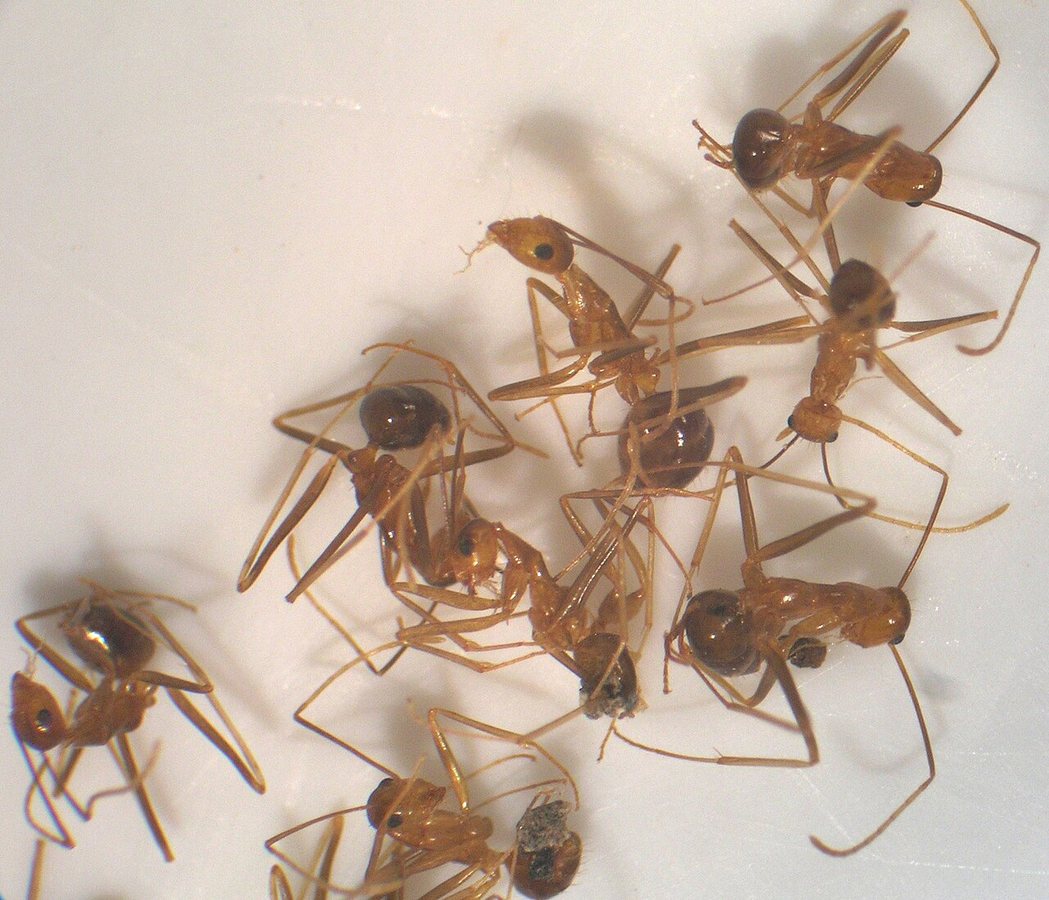
Yellow crazy ants have claimed a decisive victory over red crabs in a brutal encounter, using a chemical attack to overpower the larger crustaceans. The confrontation, filmed for the BBC's retrospective marking 20 years of the landmark nature series Planet Earth II, offers a vivid illustration of how an invasive insect species has upended the ecology of Christmas Island in the Indian Ocean.
The ants, known scientifically as Anoplolepis gracilipes, spray formic acid to blind and immobilize their opponents. In the footage, red crabs — which can grow to more than a meter across — are shown retreating or succumbing as swarms of the tiny insects target their eyes and joints. The chemical assault allows the ants to neutralize a creature many times their size, a tactic that has made them one of the world's most damaging invasive species.
Christmas Island's red crabs are famous for their annual mass migration from the forest to the sea to breed, a spectacle that draws global attention and supports the island's tourism economy. But the arrival of yellow crazy ants, likely introduced accidentally through trade routes decades ago, has turned parts of the island into a patchwork of ant supercolonies. These supercolonies can contain billions of individuals and operate as a unified force, overwhelming native wildlife.
The ants do not eat the crabs directly in most cases. Instead, their acid spray disables the crabs, leaving them vulnerable to dehydration, injury, or predation by other ants. Researchers have documented widespread crab mortality in areas where supercolonies have formed, with cascading effects on the forest ecosystem. Red crabs are ecosystem engineers: they consume leaf litter, turn over soil, and help recycle nutrients. When their numbers plummet, the forest floor changes, affecting everything from seedling growth to the survival of other invertebrates.
The ecological crisis on Christmas Island is not new. Scientists have been tracking the ant invasion for more than two decades. In some areas, yellow crazy ants have formed dense supercolonies that eliminated up to 30 million red crabs, according to estimates from long-term monitoring. The loss of crabs has been linked to shifts in forest composition and an increase in other invasive species, such as giant African land snails.
Conservation managers have tried various control methods, including aerial baiting with insect growth regulators and fipronil, a controversial pesticide. These efforts have had mixed success. Baiting can knock back ant populations temporarily, but reinfestation often occurs, and the chemicals may harm non-target species. Researchers continue to search for more targeted biological controls, but no single solution has yet proven sustainable at landscape scale.
The BBC footage, part of a retrospective celebrating Planet Earth II's legacy, serves as a reminder that nature's dramas are not confined to remote wilderness. They are unfolding on islands and in forests worldwide, often driven by human activity. The segment has been shared widely on social media, sparking renewed interest in the plight of Christmas Island's crabs and the broader threat of invasive ants, which are estimated to cost the global economy billions of dollars annually in damage and control efforts.
For viewers, the encounter is both fascinating and sobering. It shows a tiny insect defeating a much larger animal through chemistry and coordination, a testament to the power of social insects. But it also underscores how fragile island ecosystems can be when a new predator arrives. The red crabs of Christmas Island have become a symbol of that vulnerability, and their ongoing battle with yellow crazy ants is far from over.