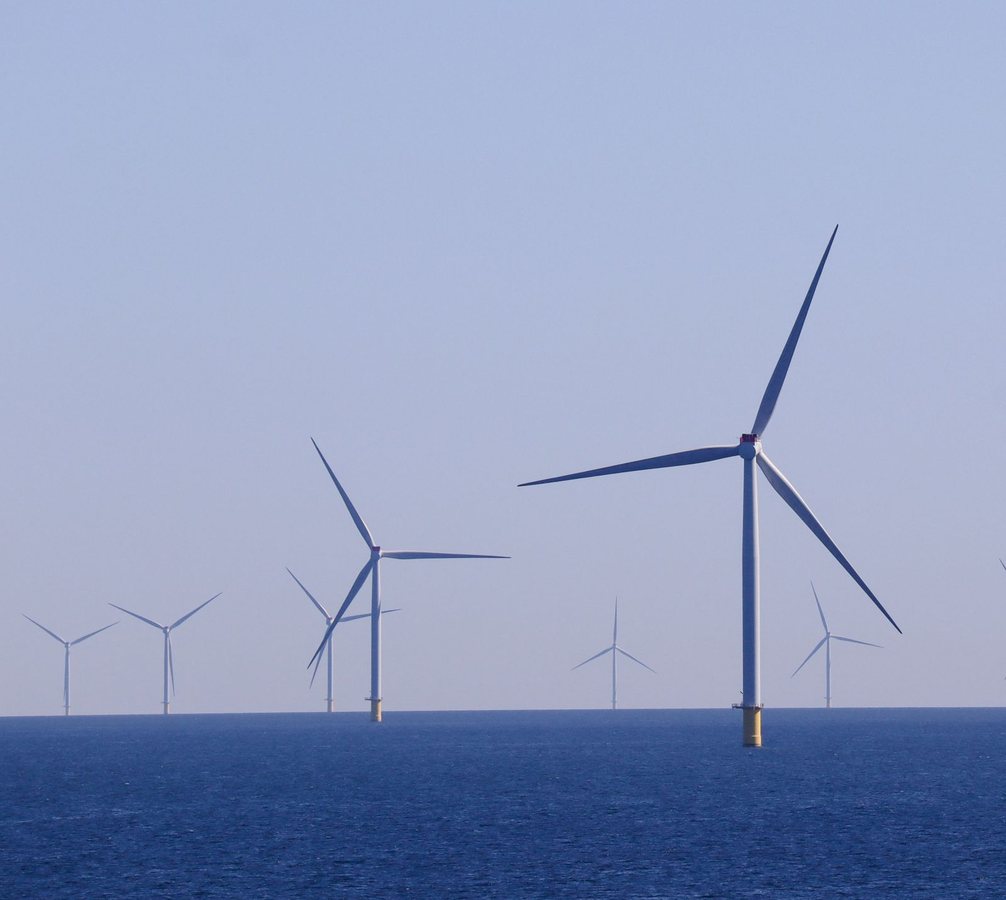
The most important feature of Belgium's Princess Elisabeth Island is not that it is an artificial island. It is that the project changes the geometry of an electricity network. With a €1 billion green credit facility from the European Investment Bank for phase two, Belgium is financing a node that can connect offshore wind generation to the domestic grid while leaving room for future routes to other power systems, including the United Kingdom.
That network logic matters more than the engineering novelty. Traditional offshore wind projects usually move electricity from a group of turbines to one national landing point. A hub can do more: aggregate generation, host high-voltage equipment and support interconnection so electricity can be routed according to where it is needed. In a North Sea crowded with national wind targets, cables and shipping constraints, the value of a well-placed node increases with the number of systems it can connect.
The EIB says the island is being built roughly 45 kilometres off Belgium's coast and will serve as an energy hub for new offshore wind farms. Its project database records a €1 billion financing signature on 17 July 2026 and puts the overall cost of the second phase at around €2.296 billion. The public announcement came on 7 September.
The financing is itself part of the route. Large transmission projects must commit capital years before all connected assets are operational. Interest costs therefore become a structural component of the project, and the EIB explicitly says its favourable terms are intended to help limit costs. For a regulated grid operator, the price and duration of capital can be almost as important as the price of steel or cable.
The UK dimension is particularly significant because Britain combines a large offshore-wind fleet with an electricity market that already relies on interconnectors to continental Europe. A future connection associated with Princess Elisabeth Island could allow power to move between a Belgian offshore hub and the British system. In theory, such infrastructure can improve the use of variable renewable generation by expanding the market available to each unit of wind power.
But the route is not open yet. The EIB description says the island can facilitate future interconnection; it does not announce a completed cable or a fixed commissioning date for a UK link. Separate regulatory approvals, commercial structures and engineering decisions still determine whether potential becomes operating infrastructure.
That caution is useful because Europe's energy transition increasingly depends on sequencing. Wind farms without grid capacity can be constrained. Interconnectors without sufficient generation or domestic reinforcement can underperform. National networks that are expanded without cross-border coordination can duplicate costs. The island model attempts to combine several of those layers in one offshore platform.
It also creates governance questions. Cross-border electricity routes require agreement over capacity allocation, congestion revenues, market coupling and cost sharing. As hubs become multi-purpose assets, regulators must decide which users pay for which functions and how risks are divided between national consumers, developers and network operators.
Princess Elisabeth Island therefore belongs to a larger story about routes rather than monuments. The €1 billion facility finances a physical node, but its eventual value will be measured by the flows it enables: Belgian wind to shore, electricity across borders and investment across a system that increasingly treats the North Sea as shared energy infrastructure. The next decisive events will be connection contracts and interconnector decisions, not the ceremonial completion of the island itself.