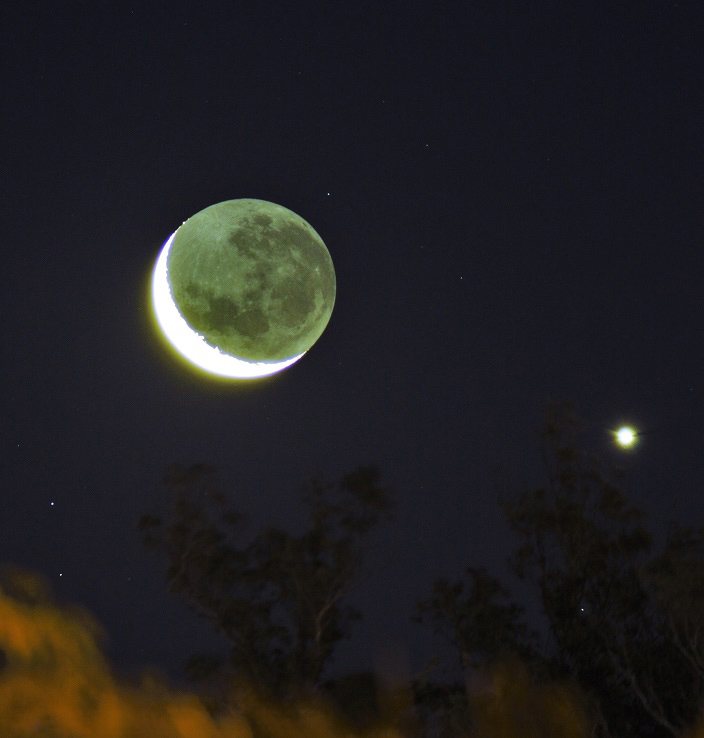
The Moon, Mars, Jupiter and Regulus, the brightest star of the constellation Leo, will line up in the sky on the morning of November 2, offering skywatchers a striking celestial display. The alignment is visible before dawn, shortly before the sun comes up.
About 30 minutes before sunrise, the very bright planet Venus is expected to appear above the eastern horizon, adding another luminous point to the scene. Because the event unfolds in the early hours, observers will need a clear view toward the east to take in the full arrangement.
Such alignments occur when several bright objects appear close together from the perspective of Earth, even though the planets and stars lie at vastly different distances from our planet. The Moon, which orbits Earth, passes near the planets as it crosses the sky, which is why it sits among them in the grouping seen from the ground.
Regulus is among the brightest stars visible in the night sky, which makes it an easy reference point for amateur observers. Mars and Jupiter are both prominent planets that can be identified with the naked eye, and their proximity to the Moon and to one another makes the morning arrangement easier to locate for anyone who knows where to look.
The alignment falls within a broader pattern of planetary visibility during the autumn months, when Mars and Jupiter are both well placed in the pre-dawn sky. Observers who watch the event over several mornings may notice the Moon shifting position against the backdrop of the stars, a movement that is visible within hours and that gives a practical sense of how quickly the sky changes.
No special equipment is needed to watch the alignment, although binoculars can help bring out the details of the Moon and the brighter stars. Observers are advised to find a location with an unobstructed horizon to the east and to allow their eyes time to adjust to the dark before looking up, since the faint light of dawn can quickly wash out the fainter objects in the scene.