The latest U.S.-Iran military exchange matters to business because it joined two forms of risk that markets normally try to price separately: attacks on major military assets and disruption to the movement of oil.
U.S. Central Command said Iran’s Islamic Revolutionary Guard Corps launched ballistic missiles on 5 September towards two U.S. Navy warships, an aircraft carrier and a guided-missile destroyer. CENTCOM said both vessels evaded the attacks and no American personnel were injured.
The public release did not identify the carrier. That detail matters because it prevents a responsible account from attaching the attack to a particular ship without additional evidence.
The U.S. response moved immediately into the energy system. American forces struck three Iranian crude-oil carriers that CENTCOM describes as part of a network funding the IRGC and its regional proxies. Two were said to have been permanently disabled and a third destroyed after its crew was directed to leave.
Military deterrence is becoming economic coercion
The logic in CENTCOM’s statement is explicit: an attack on two U.S. warships would be answered by imposing a larger economic cost on Iran. That turns commercial shipping and oil-linked assets into instruments within the military signalling cycle.
For companies, the most important issue is not the rhetoric itself but the way it can change behaviour around a chokepoint. Shipowners, insurers, commodity traders and governments respond to perceived risk before a route is physically closed. Higher war-risk premiums, diversions, slower transits and reduced availability of vessels can all raise costs.
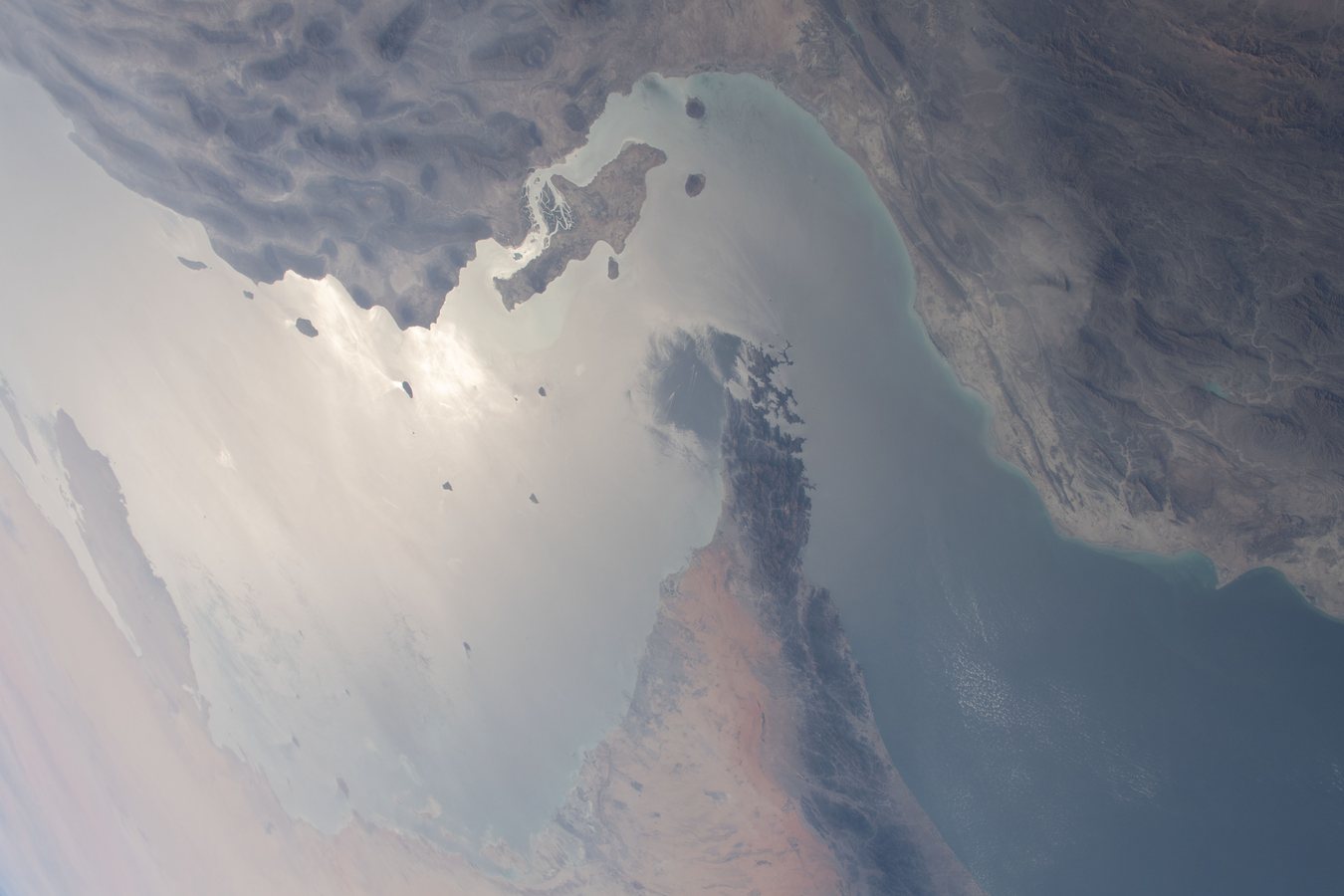
This is particularly important at Hormuz because the route was already under severe pressure in 2026.
The baseline is already abnormal
The U.S. Energy Information Administration estimates that crude oil and petroleum liquids moving through the Strait of Hormuz averaged 4.9 million barrels per day in the second quarter of 2026. In the fourth quarter of 2025, before the conflict, the figure was 21.6 million barrels per day.
That gap shows why a fresh security shock cannot be treated as an isolated naval incident. The region is not returning from a normal commercial baseline; it is operating after a major contraction in one of the world’s most important energy corridors.
EIA notes that Saudi Arabia, the United Arab Emirates and Iran have pipeline options that can bypass parts of the strait, while other cargoes can be rerouted. But alternative capacity is limited, and rerouting is generally slower or more expensive.
The economic question is therefore not simply whether Hormuz is “open” or “closed”. It is how much volume can move through it reliably, at what insurance cost, and with what confidence that vessels will not become part of the next round of retaliation.
Why an aircraft carrier changes the calculation
An aircraft carrier is a high-value military asset and a visible symbol of U.S. power. Targeting one raises the political cost of restraint for Washington even if the attack fails. It also increases the risk that future U.S. retaliation will be designed to have consequences beyond the battlefield.
The 5 September response suggests that oil-linked assets are already within that framework. That is the development business readers should watch.
A shipping company does not need to believe that a full regional war is imminent to change its behaviour. It only needs to conclude that the probability of another strike has increased enough to justify a different route, a higher premium or a delay. Commodity prices can react to the same shift in probability.
The next signal will come from traffic, not headlines
CENTCOM’s account is a U.S. military statement, and Iran’s response to the latest strikes will determine whether the escalation continues. For markets, however, the practical indicators are measurable: tanker movements, insurance costs, export volumes and the pace at which Hormuz traffic recovers from this year’s earlier disruption.
If the confrontation remains limited, those indicators may stabilise. If attacks on warships and oil carriers become part of a recurring cycle, the cost will spread through shipping and energy even without a formal closure of the strait.
That is why the carrier story is more than a defence headline. It is a test of whether military deterrence around Hormuz can still be separated from the commercial infrastructure on which global energy markets depend.