The white pigment that colors walls, sunscreen bottles and printed pages is not one material but two. Titanium dioxide, the most widely used white pigment in the world, exists in two crystal forms that share the same chemical formula and the same white appearance yet behave very differently. One form scatters light efficiently and holds up under long exposure to sunlight, while the other breaks down pollutants when struck by ultraviolet light.
The difference between the two forms, anatase and rutile, was not understood when titanium dioxide was first produced in the late nineteenth century. Early manufacturers worked with the powder as a single substance. As applications multiplied, however, results varied from batch to batch. Some paints made with the material lasted for years, while others yellowed and cracked within months, even when made by the same process. Some samples also showed unusual photocatalytic properties that could clean surfaces, while others stayed inert.
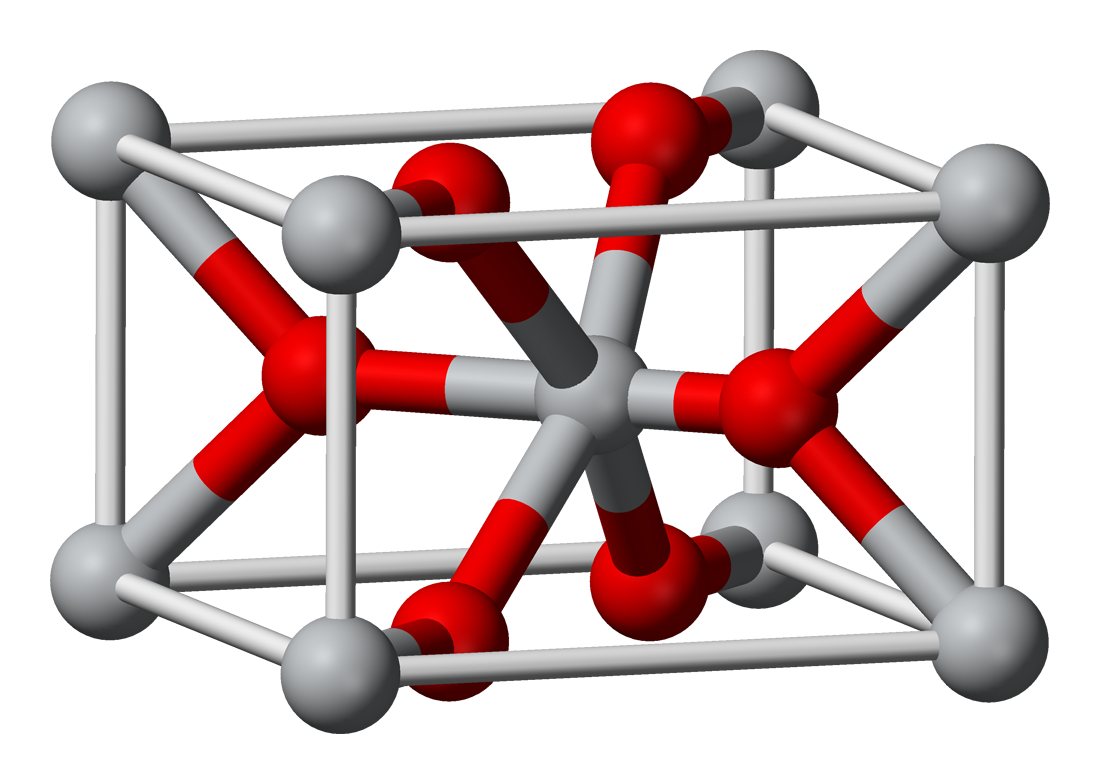
By the mid-twentieth century, X-ray crystallography revealed the cause. The atoms in titanium dioxide can arrange themselves in two fundamentally different ways. Anatase has an open, spacious lattice that allows light and electrons to move freely. Rutile has a dense, tightly packed structure that scatters light with high efficiency and resists environmental wear. Once scientists could identify the structures, they could select the appropriate form for a given application rather than relying on trial and error.
Producing each form in a controlled way is a demanding industrial process. Titanium dioxide is extracted from mineral ore and refined through either the sulfate process or the chloride process, and its crystal structure is then set during later stages. Anatase is the metastable form, favored at lower temperatures. When heated above roughly 600 degrees Celsius, it converts irreversibly to rutile, and rutile does not revert. Manufacturers therefore must carefully control temperature to keep anatase from converting early when it is needed for photocatalysis, or deliberately drive the conversion to completion when maximum durability and opacity are required.
Anatase's value lies in its photocatalytic activity. Under ultraviolet light, it generates electron-hole pairs that react with water and oxygen to produce reactive species, including hydroxyl radicals and superoxide ions. These species can break down organic pollutants and kill microorganisms. Because the open anatase structure lets charge carriers reach the surface quickly, reactions proceed faster than with other forms. Applications have included coatings on building facades that break down nitrogen oxides from vehicle exhaust, a use aimed at reducing smog in urban settings.
Rutile, by contrast, is valued for its durability and its ability to hide what lies beneath it. Its dense structure makes it the preferred choice for paints, plastics and other products that must remain white and stable for long periods. The article's source material also notes that some manufacturers now produce mixed-phase powders in which anatase and rutile coexist within the same particle, combining properties of both forms, although producing such materials requires precise control over temperature, residence time and precursor concentration.