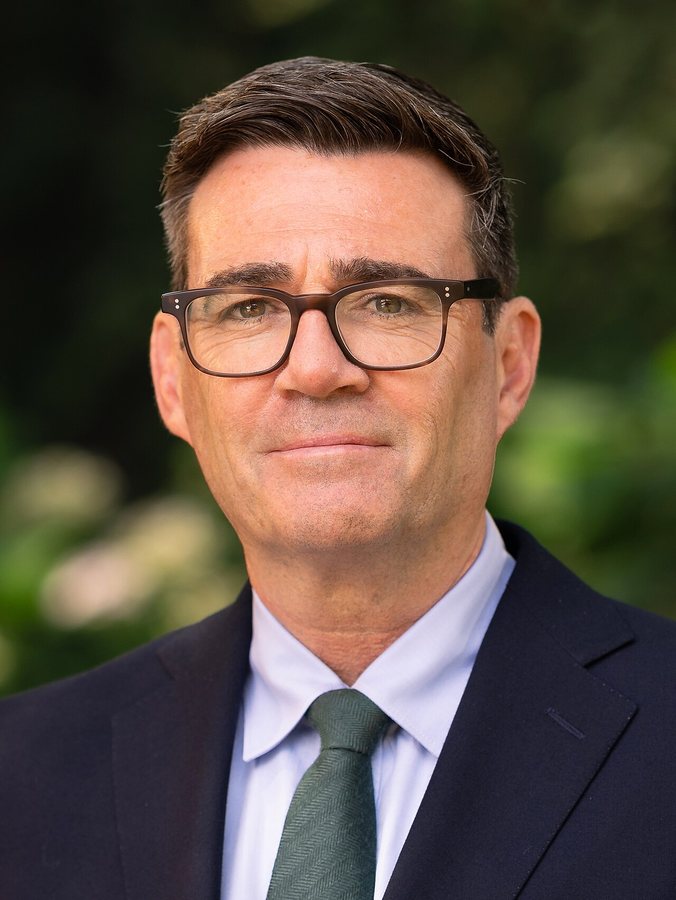
The UK Prime Minister, Andy Burnham, is preparing to set out his government's economic vision in a major address, as persistent inflation and the escalating conflict with Iran present twin challenges to Britain's financial stability. The speech is expected to outline the administration's priorities for growth, public spending, and international trade at a time when global markets remain volatile.
Burnham's address comes amid mounting pressure on the government to demonstrate a clear plan for steering the economy through a period of significant uncertainty. Inflation has remained stubbornly above the Bank of England's target, squeezing household budgets and complicating the fiscal outlook. At the same time, the conflict with Iran has introduced fresh risks to energy prices and supply chains, echoing the disruptions seen during previous periods of geopolitical tension.
The Prime Minister is expected to use the speech to argue that his economic approach balances immediate support for households and businesses with longer-term investment in productivity and infrastructure. Officials have signalled that the vision will focus on industrial strategy, regional growth, and measures to bolster the UK's resilience against external shocks. However, the government faces a difficult balancing act: any new spending commitments must be weighed against the need to maintain market confidence and keep borrowing under control.
The Iran conflict has added a layer of complexity to the economic picture. Rising tensions in the Middle East have historically driven up oil prices, and any sustained increase would feed directly into UK inflation, particularly through transport and energy costs. The government is understood to be monitoring the situation closely, with contingency plans in place to support vulnerable sectors if the situation deteriorates further. The Prime Minister is likely to address the geopolitical dimension in his remarks, linking domestic economic security to stability abroad.
Business groups have welcomed the prospect of a clear strategic direction but are pressing for detail on how the vision will be implemented. Industry leaders have repeatedly called for certainty on tax policy, energy costs, and regulation, arguing that without a stable framework, investment decisions will continue to be delayed. The Confederation of British Industry and other trade bodies have highlighted the need for measures that boost competitiveness and unlock private capital.
Politically, the speech represents a significant moment for Burnham, who has sought to position himself as a leader capable of managing both the domestic economy and international crises. His opponents have criticised the government's record on growth and living standards, and the address will be scrutinised for signs of division within the cabinet over spending priorities. The Prime Minister's allies insist that the plan is fully costed and consistent with the fiscal rules set out earlier in the parliament.
The Bank of England, meanwhile, continues to walk a fine line between controlling inflation and avoiding a recession. Interest rates remain elevated, and policymakers have warned that further increases cannot be ruled out if price pressures persist. The Prime Minister's economic vision will need to complement the central bank's efforts without undermining its independence, a delicate task that has tripped up previous administrations.
As the speech approaches, attention will focus on whether Burnham can project competence and control in an environment shaped by forces largely beyond Westminster's control. The combination of domestic inflation and foreign conflict means that even a well-received address may struggle to alter the underlying economic reality. For now, the government's task is to reassure markets, households, and businesses that it has a credible plan for the months ahead.