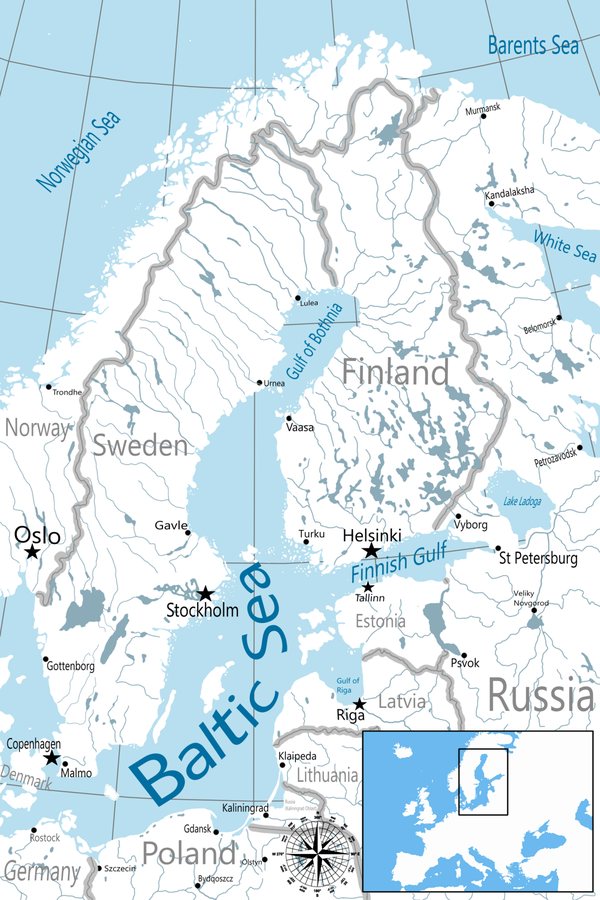
A sudden, simultaneous blackout of GPS and satellite navigation affected about 80 aircraft flying over Northern Europe, leaving them without reliable positioning for roughly 19 minutes. The disruption occurred on 9 November and has raised concerns about possible interference with critical navigation systems over the North Sea region.
Reports circulating about the incident link the jamming to a powerful transmitter said to be associated with a convoy of Russian naval vessels. The available material frames the episode as a suspected hybrid-warfare action, but the origin of the signal has not been confirmed, and the exact location of any transmitter remains unknown from the information currently available.
The scale of the event is what has drawn attention. The outage hit a large number of aircraft at the same time and lasted several minutes, which the reporting describes as unprecedented. It underlines how dependent modern aviation is on satellite positioning. Aircraft that lose these signals must fall back on backup systems and manual procedures, and sustained interference over busy air corridors can quickly become a matter of flight safety.
The fact that the disruption was simultaneous matters for the investigation. A single, localised fault would typically affect a smaller area or a narrower set of receivers, whereas a blackout across dozens of aircraft at once points toward interference broad enough to cover a wide sector of airspace. That reading is still an inference, however, and it has not been independently verified in the material available.
Attribution is the central open question. Interference with satellite navigation is a known tactic in several conflict zones, and it is often difficult to trace to a specific source without technical verification. Until such confirmation exists, the link between the blackout and the Russian convoy rests on suspicion rather than established findings, and no official statement tying the event to any state actor had been published at the time of writing.
For readers following the wider picture, the episode fits into a broader debate about the vulnerability of civil infrastructure to deliberate interference below the threshold of open military conflict. Satellite navigation underpins not only aviation but also shipping, logistics and telecommunications, so a disruption of this kind raises questions beyond the cockpit. Whether the incident was an isolated disruption or part of a pattern will depend on further technical analysis and official statements, neither of which had been published in the material available.