The International Space Summit opening in Paris on September 9 is not being framed as another showcase for launch vehicles and astronaut missions. Its agenda reaches into governance, telecommunications, science, industry and security, reflecting the fact that orbital infrastructure now supports much of the technology used on Earth.
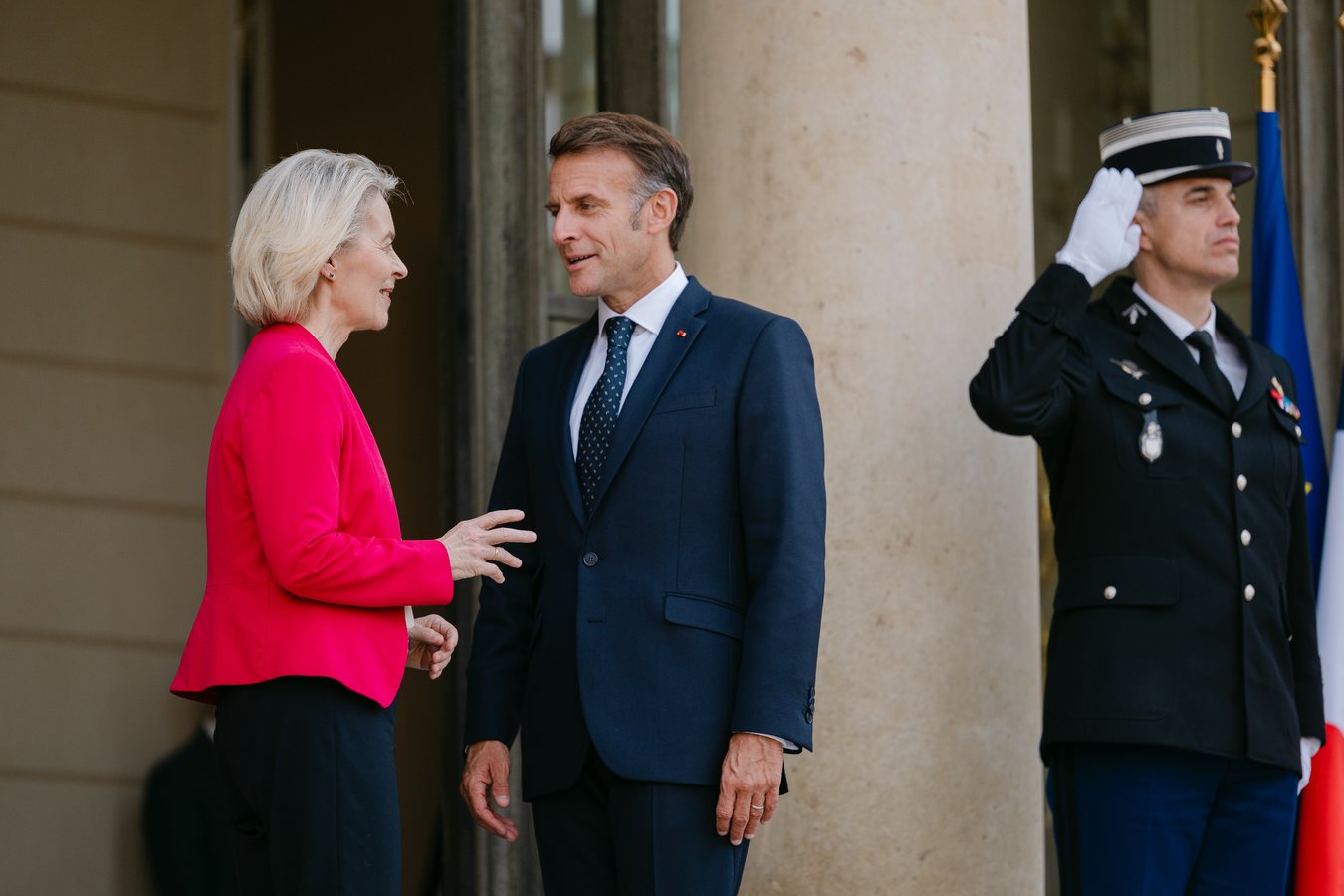
The two-day meeting at the Grand Palais brings together governments, international organisations, scientists, astronauts, military representatives, investors and private companies. European Commission President Ursula von der Leyen is scheduled to speak on September 10, placing the European Union’s executive leadership directly inside a debate that has traditionally been split among national space agencies, regulators and specialised multilateral bodies.
The scientific stakes are substantial. Earth-observation missions monitor climate, agriculture, oceans and disasters. Navigation systems support transport and precision timing. Space telescopes and planetary probes depend on reliable communications and predictable orbital environments. As more satellites are launched, the physical and radio-frequency environment becomes a shared resource that must be coordinated if scientific and commercial systems are to operate without harmful interference.
France and Germany have already identified satellite spectrum as a strategic issue. In a July ministerial agreement, the two governments backed the International Telecommunication Union as the multilateral framework for coordinating radio frequencies and satellite orbits. They also connected spectrum policy to IRIS², the European secure-connectivity constellation intended to strengthen resilient government and commercial communications.
France and Italy have taken a similar approach. Their June joint statement committed both countries to close coordination before the Paris summit, support a competitive and sovereign European space industry, align positions on EU and European Space Agency programmes and protect European interests in scarce satellite frequency bands.
Those agreements reveal a basic tension the summit will have to confront. Space is increasingly commercial, with private firms building launchers, satellites, data services and communications networks. At the same time, governments regard many of the same capabilities as strategic infrastructure. A policy that is too restrictive can suppress investment and innovation; a policy that relies entirely on external commercial providers can leave governments exposed when geopolitical conditions change.
Von der Leyen’s participation is therefore relevant beyond Europe. The Commission is a major rule-making and funding institution, and its decisions can shape procurement, competition, security standards and the architecture of cross-border services. Her Paris speech comes just six days before the 2026 State of the Union address in Strasbourg, where she is expected to set out the Commission’s priorities for the year ahead.
It would be premature to predict what she will announce in either venue. The confirmed agenda is enough to show that space has moved into the same policy vocabulary as economic competitiveness, defence resilience and technological sovereignty.
For science, that shift creates both opportunity and risk. More public investment in launch capacity, secure communications and satellite manufacturing can support missions that would otherwise struggle for funding. But a stronger security focus can also redirect resources toward classified or dual-use systems. Researchers will have an interest in keeping open scientific cooperation and data access visible as strategic competition intensifies.
The Paris summit’s most important outcome may therefore be a clearer set of rules rather than a single new spacecraft. Orbital slots, radio frequencies, debris mitigation, secure connectivity and procurement policy sound technical, but together they determine who can use space reliably. The summit is a test of whether governments can treat that shared environment as both an arena of competition and a domain that still requires cooperation.