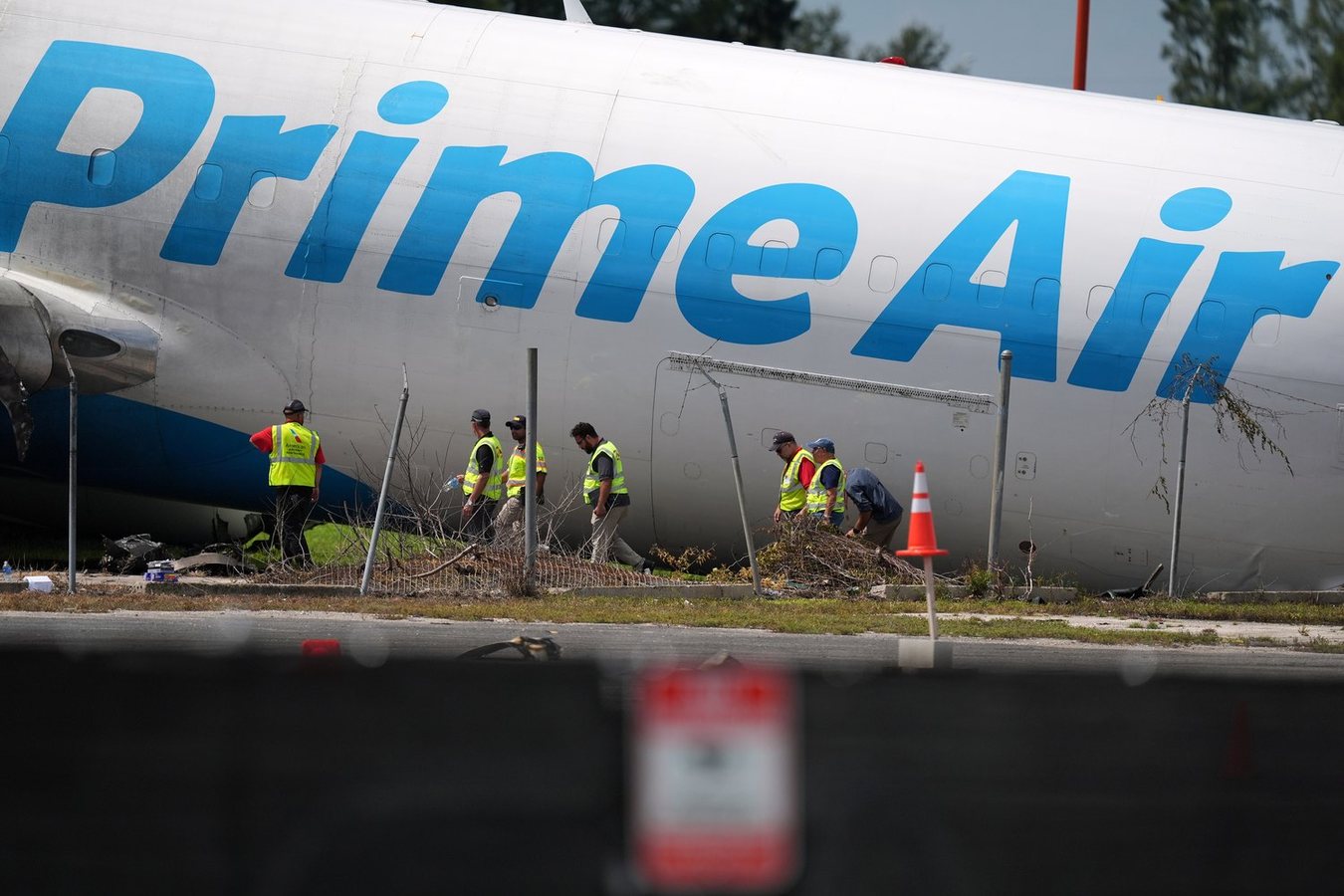
Federal investigators have recovered flight recorder data showing that the Amazon cargo jet that careened off a runway at Miami International Airport was traveling too fast on its final approach, with cockpit alarms sounding as a pilot warned of the plane's excessive speed before the crash that killed five people.
The National Transportation Safety Board released transcripts and data from the cockpit voice and flight data recorders of Prime Air Flight 7598, a Boeing 767 freighter operated for Amazon by Atlas Air. The recordings capture the final moments before the aircraft overran the runway, struck a structure and came to rest near a busy roadway just beyond the airport perimeter.
According to the NTSB material, an automated warning about the plane's speed activated during the approach, and one of the pilots verbally flagged that the aircraft was coming in too fast. The flight data recorder corroborates those alerts, showing the jet was above the target speed as it crossed the threshold and touched down, leaving insufficient runway distance to stop.
The crash killed five people, making it one of the deadliest aviation accidents on U.S. soil in recent years and focusing renewed attention on the safety of the air cargo industry, which moves a growing share of the packages Americans rely on for next-day delivery.
The recovered data does not by itself establish why the aircraft was fast on approach. Investigators are expected to examine factors including crew workload, weather, runway conditions, aircraft weight and the possibility of mechanical issues. The NTSB has not yet issued a probable cause finding, and its final report is expected to take months.
The disclosure of the recorder data follows earlier reporting that former pilots for the cargo company involved in the Miami crash had raised concerns about safety culture and training at the carrier. Those accounts, drawn from internal documents and interviews, add a broader context to the investigation as it moves beyond the immediate mechanics of the approach.
Miami International Airport is a major hub for cargo traffic between the United States and Latin America, and the runway overrun disrupted operations at one of the busiest freight gateways in the country. The aircraft involved was a wide-body freighter, a workhorse of the express delivery network that Amazon has built around its Prime Air operation.
The NTSB's release of the recorder transcripts is a standard step in major accident investigations, intended to provide the public with a factual record while the agency continues its work. Board members have cautioned that such preliminary information is not a determination of fault and that conclusions should wait until the full investigative process is complete.
For now, the data offers the clearest picture yet of the final seconds of Flight 7598: a crew aware that their aircraft was moving too fast, automated systems confirming the problem, and a touchdown that left too little runway to bring the jet to a safe stop.