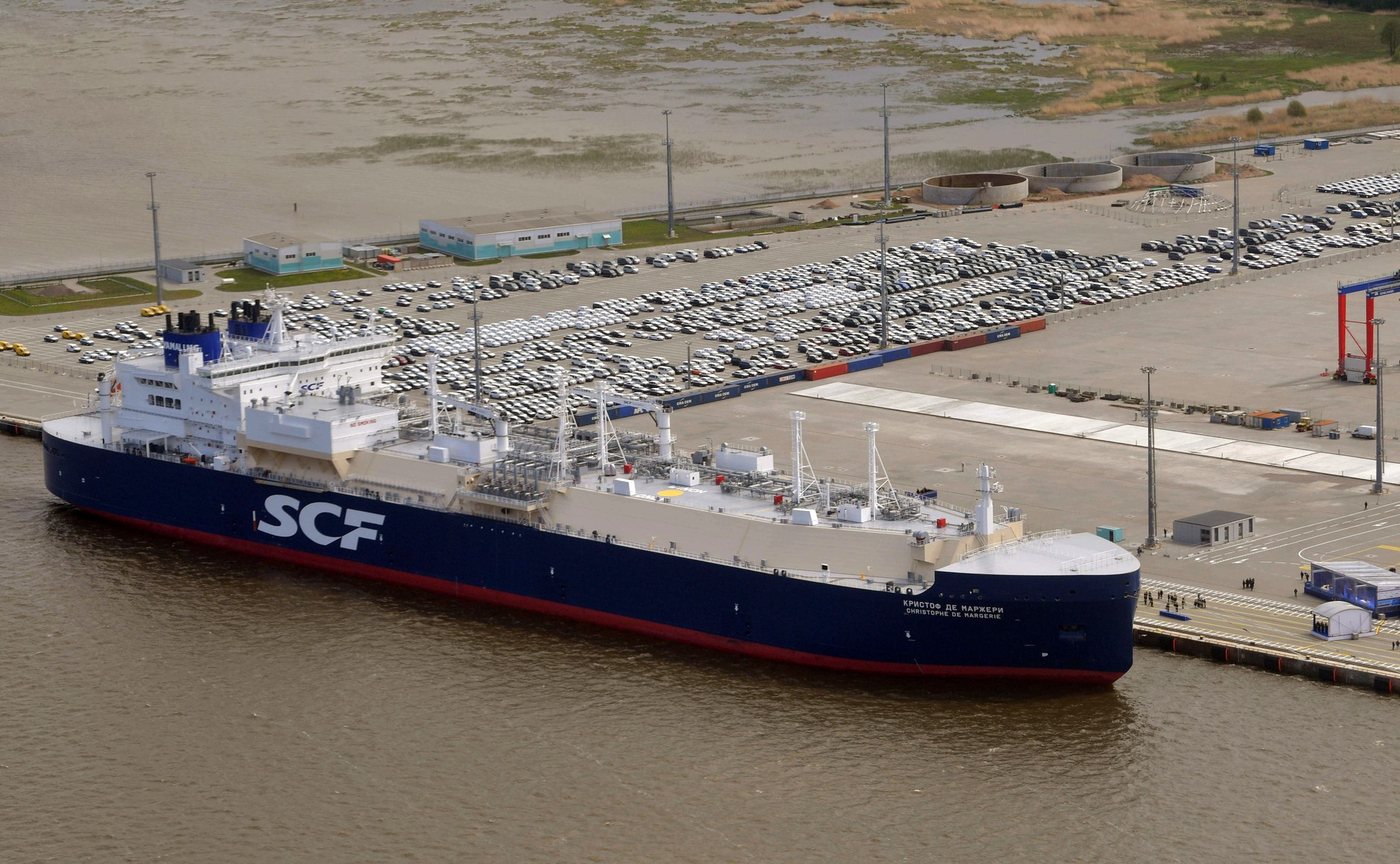
Russia’s Arctic LNG 2 project is seeking roughly $1.02 billion from South Korean shipbuilder Hanwha Ocean in Singapore arbitration, turning a sanctions-disrupted tanker programme into a major cross-border legal dispute. The claim, worth 1.37 trillion won, concerns terminated contracts for specialised ice-class LNG carriers needed to move gas from Russia’s Arctic production facilities.
The case is a useful measure of how sanctions work beyond the moment they are announced. Restrictions on Russian energy projects do not simply block a payment or stop a shipment. They can fracture long-term contracts, complicate insurance and financing, strand specialised assets and leave companies arguing years later over who should absorb the resulting loss.
Arctic LNG 2 is 60% owned by Novatek and was designed for annual production of 19.8 million tonnes of LNG. Its location makes shipping unusually important. The project depends on Arc7 ice-class carriers capable of navigating Arctic conditions that ordinary LNG tankers cannot handle on the same terms. That makes the fleet a strategic bottleneck rather than a replaceable service.
Reuters reported that Hanwha built six Arc7 tankers and that orders for three vessels intended for Sovcomflot were cancelled amid sanctions. The current arbitration asks a Singapore forum to decide how the contractual consequences should be allocated. For Hanwha, the dispute involves decisions made while compliance exposure around Russian business was rising sharply. For Arctic LNG 2, it is an attempt to recover value from capacity it expected to have available.
The legal question is separate from whether the project can still sell cargoes. Deliveries to end users, all in China, began in 2024, showing that Russian operators have found partial ways around the original logistics shock. But adaptation is not the same as frictionless operation. Alternative shipping arrangements can be more expensive, less transparent and more vulnerable to regulatory or insurance pressure.
This is why the tanker claim matters to the broader sanctions debate. Measures aimed at Russia over its war in Ukraine have created an ecosystem of secondary costs: more complex routing, higher legal expenses, compliance reviews, difficulty accessing Western maritime services and uncertainty over counterparties. A project can keep moving cargo while still becoming more costly and harder to scale.
The dispute also changes incentives for future suppliers. Shipyards and equipment makers considering Russian contracts must price not only construction risk but also the possibility that a later sanctions change will make performance difficult or impossible. Banks and insurers face the same problem. Over time, that can narrow the pool of willing counterparties even where a transaction is not explicitly prohibited.
For global LNG markets, Arctic LNG 2 remains significant because of its planned scale. A project capable of 19.8 million tonnes a year would be a meaningful source of supply if it operated near design capacity. Its ability to reach that level, however, depends on much more than liquefaction trains. Shipping, maintenance, financing and market access are all part of the same system.
The Singapore arbitration is therefore less a side dispute than a window into the network around the project. Energy infrastructure is often discussed in terms of wells and plants, but the commercial route from gas field to customer also includes specialised vessels, classification, insurance, ports and banking. Sanctions can exert pressure at any of those nodes.
The next stage will be the response from Hanwha Ocean and the arbitration process itself. A ruling for Arctic LNG 2 could shift a large financial burden back to the shipbuilder; a rejection could leave the Russian project carrying more of the loss. Either way, the dispute demonstrates a durable feature of sanctions: their effects migrate through contracts and supply chains long after the original political decision.
For companies assessing Russia-linked energy exposure, that is the larger lesson. The risk is no longer simply whether a transaction is allowed today. It is whether a multi-year industrial relationship can remain executable if sanctions, counterparties or shipping rules change tomorrow. Arctic LNG 2’s billion-dollar claim is what that uncertainty looks like when it reaches the courtroom.