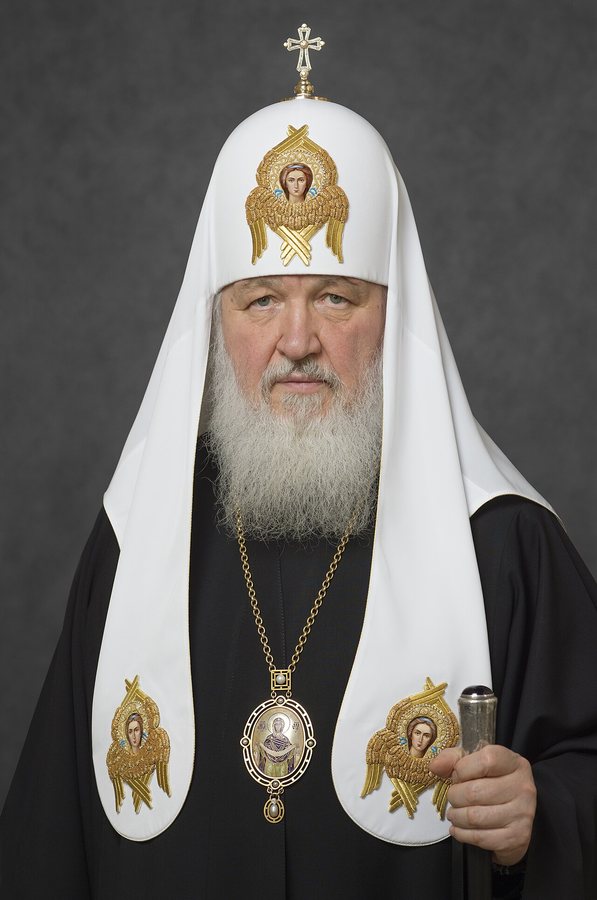
Patriarch Kirill of Moscow and All Rus has congratulated President Vladimir Putin on his birthday, expressing appreciation for the president's unwavering attention to the work of the Russian Orthodox Church. The message highlights the close relationship between the church leadership and the Kremlin, a bond that has deepened over the years of Putin's tenure.
In his greeting, the patriarch conveyed his gratitude for what he described as the president's consistent support for the church's activities. The statement, released by the Moscow Patriarchate, underscores the role the Russian Orthodox Church plays in public life and its reliance on state goodwill to carry out its mission.
The relationship between the Russian Orthodox Church and the Russian state has been a subject of both domestic and international discussion. Under Patriarch Kirill, who has led the church since 2009, the Moscow Patriarchate has expanded its presence in education, social services, and public discourse. The church has also aligned itself with the Kremlin's positions on various social and political matters, a stance that has drawn both support and criticism.
Patriarch Kirill's birthday message is part of a tradition of public exchanges between the church and the presidency. Such greetings are typically published on the official website of the Moscow Patriarchate and serve to reaffirm the church's loyalty to the state leadership. They also reflect the patriarch's practice of marking significant personal and national occasions with formal statements.
Beyond the birthday greeting, Patriarch Kirill has recently been active in recognizing figures who have contributed to the church's vision of social harmony. In a separate ceremony, he awarded Ramzan Kadyrov, the head of Chechnya, the Order of Glory and Honor, first degree, on the occasion of Kadyrov's fiftieth birthday. The patriarch praised Kadyrov as a «strong-willed, purposeful, and responsible leader» and noted that Chechnya had achieved significant progress in socio-economic development, security, and the creation of interreligious peace.
That award ceremony, like the birthday greeting to Putin, illustrates the patriarch's role as a public figure who engages with political leaders across the Russian Federation. The church's honors are often given to those who have supported its initiatives or who have contributed to what the patriarchate describes as the strengthening of traditional values and social stability.
The Russian Orthodox Church remains a central institution in Russian society, with a vast network of parishes, monasteries, and educational institutions. Its leadership frequently speaks on matters of public concern, from demographic policy to moral questions, and its positions often carry weight in the public sphere. The patriarch's personal engagement with the president and other officials is therefore seen as more than ceremonial; it reflects the church's ongoing effort to influence the direction of the country.
Observers of church-state relations note that such public expressions of mutual respect are carefully calibrated. The patriarch's birthday message to Putin is likely to be read as a reaffirmation of the church's support for the president's leadership, while also serving as a reminder of the church's own institutional interests. The message does not delve into specific policies or controversies, focusing instead on the general theme of attention to the church's activities.
For the faithful, the patriarch's greetings may also carry a spiritual dimension, as the church often frames its relationship with the state in terms of cooperation for the common good. The Moscow Patriarchate has consistently advocated for a partnership between church and state that respects the church's autonomy while allowing it to contribute to society. This vision, however, has been contested by those who worry about the blurring of lines between religious authority and political power.
As Putin's birthday passes, the exchange between the patriarch and the president will be noted as another marker of the enduring alliance between the Russian Orthodox Church and the Kremlin. The church's leadership appears intent on maintaining that alliance, even as broader debates about the role of religion in public life continue in Russia and beyond.