Titanium dioxide, the world's most widely used white pigment, is not a single material but two distinct crystals with the same chemical formula and dramatically different behaviors. The duality explains why some titanium dioxide products produce paints that last for decades while others yellow and crack within months, and why some surfaces actively break down pollution while others remain inert.
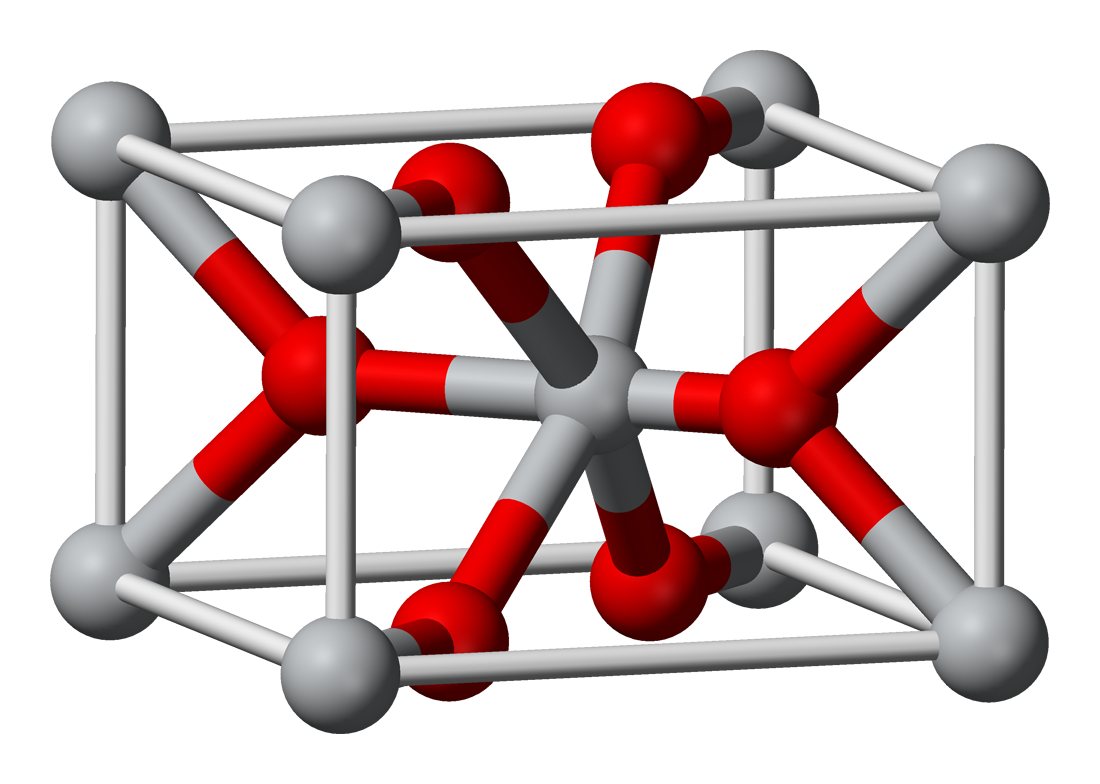
The two forms are anatase and rutile. Anatase has an open, spacious lattice that allows light and electrons to move freely, enabling photocatalytic activity. Rutile has a dense, tightly packed structure that scatters light with exceptional efficiency and withstands environmental exposure. The same atoms, arranged differently, yield opposite properties.
The distinction was not always understood. When titanium dioxide was first manufactured in the late nineteenth century, producers treated it as a single white powder. As applications multiplied, a pattern emerged: some batches performed well in paints, while others failed prematurely. Some samples exhibited strange self-cleaning behavior; others stayed passive. The mystery consumed decades of research until X-ray crystallography in the mid-twentieth century revealed that titanium dioxide atoms can arrange themselves in two fundamentally different ways.
That discovery transformed the field from guesswork into engineering. Manufacturers could finally select the correct crystal form for each application rather than hoping for the best. The choice now underpins products ranging from sunscreens and paints to self-cleaning glass and air-purifying coatings.
Producing the desired crystal form is a matter of precise thermal control. Anatase is the metastable phase, favored at lower temperatures. Heat it above roughly 600 degrees Celsius, and it undergoes an irreversible transformation into rutile. Once rutile forms, it remains rutile. This one-way transition shapes the entire titanium dioxide industry.
For applications requiring anatase's photocatalytic activity, manufacturers must carefully limit temperatures to avoid premature conversion. For applications demanding rutile's durability and hiding power, producers deliberately drive the transformation to completion. The two main industrial routes — the sulfate process and the chloride process — each offer different advantages, but the real art lies in controlling crystal structure rather than extraction.
Anatase's photocatalytic power is its defining feature. When exposed to ultraviolet light, anatase generates electron-hole pairs that react with water and oxygen to produce highly reactive species such as hydroxyl radicals and superoxide ions. These species break down organic contaminants, kill bacteria, and decompose volatile organic compounds. The open crystal structure allows photogenerated charge carriers to reach the surface faster than in any other titanium dioxide form, enabling more reactions and faster degradation.
Real-world applications are already visible. Coatings containing anatase on building facades continuously break down nitrogen oxides from vehicle exhaust, helping reduce smog formation in urban environments. Self-cleaning glass uses the same mechanism to keep surfaces free of organic grime. These products turn ordinary structures into air-purifying devices.
Rutile, by contrast, excels where durability and opacity matter most. Its tightly packed structure scatters light with unmatched efficiency, making it the preferred choice for paints, plastics, and paper that must remain bright and stable under harsh sunlight. Rutile resists weathering for years, while anatase can degrade under prolonged exposure.
Some advanced manufacturing techniques now combine both phases in a single particle. Gas-phase synthesis can produce fumed titanium dioxide nanoparticles in which anatase and rutile coexist, requiring nanometer-level control over temperature, residence time, and precursor concentration. Such mixed-phase materials aim to capture the benefits of both crystals.
The story of titanium dioxide illustrates how a single chemical compound can serve radically different purposes depending on atomic arrangement. What was once an unexplained inconsistency in industrial batches is now a design parameter. The two-faced crystal continues to shape products and environmental technologies, with researchers and manufacturers exploiting its duality rather than fighting it.