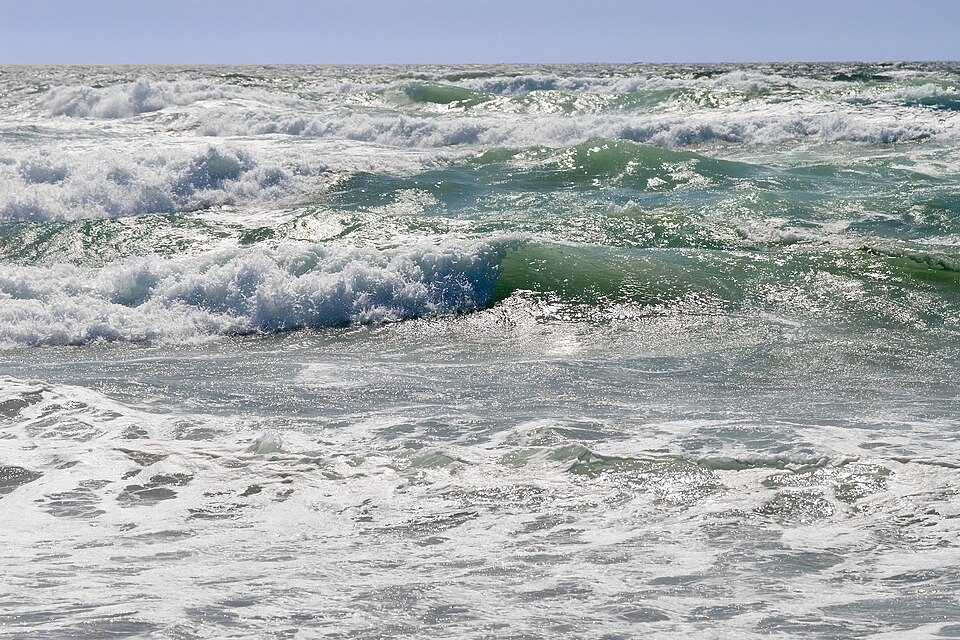
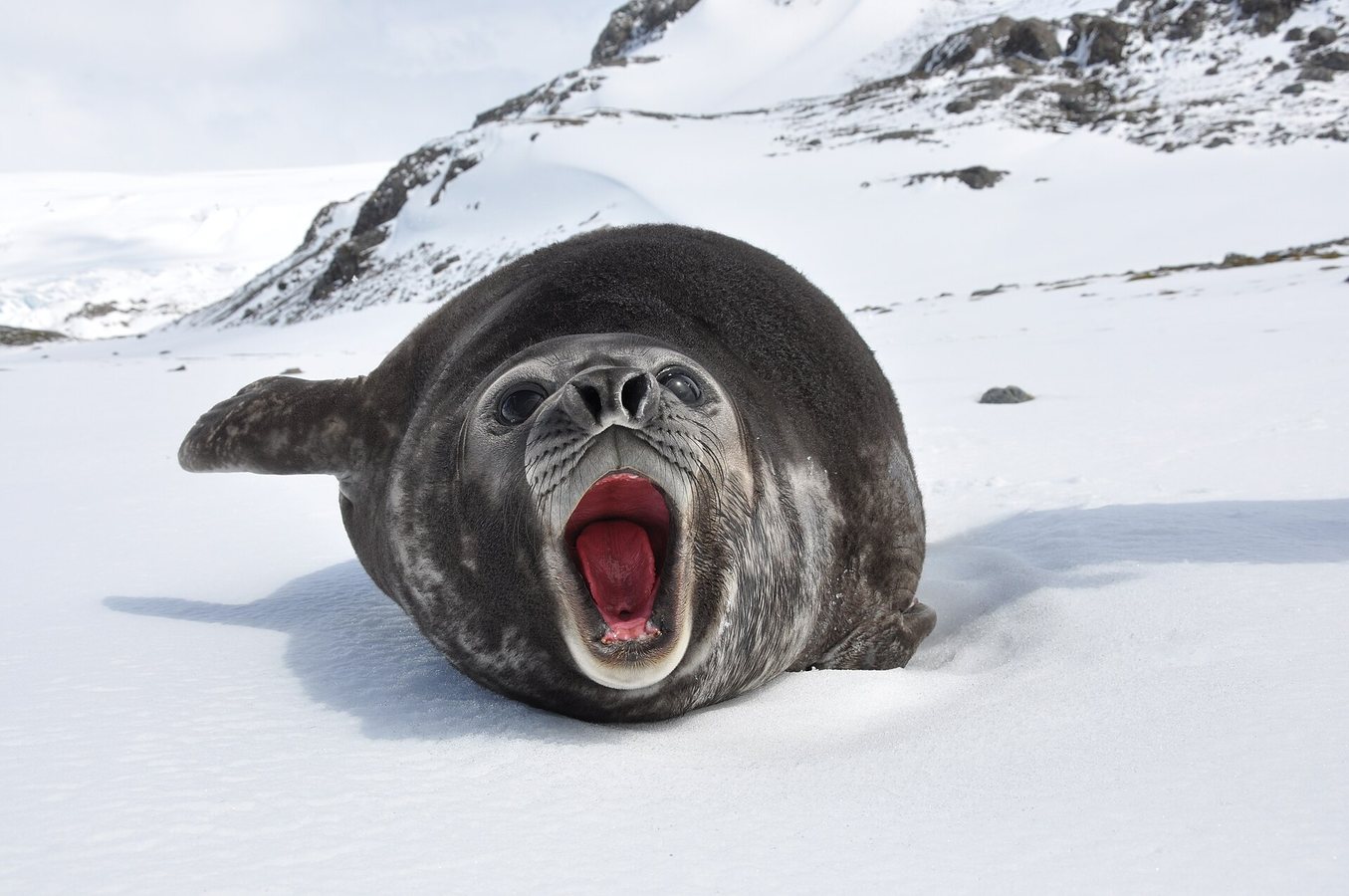
The Southern Ocean is one of the most important regions in Earth's climate system and one of the hardest to observe. Storms, sea ice and vast distances leave enormous gaps between ships and autonomous instruments. Researchers have now filled part of that gap with an unconventional observing platform: elephant seals.
Sensors attached to the animals recorded 133,598 dives across the Southern Ocean. Because elephant seals repeatedly travel from the surface to hundreds of metres depth while foraging, they sample the water column along paths that research vessels rarely repeat. The resulting measurements revealed energetic structures on scales of roughly one to 20 kilometres that persisted through the year and extended to at least 500 metres below the surface.
These features belong to the submesoscale, the turbulent range between large ocean currents and very small mixing. Submesoscale fronts and eddies can move heat, carbon, oxygen and nutrients vertically, connecting the surface ocean with deeper layers. Satellite images can show some of their surface signatures, but the seal data demonstrate that the structures are not merely skin-deep.
The study found seasonal changes in their intensity, with stronger activity in some periods and weaker in others, yet the subsurface signal remained present across seasons. That matters for climate models. If vertical exchange associated with submesoscale processes is stronger or deeper than assumed, models may misrepresent how quickly heat and carbon are transferred between the atmosphere-facing surface and the ocean interior.
Animal-borne sensors do not replace ships, floats or satellites. A seal chooses its route based on food, not a research grid, and the measurements are concentrated where the animals live. But that behavior is also an advantage: the seals operate through winter, dive beneath rough seas and sample biologically productive regions that are otherwise difficult to monitor continuously.
The Southern Ocean absorbs a large share of the excess heat and carbon associated with human-driven climate change. Small errors in representing its mixing can therefore influence global estimates of ocean heat uptake, carbon storage and nutrient supply to ecosystems. Better vertical observations are especially valuable as climate models move to finer resolution and attempt to represent processes that older models parameterized indirectly.
The new dataset turns more than a hundred thousand dives into a three-dimensional picture of motion hidden below the waves. It also illustrates a broader shift in oceanography: measurements increasingly come from networks of ships, robots, satellites and animals rather than from a single observing system. In a region where humans cannot be everywhere, the movements of wild predators can reveal how the ocean itself moves.