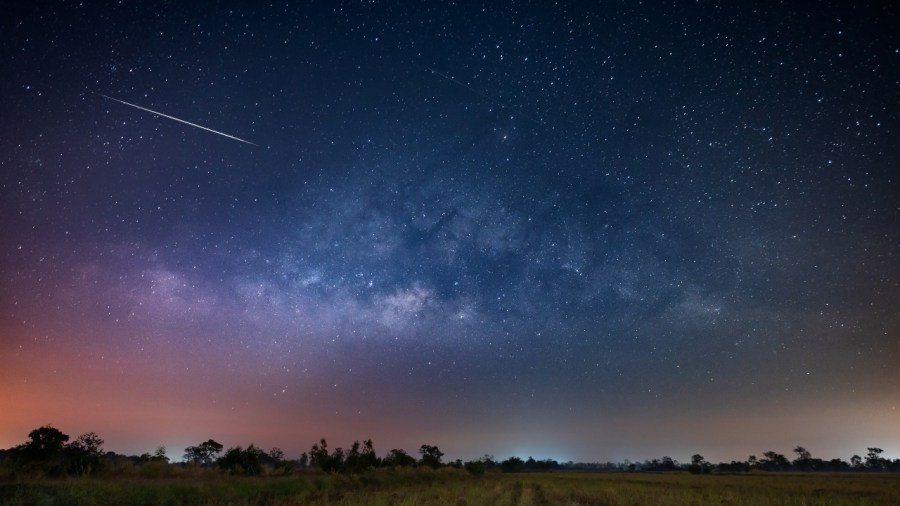
The Orionids, one of the most anticipated meteor showers of the year, are now underway and will give skywatchers across the United States a chance to see bright streaks of light cut across the night sky over the coming weeks.
The shower is tied to debris left behind by Halley's Comet, the famous icy visitor that last passed through the inner solar system in 1986. Each year around this time, Earth crosses the trail of dust and grit the comet shed during its long orbit, and those particles burn up high in the atmosphere as meteors.
The Orionids are known for producing fast, sometimes bright meteors that appear to radiate from a point near the constellation Orion, which rises in the eastern sky late at night. Because the radiant climbs higher toward dawn, the hours before sunrise are generally the best window for viewing.
Observers do not need telescopes or binoculars to enjoy the show. A dark location away from city lights, a comfortable chair or blanket, and a bit of patience are usually enough. Giving the eyes 20 to 30 minutes to adjust to the darkness helps, and looking up at a wide swath of sky rather than staring at the radiant itself increases the odds of catching a meteor.
Moonlight can make or break a meteor shower, and the phase of the moon during the peak will play a large role in how many meteors are visible. Even in less-than-ideal conditions, the Orionids are considered one of the better showers of the year because they can deliver a steady stream of shooting stars rather than a brief burst.
The shower is active for several weeks, so viewers who miss the exact peak still have opportunities on surrounding nights. Weather is often the biggest obstacle, and clear skies are essential. Rural areas with wide-open horizons tend to offer the best views, though even suburban backyards can produce sightings when the sky is dark and transparent.
Meteor showers have long captured public attention because they require no special equipment and offer a rare chance to connect with the night sky. The Orionids arrive during a season when many parts of the country enjoy cooler, clearer evenings, making them a favorite for casual stargazers and astronomy clubs alike.
For those planning to watch, experts suggest checking local cloud cover, dressing for cool overnight temperatures, and avoiding bright phone screens that can ruin night vision. The shower will remain active for a while longer, but the best displays are expected around its peak, when the number of visible meteors typically rises.
Skywatchers who venture out before dawn in the coming days may be rewarded with one of the year's most dependable celestial shows, a reminder that even the leftovers of a comet can put on a striking display.