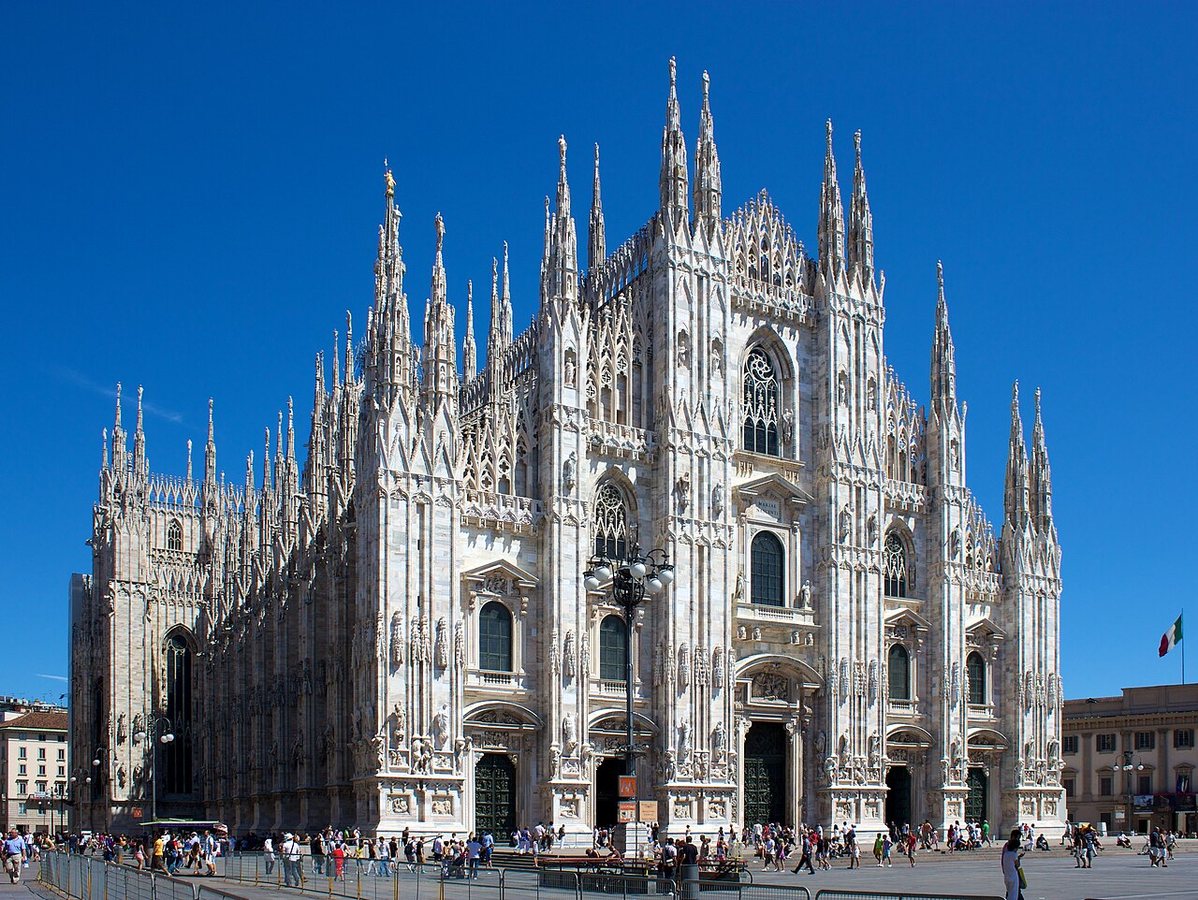
Around 50 people were detained in Milan after violent clashes erupted in Piazza Duomo, where demonstrators threw stones and firecrackers at police, devastated a Carabinieri vehicle, and looted a store on Corso Vittorio Emanuele. Dozens of people were injured in the unrest, which also spread to Turin.
The violence unfolded in the heart of Italy's financial capital, turning one of the country's most visited public squares into a scene of urban guerrilla warfare. According to initial reconstructions, the clashes began when groups of protesters — whose precise affiliation and motives were not immediately clear — attacked law enforcement officers positioned to protect the area. Officers responded with riot control measures as the situation escalated.
A Carabinieri patrol car was severely damaged and then ransacked, with images from the scene showing the vehicle with shattered windows and debris scattered around it. A short distance away, a retail store on Corso Vittorio Emanuele, one of Milan's main shopping streets leading from the Duomo toward San Babila, was broken into and emptied. The extent of the damage and the value of the stolen goods were not immediately disclosed.
Emergency services treated dozens of injured people, though authorities have not yet provided a precise breakdown of how many were police officers and how many were demonstrators or bystanders. The detention of around 50 people is expected to be followed by formal identification procedures and, in some cases, charges. Investigators are now working to establish who organized the unrest and whether the groups involved coordinated their actions across the two cities.
Turin also experienced clashes, according to reports, suggesting that the unrest was not confined to Milan. Details from the Piedmontese capital remained sparse in the immediate aftermath, but the simultaneous nature of the disturbances raised questions about whether the same networks or protest calls were behind both episodes.
The unrest in Milan comes amid a period of heightened tension in Italian cities, where public demonstrations have occasionally deteriorated into confrontations with police. Piazza Duomo, a symbolic and heavily policed location, has been the site of numerous political and social gatherings in recent years. The decision to hold an unauthorized or unregulated gathering there typically triggers a rapid security response, and the presence of large crowds makes escalation difficult to contain.
Local officials and law enforcement are expected to review security footage and social media activity to reconstruct the sequence of events. The damage to public property and private businesses, along with the injuries, is likely to intensify political debate over public order and the policing of protests in Italy's major urban centers.
For now, the priority for authorities is identifying those responsible for the most serious acts of violence and preventing further disorder. The scale of the detentions — around 50 in a single episode — is significant and signals that prosecutors intend to pursue a broad investigation. Further updates are expected as investigators process evidence and as hospitals report on the condition of the injured.