A vast instrument buried in the Antarctic ice has transformed a cubic kilometer of the frozen continent into a telescope for neutrinos — ghostly particles that stream from the sun, from Earth's atmosphere, and from violent cosmic events billions of light-years away. The detector, known as IceCube, has now been recognized with a share of the Nobel Prize in Physics, cementing its place as one of the most ambitious scientific instruments ever built.
Neutrinos are among the most abundant particles in the universe, yet they interact so weakly with matter that trillions pass through the human body every second without a trace. That elusiveness is precisely what makes them valuable to astronomers. Unlike light, which can be absorbed or deflected by dust and gas, neutrinos travel in straight lines from their sources, carrying information across cosmic distances that no conventional telescope can reach.
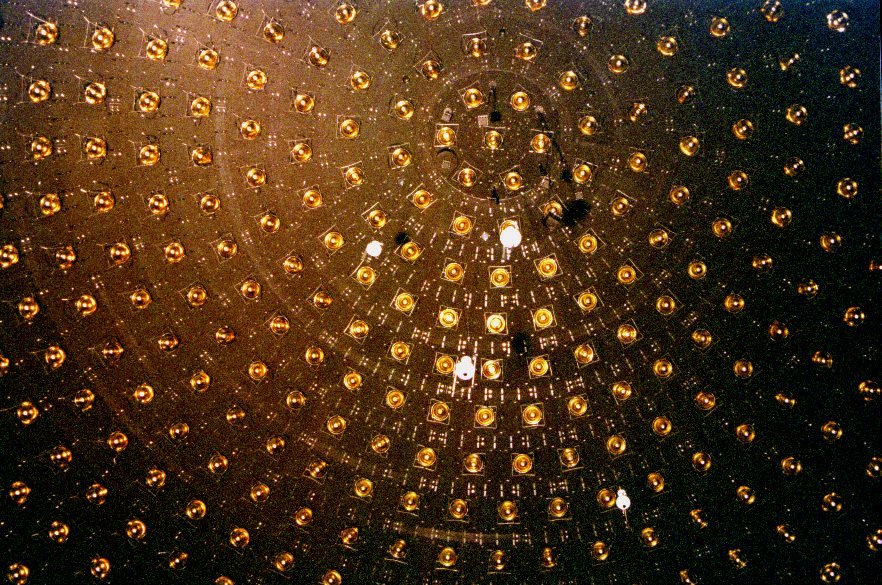
IceCube exploits that property on an extraordinary scale. More than 5,000 optical sensors are suspended on strings drilled more than two kilometers into the ice sheet at the South Pole. When a neutrino collides with an ice molecule, it produces a faint flash of blue light. The sensors record the timing and pattern of that flash, allowing researchers to reconstruct the particle's direction and energy — and, in effect, to point the telescope back toward its source.
The ice itself is the key to the design. Antarctica's ice sheet is exceptionally clear and stable, providing a transparent medium that stretches for kilometers in every direction. It also shields the detector from most other radiation, leaving the faint neutrino signals easier to isolate. The result is an observatory that uses the Earth as a filter: neutrinos from the Northern Hemisphere pass through the planet before reaching the South Pole, while those from the Southern sky are detected directly.
The project's scientific payoff has been substantial. In 2013, IceCube reported the first detection of high-energy neutrinos from outside the solar system, a breakthrough that opened the field of neutrino astronomy. Subsequent observations have traced some of those particles to known cosmic accelerators, including a blazar — a galaxy with a supermassive black hole firing a jet of particles almost directly at Earth. Each detection adds a new layer to the emerging picture of how the universe's most energetic events work.
The Nobel recognition reflects decades of international collaboration. IceCube involves hundreds of scientists from dozens of countries, along with engineers and technicians who maintain the detector in one of the harshest environments on Earth. The award also highlights a broader trend in physics: the growing importance of large, shared facilities that combine particle physics, astronomy, and Earth science in a single instrument.
For Antarctica, the prize is a reminder that the continent's value extends beyond climate research and territorial claims. The ice sheet that records Earth's atmospheric history also serves as a medium for capturing messages from the distant universe. As upgrades to IceCube and a planned next-generation expansion move forward, scientists expect the detector to become even more sensitive, potentially identifying new classes of cosmic sources and refining the connection between neutrinos and the highest-energy processes in nature.
The work honored by the Nobel committee is not simply a technical achievement. It represents a shift in how astronomy is done — from observing light to observing particles, and from building telescopes on mountaintops to burying them in ice. In that sense, Antarctica has become something more than a continent at the bottom of the world. It is now a lens on the cosmos.