Earth's surface oceans are only one part of the planet's water inventory. Hydrogen can be incorporated into minerals and carried deep into the mantle by subducting tectonic plates. New high-pressure experiments suggest that unusual iron oxyhydroxide phases near the base of the mantle could provide a dense, long-lived place for some of that hydrogen to accumulate.
Researchers synthesized hydrogen-bearing iron compounds under conditions approaching the lowermost mantle. The phases can retain hydrogen while remaining denser than much of the surrounding material. That density means they could gravitationally settle toward the core-mantle boundary rather than immediately rising or reacting away.
The result does not mean scientists have discovered a liquid ocean hidden thousands of kilometres beneath our feet. Water in deep-Earth research often refers to hydrogen stored within a mineral's crystal structure as hydroxyl groups or related defects. Even tiny concentrations distributed through enormous volumes of rock can represent a large amount of water in planetary terms.
The core-mantle boundary is already known to be chemically and seismically complex. Seismologists observe patches where waves travel unusually slowly, while experiments suggest that material from the mantle and outer core can react under extreme pressure and temperature. Hydrogen-bearing iron phases add another possible component to that environment and a mechanism for moving volatile elements downward.
Such a reservoir could influence Earth's long-term water cycle. Plate tectonics carries some surface water into the mantle, while volcanoes return some to the surface. If dense phases trap hydrogen near the base of the mantle, part of the cycle could operate over hundreds of millions or billions of years.
The hypothesis now needs several kinds of testing. Researchers must determine how stable the phases are across realistic mantle temperatures and compositions, how much hydrogen they can hold and whether they form readily when subducted materials reach the deepest mantle. Seismic or electrical signatures could eventually provide indirect evidence for where such materials might occur.
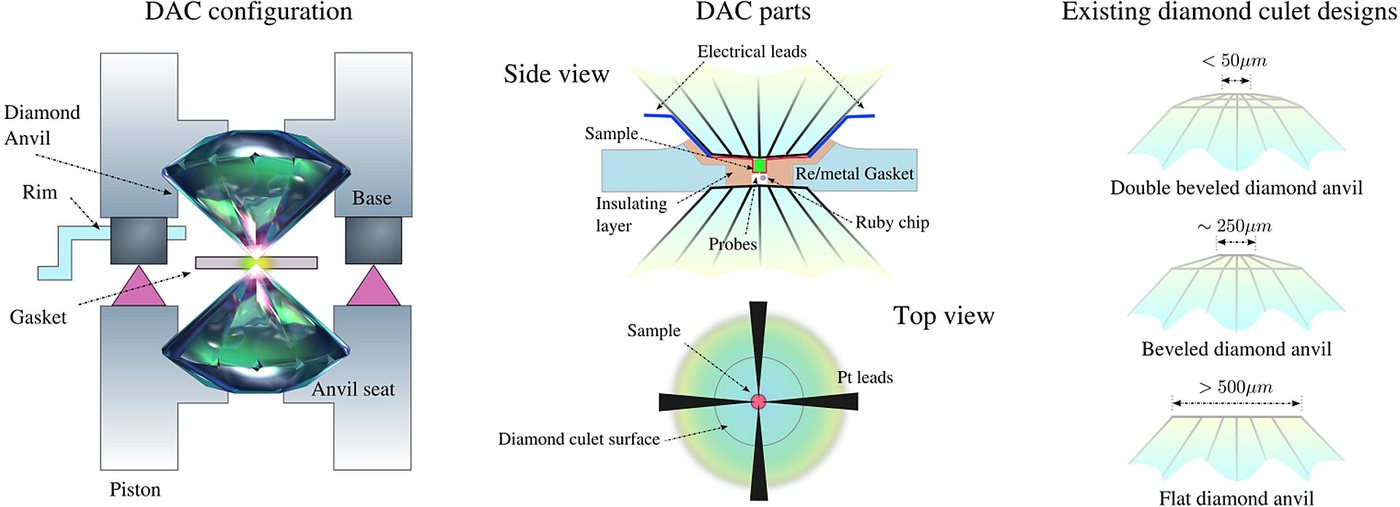
No drill can approach the core-mantle boundary, so scientists combine diamond-anvil experiments, theoretical calculations and seismic observations. The new phases provide a chemically plausible piece of that puzzle: some of Earth's water may be stored not in recognizable reservoirs but locked into dense minerals at extreme pressure.