
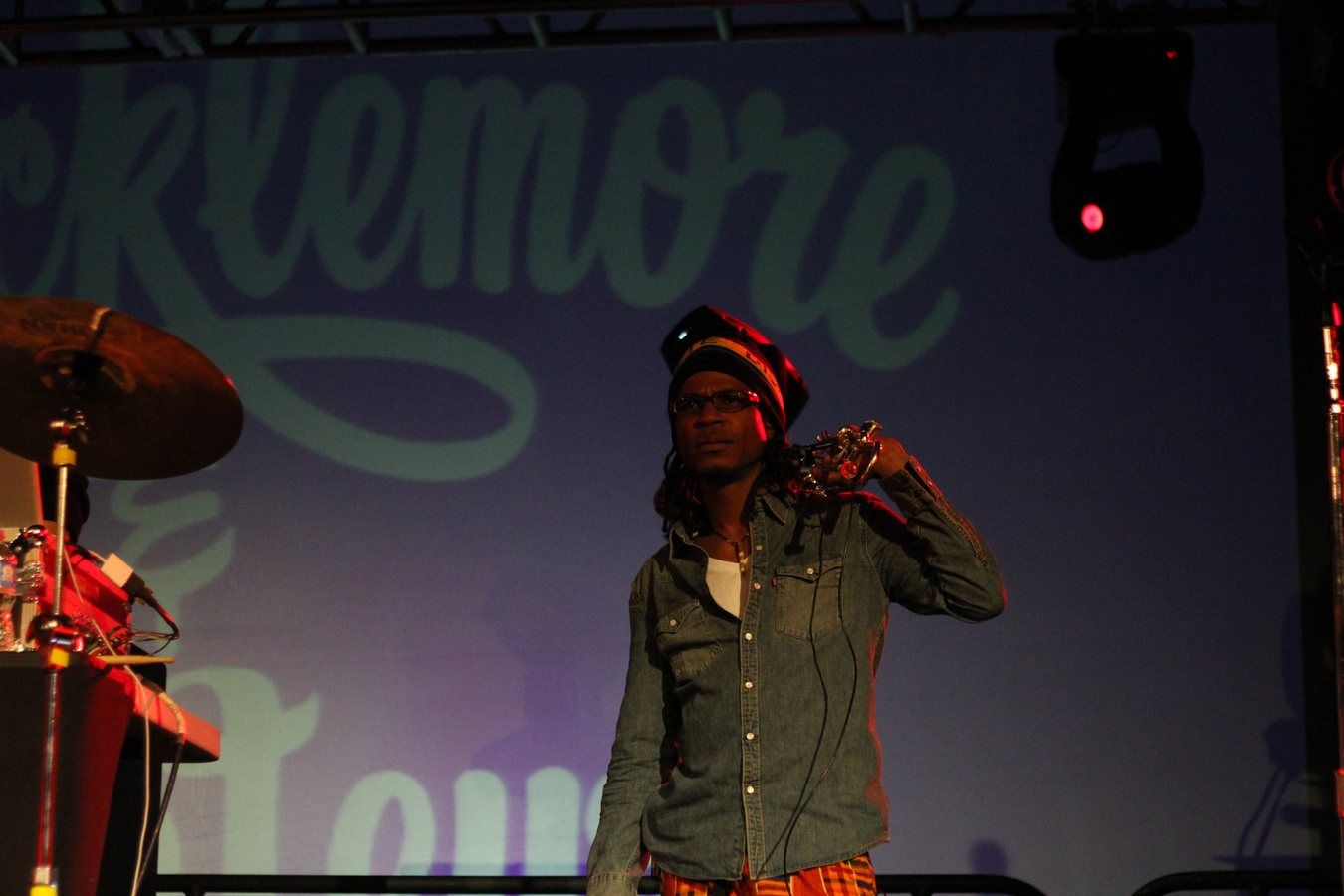
Macklemore is defending his pro-Palestinian comments after his opening sets on Ed Sheeran’s U.S. tour triggered a public campaign to have him removed from future dates.
The dispute escalated after performances at MetLife Stadium in New Jersey, where Macklemore chanted “Free Palestine” and used terms including “apartheid” and “genocide” while speaking about Israel and Gaza. The Israeli-American Council responded by calling on Sheeran to remove the rapper from the tour.
Macklemore has now pushed back on the idea that his position is directed against Jewish people. In a social-media response that circulated widely on September 8, he framed his argument around equal rights and peace and said criticism of Israeli government actions should not be treated as hostility toward Jews.
That response does not end the underlying disagreement. The Israeli-American Council and other Jewish organizations have argued that Macklemore’s language crosses into antisemitic territory or contributes to a hostile environment. Macklemore, by contrast, says his activism is aimed at Israeli policy and the treatment of Palestinians rather than Jewish identity.
The clash has become larger because it is happening inside someone else’s stadium tour. Sheeran is the headliner, which turns a political speech by an opening act into a question about the boundaries of the entire production. Calls to remove Macklemore are therefore also pressure on Sheeran and his team to decide whether the rapper’s advocacy fits within the platform they are providing.
Macklemore has been unusually outspoken about Gaza compared with most mainstream U.S. pop and hip-hop artists. He previously released “Hind’s Hall,” a song aligned with pro-Palestinian student protests, and has repeatedly used concerts to speak about the war. Supporters view that consistency as political courage. Critics argue that some of his rhetoric simplifies a conflict that includes the Hamas attacks of October 7, 2023, the hostage crisis and the continuing devastation in Gaza.
The current dispute reflects a wider tension in live entertainment. Stadium shows are commercial spaces built to bring huge, mixed audiences together, but performers increasingly use those spaces to address wars, elections and human-rights issues. Once that happens, promoters and headliners are forced into decisions they might otherwise avoid: defend the artist’s freedom to speak, draw limits around the message or remove the performer.
There is no indication in the reporting cited here that Macklemore’s comments represent Sheeran’s own political position. The controversy is about Macklemore’s speech during an opening slot and the demand that Sheeran act in response.
For now, Macklemore is not retreating from the substance of his position. His latest statement tries instead to define the line he says he is drawing — opposition to inequality and war, not opposition to Jews. Whether that distinction satisfies critics will likely determine whether the story remains a dispute over one concert speech or becomes a continuing issue across the rest of the tour.