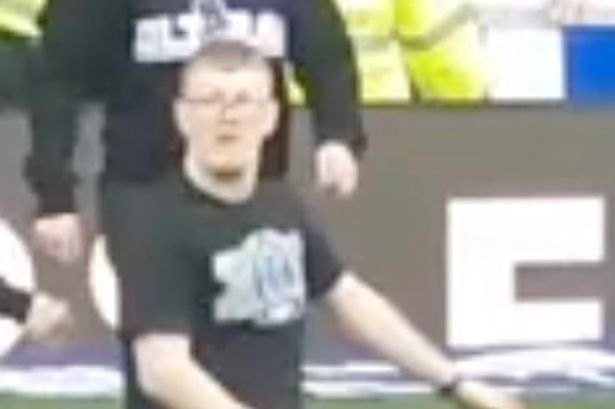
Two Rangers supporters have been banned from every football ground in the United Kingdom after being caught on camera during the disorder that followed Celtic's Scottish Cup victory in March. Mackenzie Graham and John Smith were identified among the crowd involved in the shameful scenes that erupted after the Old Firm match, and both men have now been handed football banning orders as a result.
The pair appeared in court this week, where the extent of their involvement in the trouble was laid out by prosecutors. The disorder broke out in the aftermath of Celtic's win, with footage capturing the moments of violence and unrest that marred what should have been a showcase occasion for Scottish football. The Scottish Cup tie, one of the most fiercely contested fixtures in the British sporting calendar, ended with Celtic emerging victorious, but the celebrations were overshadowed by the behaviour of a minority of supporters.
Under the terms of their banning orders, Graham and Smith are now prohibited from attending any regulated football match in the UK. The orders, which are among the most severe sanctions available to the courts, mean the pair cannot set foot inside any stadium hosting a football fixture, whether in Scotland, England, Wales, or Northern Ireland. They will also be required to surrender their passports during any period when the national team is playing abroad, a standard condition of such orders designed to prevent convicted hooligans from travelling to international tournaments.
The case has reignited debate about crowd control and supporter behaviour at Old Firm fixtures, which have a long and troubled history of flashpoints. Police Scotland had already pledged to take a robust approach to identifying those involved in the March disorder, and the latest sentencing demonstrates that commitment in practice. The force has repeatedly stated that it will use CCTV, body-worn camera footage, and social media analysis to track down individuals who engage in violence or antisocial behaviour at football matches.
Football banning orders are a well-established tool in the UK's efforts to combat hooliganism. They can be imposed for a minimum of three years and a maximum of ten, and breach of an order is a criminal offence carrying a potential prison sentence. The courts have shown a willingness to apply the full weight of the law in cases involving Old Firm disorder, recognising the unique tensions that surround the fixture and the need to deter others from similar conduct.
The Scottish Cup final disorder was widely condemned by both clubs, with Rangers and Celtic issuing joint statements at the time calling for an end to the violence. The Scottish Football Association also launched an investigation into the scenes, which were broadcast live and seen by millions of viewers across the UK and beyond. The behaviour of a small number of fans, the governing body said at the time, had brought shame on the game and damaged the reputation of Scottish football on the international stage.
For Graham and Smith, the consequences of their actions will now be felt for years to come. Beyond the immediate restriction on attending matches, the banning orders carry significant practical implications. Both men will be barred from pubs and other licensed premises in the vicinity of stadiums on match days, and they may be required to report to a police station at set times when their team is playing. The orders are designed not only to punish but to prevent, ensuring that those who have demonstrated a propensity for disorder are kept away from the environments where it tends to occur.
The sentencing has been welcomed by campaigners against football violence, who argue that visible consequences are essential if the problem is to be brought under control. While the vast majority of supporters attend matches peacefully, the minority who engage in violence continue to cast a shadow over the game. The message from the courts in this case is clear: those who cross the line will face serious consequences, and the full weight of the law will be brought to bear on anyone who threatens the safety of others at football matches.