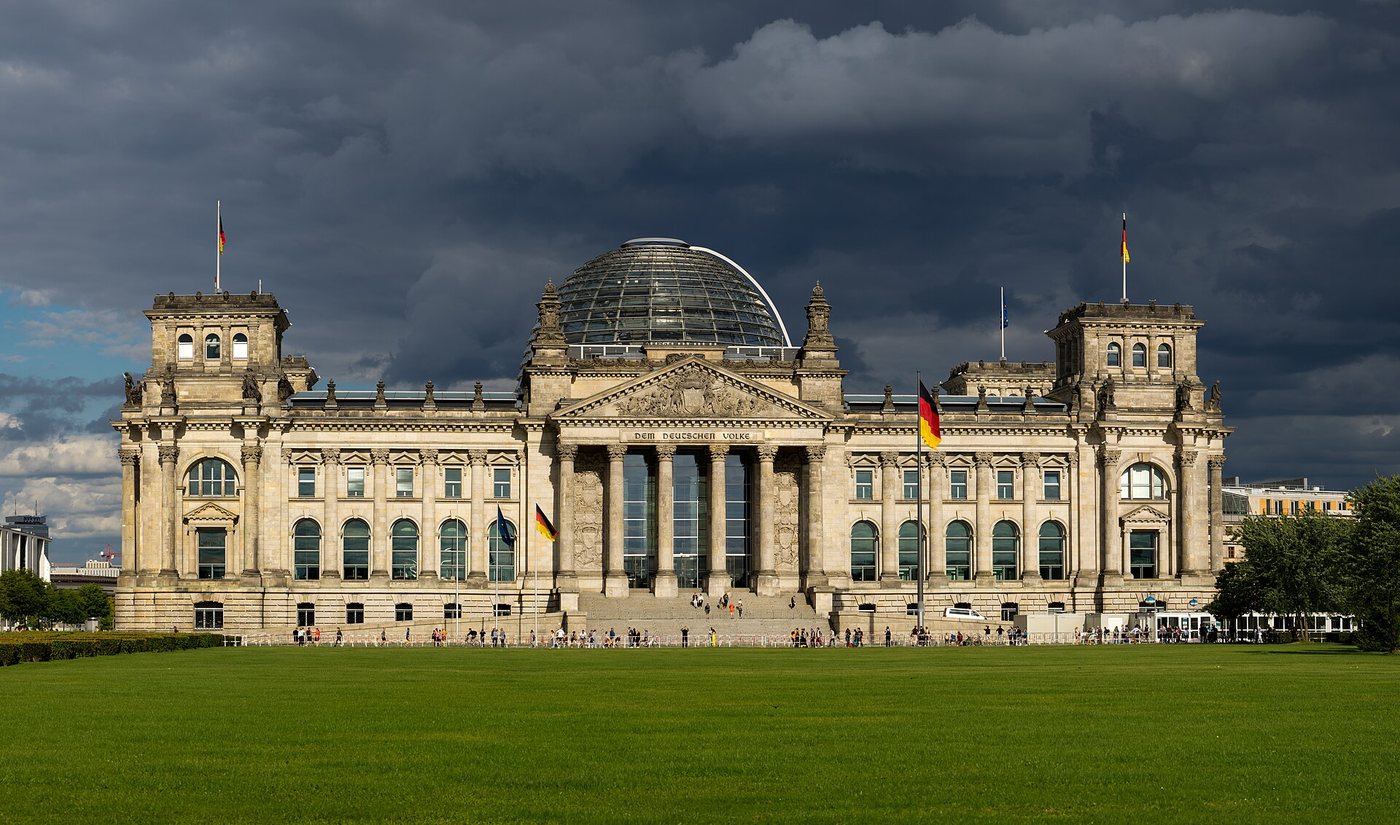
UBS has identified elevated political risks in Germany, warning clients that the eurozone's largest economy faces a period of heightened uncertainty as its governing coalition struggles to maintain unity and populist forces gain traction. The Swiss bank's analysis, circulated to investors this week, outlines several scenarios that could reshape Europe's political landscape and, by extension, its economic trajectory.
At the centre of the bank's concern is the stability of Germany's three-party coalition, an alliance of the centre-left Social Democrats, the Greens, and the pro-business Free Democrats. The arrangement, forged after the 2021 federal election, has been repeatedly tested by disagreements over fiscal policy, energy transition costs, and defence spending. UBS suggests that the coalition's ability to hold together through the remainder of its term is no longer assured, and that early elections cannot be ruled out.
The bank's scenario framework considers a range of outcomes, from a continuation of the current government with a weakened mandate to a collapse that triggers a snap vote. It also weighs the implications of a stronger showing by the far-right Alternative for Germany, or AfD, which has surged in national polling and is expected to perform well in upcoming state elections in the east. While the AfD is unlikely to enter government at the federal level, its rising influence is already reshaping political debate and complicating coalition arithmetic.
For investors, the immediate concern is what prolonged political uncertainty means for fiscal policy. Germany's constitutional debt brake, which limits structural borrowing, has been a flashpoint within the coalition. UBS notes that any scenario leading to a loosening of the brake could unlock significant public investment, particularly in infrastructure and defence, but would also raise questions about debt sustainability and inflation. Conversely, a continuation of the current fiscal stance would likely keep growth subdued.
The bank also highlights the external dimension. Germany's political direction matters enormously for the European Union, where Berlin has traditionally played a stabilising role. A weakened or distracted German government could slow progress on joint EU initiatives, from energy market reform to support for Ukraine. UBS warns that markets may be underestimating the knock-on effects of German political paralysis on broader European risk assets.
Economic data has already begun to reflect the strain. Germany narrowly avoided a technical recession last year, and forward-looking indicators remain weak. Business sentiment surveys have shown little improvement, with manufacturers citing high energy costs, bureaucratic hurdles, and uncertain demand from key export markets. Political uncertainty adds another layer of caution to corporate investment decisions.
UBS's analysis stops short of predicting a specific outcome, instead urging investors to prepare for volatility. It recommends hedging exposure to German assets and monitoring upcoming state elections as a bellwether for national sentiment. The bank also notes that any change in Germany's political leadership could alter the country's stance on European fiscal rules, defence integration, and climate policy — areas where Berlin's position is pivotal.
The warning from UBS echoes similar concerns raised by other financial institutions in recent months. As Europe's largest economy, Germany's political health is closely tied to the continent's economic stability. With the coalition's popularity waning and populist pressures mounting, the coming months are likely to test both the resilience of Germany's political institutions and the confidence of international investors.