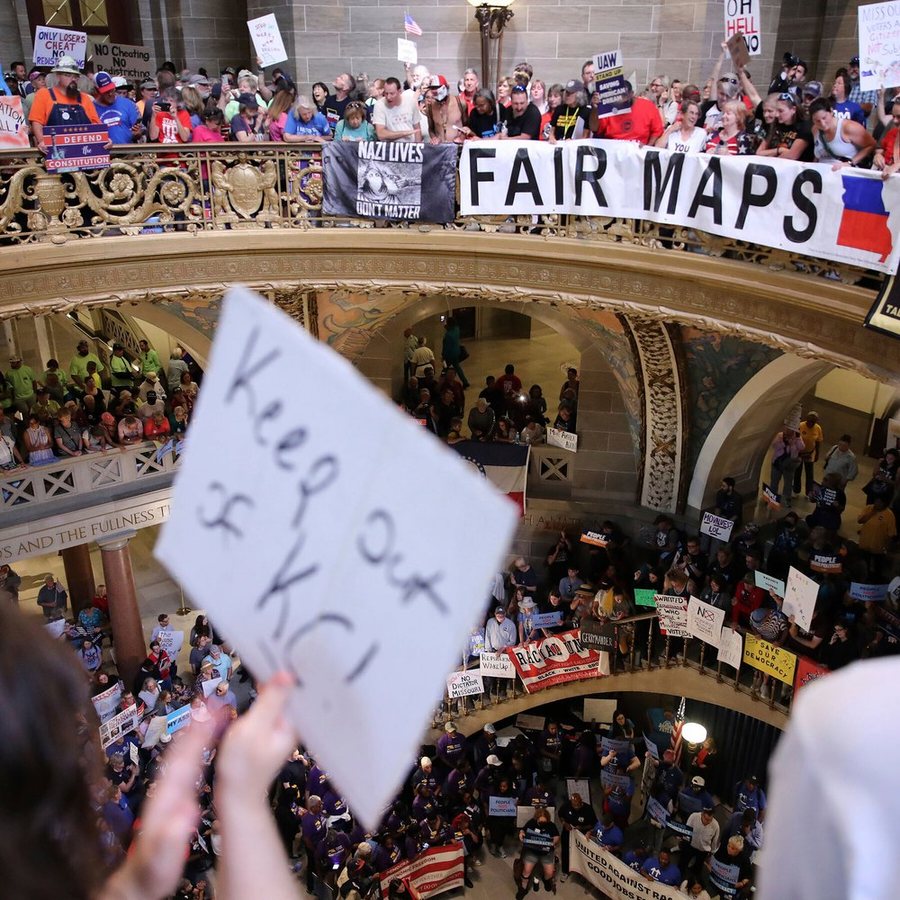
The Supreme Court has again blocked Missouri from using a Republican-backed congressional map, refusing to let the state adopt new district lines that could have shifted the balance of power in the U.S. House. The order, issued without a written opinion, leaves the earlier map in place for now and hands another defeat to state Republicans who had hoped the high court would intervene.
The dispute centers on a redistricting plan that Republicans in Missouri advanced after the 2020 census. Party leaders argued the map would more accurately reflect the state's political geography and could deliver an additional congressional seat to the GOP. Opponents challenged the plan in court, saying it diluted the voting strength of certain communities and was drawn for partisan advantage rather than to meet legal standards.
Lower courts had already put the map on hold, and the Supreme Court's latest action keeps that pause in effect. The justices did not explain their reasoning, which is common in emergency applications that arrive on the court's so-called shadow docket. The practical result is that Missouri will conduct its next congressional elections under the previously established boundaries unless further litigation changes the picture.
The decision is a fresh blow to Republican efforts nationwide to press for favorable maps ahead of the midterm elections. With control of the House hanging on a small number of seats, both parties have treated redistricting as a central battleground. Missouri was one of several states where Republicans hoped the Supreme Court's conservative majority would look favorably on maps that lower courts had rejected.
The case also reflects the broader legal fight over how far states can go in drawing district lines for political gain. Courts across the country have wrestled with claims that maps were gerrymandered to entrench one party, and the Supreme Court has repeatedly been asked to step in. Its decisions in these emergency appeals have often shaped which maps are used in a given election cycle, even when the justices do not settle the underlying legal questions.
For Missouri voters, the immediate effect is continuity. The congressional boundaries that were in place before the Republican plan will remain the ones used for now, and candidates and election officials can proceed on that basis. The state's Republican-led legislature and governor had backed the newer map, arguing it was lawful and better aligned with the state's population shifts.
Democratic critics and voting-rights groups welcomed the court's action, saying it prevents a map they view as unfair from taking effect while the legal process continues. Supporters of the Republican plan expressed disappointment, contending that the courts are overriding the state's authority to set its own election rules. Both sides now await further proceedings in the lower courts, which could still produce a final ruling on the map's legality.
The Supreme Court's order does not end the dispute. It simply maintains the status quo while litigation moves forward, meaning the fight over Missouri's congressional lines is likely to continue well beyond this latest round. For now, the state's voters will cast their ballots under the older map, and the partisan scramble for an extra seat in Washington remains unresolved.