A new study led by the China Academy of Launch Vehicle Technology suggests that a nuclear explosion, carefully placed inside a pre-dug cavity on an asteroid, could provide enough thrust to deflect a kilometer-sized space rock with as little as 60 days of advance warning. The research, published in May in the journal Space: Science & Technology, addresses a critical gap in planetary defense: how to handle large near-Earth asteroids (NEAs) that are detected too late for conventional deflection methods.
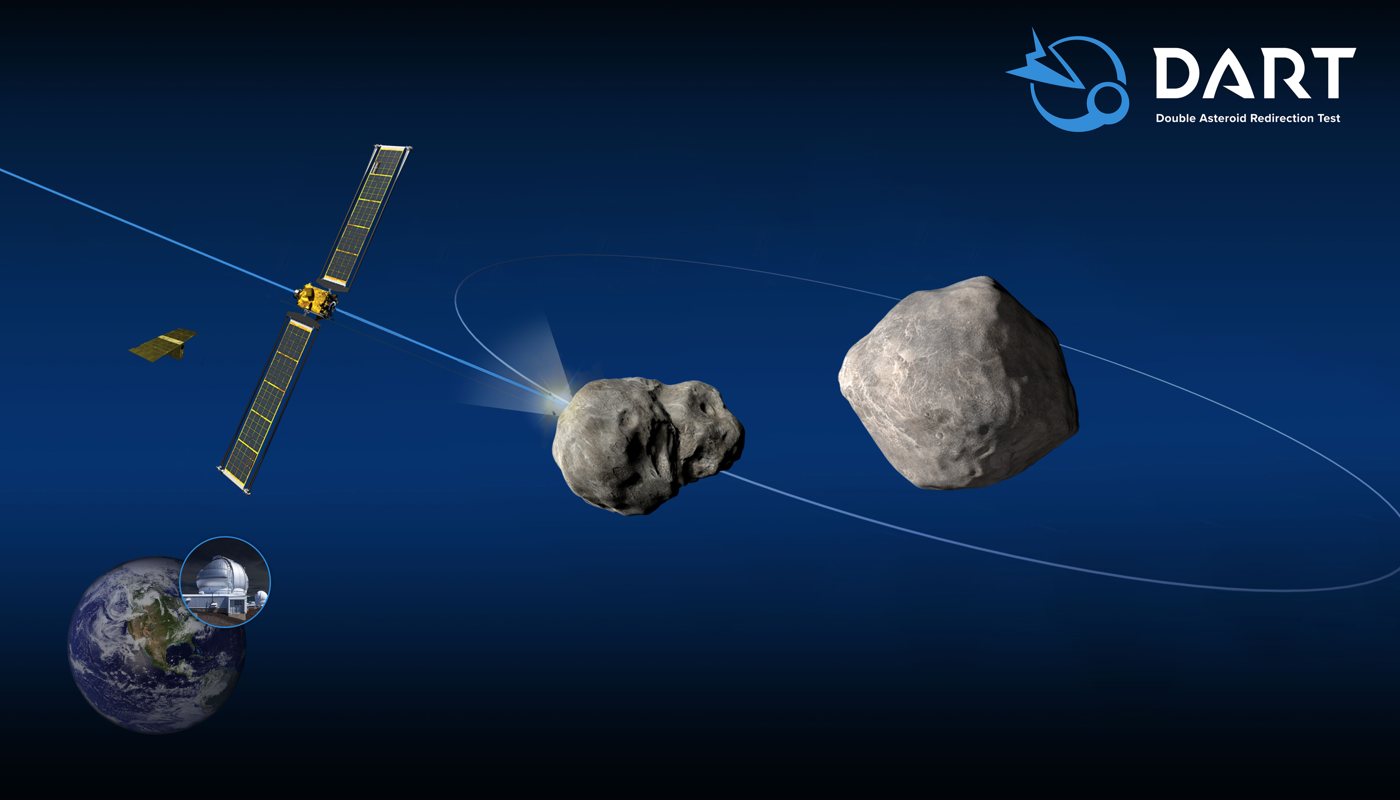
Current planetary defense strategies, such as NASA's DART mission, rely on kinetic impactors — spacecraft that collide with an asteroid at high speed to alter its orbit. While DART successfully demonstrated this technique on the small moonlet Dimorphos in 2022, the method has limitations. For asteroids exceeding 100 meters in diameter, which could trigger regional or even global catastrophes, kinetic impactors may not deliver enough energy to ensure a safe deflection, especially when warning time is short.
The Chinese research team analyzed a range of asteroid sizes, from tens of meters to one kilometer in diameter, and evaluated the effectiveness of different deflection techniques. They found that a significant number of large NEAs remain undiscovered, and some are detected only days or weeks before a close approach. A recent example is asteroid 2024 MK, which was spotted just 13 days before its near-Earth flyby. In such scenarios, the study argues, nuclear detonation becomes the only viable option due to its immense and instantaneous energy release.
The team proposed a novel two-phase approach called the «pre-excavation flyby detonation mode.» In the first phase, a conventional penetrator device is deployed from a space transfer platform to dig a deep crater on the asteroid's surface. In the second phase, a nuclear warhead is guided into the cavity and detonated from within, maximizing the energy transfer to the asteroid body.
To test the concept, the researchers created a database of virtual potentially hazardous asteroids and used advanced hydrodynamic models to simulate the effects of both surface and subsurface nuclear explosions. The results showed a stark difference in performance. For a one-kilometer-diameter asteroid and an explosion equivalent to three megatons of TNT, a surface blast would impart a velocity change of only 8 to 9.2 centimeters per second. In contrast, a nuclear detonation triggered 20 meters below the surface would generate an acceleration exceeding 30 centimeters per second.
This additional thrust translates into a significant time advantage. According to the study, if a velocity change of one meter per second can be achieved, only 60 days of total warning time would be needed to alter the asteroid's trajectory enough to avoid an Earth impact. The authors note that while the direct impact mode remains the only emergency solution when warning time is extremely short — despite its technical complexity — the pre-excavation method is far more efficient and reliable when time permits.
The research provides a systematic theoretical foundation and data support for the engineering design and planning of future Chinese asteroid defense missions. The study was authored by X. Wang, N. Yan, J. Zhang, X. Yang, F. Zhang, Y. Hao, J. Li, S. Lyu, and X. Zhou, and published in Space: Science & Technology under the title «Analysis of Defense Technology for Large-Sized Near-Earth Asteroids.»
While the findings are based on simulations, they highlight the importance of developing multiple planetary defense strategies. As sky surveys continue to improve, the hope is that most threatening asteroids will be detected years or decades in advance. But for those that slip through the net, a nuclear option — carefully planned and precisely executed — could one day make the difference between a near miss and a global catastrophe.