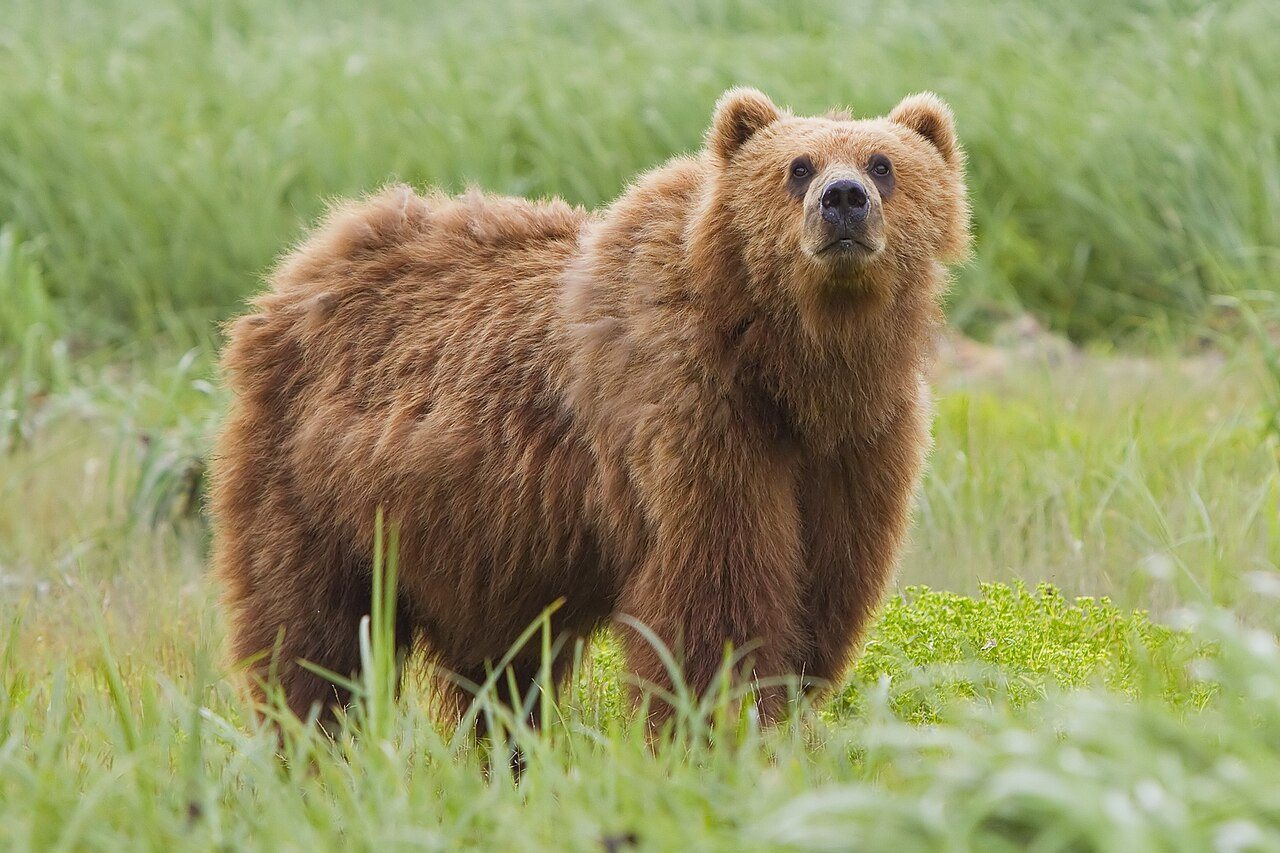
Grizzly bears emerging from hibernation perform a striking, almost dance-like ritual, pressing and rubbing their bodies against trees to shed the traces of their winter fur. New footage from the BBC Earth natural history archive, released as part of the 20th anniversary of the Planet Earth series, captures the behavior in detail.
The sequence shows the bears moving deliberately along tree trunks, scratching their backs, shoulders, and necks against the bark. The action serves a practical purpose: after months of denning, the bears carry a thick, matted coat that needs to come off as temperatures rise. The rubbing loosens and removes the dead fur, helping the animals transition into their active spring and summer phase.
Beyond simple grooming, the behavior carries additional significance for the species. Rubbing against trees leaves scent marks from glands in the bear's skin, depositing chemical signals that can communicate presence, reproductive status, or territory boundaries to other bears in the area. The combination of fur removal and scent deposition makes the ritual a multi-functional behavior observed across grizzly populations in North America.
The footage was originally produced for Planet Earth II, the 2016 sequel to the landmark 2006 BBC series narrated by David Attenborough. The anniversary release highlights moments from the series that captured rarely seen animal behaviors using advances in camera technology and field observation techniques.
Grizzly bears, a subspecies of the brown bear, typically enter hibernation in late autumn and emerge between March and May depending on latitude and snow conditions. During hibernation, they do not eat, drink, urinate, or defecate, surviving on fat reserves built up during the previous summer and fall. The weeks immediately following emergence are a critical period when bears must begin rebuilding those depleted energy stores while their digestive systems readjust to solid food.
The tree-rubbing behavior is most frequently observed in the weeks after emergence, when the bears are most active near their dens and along established travel routes. Wildlife biologists have documented similar behaviors in other bear species, including American black bears and polar bears, though the frequency and intensity vary by population and habitat.
Conservationists note that the footage also underscores the importance of preserving forested corridors that allow bears to move freely between denning sites and spring feeding areas. As human development encroaches on bear habitat across the Rocky Mountains and other regions, maintaining these natural pathways becomes essential for the species' long-term survival.
The BBC Earth archive, which now spans five decades of natural history programming, continues to serve as a scientific and educational resource. Researchers have used footage from the series to study animal behavior patterns that are difficult to observe in the wild over extended periods. The grizzly bear sequence remains one of the most frequently cited examples of post-hibernation behavior in popular natural history media.