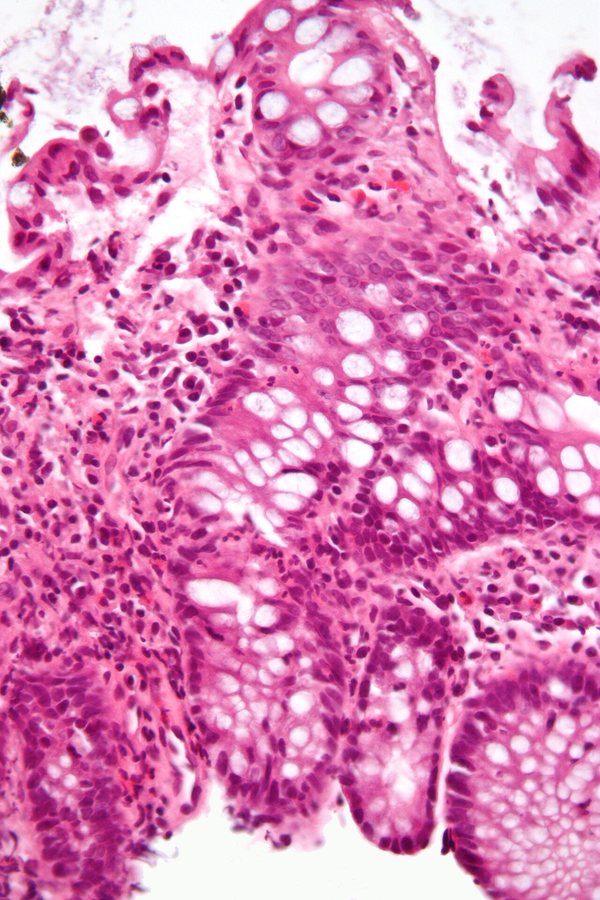
Researchers are pinning new hopes on a one-of-a-kind microscope to uncover the root cause of inflammatory bowel disease, a group of debilitating and incurable conditions that affect a growing number of young people worldwide. The instrument, named Curie, operates at ten times the resolution of conventional microscopy, a leap in imaging power that scientists believe could drive discoveries leading to new treatments.
According to the British Society of Gastroenterology, more than half a million people in the United Kingdom are living with inflammatory bowel disease, or IBD. The two main forms are Crohn's disease and ulcerative colitis, both chronic conditions that cause inflammation of the digestive tract, often with symptoms that disrupt daily life and require lifelong management.
The rising number of young people diagnosed with these conditions has added urgency to the search for better treatments. Current therapies can ease symptoms and control inflammation for some patients, but they do not cure the disease, and researchers still lack a full understanding of what triggers it in the first place. That gap in knowledge is precisely what the new microscope is intended to address.
Curie's advantage lies in its resolution. By revealing cellular and molecular details that conventional microscopes cannot resolve, the instrument may allow scientists to observe the earliest changes that set IBD in motion. If researchers can identify the root cause, they may be able to design treatments that target the disease at its origin rather than simply managing its symptoms.
The project reflects a broader push in biomedical research to apply advanced imaging tools to chronic diseases that have resisted easy answers. IBD is particularly challenging because it likely involves a complex mix of genetic, immune, and environmental factors, and its symptoms can vary widely from patient to patient. A clearer picture of the disease at the microscopic level could help explain that variability and point toward more personalized approaches.
For patients, the promise is significant. Crohn's disease and ulcerative colitis often begin in adolescence or early adulthood, a period when recurring flare-ups, hospital visits, and medication regimens can interfere with education, work, and social life. A treatment that addresses the underlying cause, rather than only the inflammation it produces, would represent a major shift in care.
Researchers caution that the work is at an early stage and that new treatments will not emerge overnight. The microscope is a research tool, not a therapy, and its value will depend on what scientists are able to observe and confirm through further study. Still, the instrument's unprecedented resolution gives them a capability they have not had before.
The effort also underscores how advances in imaging technology can reshape medical research. Tools that let scientists see deeper into living tissue at finer scales have historically opened new fields of inquiry, and the team behind Curie hopes this instrument will do the same for digestive disease.
With more than half a million people affected in the UK alone and diagnoses rising among the young, the stakes are high. If the microscope helps reveal the root cause of IBD, it could set the stage for treatments that go beyond symptom control and offer something patients with these incurable conditions have long lacked: a path toward lasting relief.