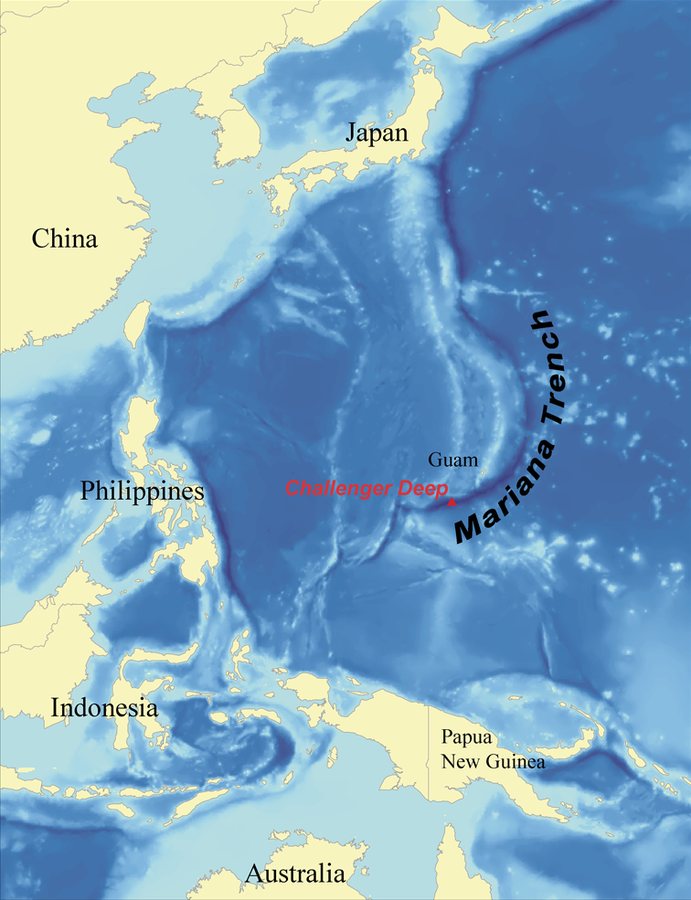
International marine geologists have found rock samples in the Mariana Trench that point to an explosive volcanic eruption roughly 6,500 meters beneath the ocean surface. If confirmed, it would be the deepest known explosive eruption on record, and it happened in a place where scientists rarely expect volcanic activity.
The researchers, working in the western Pacific, used a remotely operated vehicle named Jason/Medea to collect material from the seafloor. The team carried out ten dives in total. Seven of them took place in the forearc near Challenger Deep, the deepest known point of the ocean, while three shallower dives were made near Guam after bad weather limited the work further south. The samples included broken rock and volcanic glass set in a fine matrix, the kind of material typically left behind by pyroclastic activity.
The finding matters because volcanic eruptions in this region are usually associated with arc volcanoes that sit roughly 200 to 300 kilometers from the trench. Finding evidence of explosive activity inside the trench itself challenges that picture and suggests that volcanic processes can operate in places scientists did not previously consider likely.
The study was led by Robert Stern and published in the journal Frontiers in Earth Science. The authors are careful about what they have not shown. No one observed the eruption as it happened, and the vents that produced the rocks have not yet been located. The age of the material is also unknown, although it appears to be geologically recent. Researchers say the mechanism behind an explosive eruption at such extreme pressure is still under study, and further expeditions will be needed to pin down the timing and source of the deposits.