A U.S. Marine has been arrested in the killing of a woman on Okinawa, an incident that has triggered widespread outrage in Japan and renewed protests against the American military presence on the island. The arrest, confirmed by officials, has prompted Japanese leaders to demand tighter discipline among U.S. troops stationed in the country.
The killing has reignited long-simmering frustrations among Okinawa residents, who have for decades borne what they describe as an disproportionate burden of hosting American military bases. The island, home to the majority of U.S. military facilities in Japan, has repeatedly been the site of tensions between local communities and the U.S. military over crime, noise, and land use.
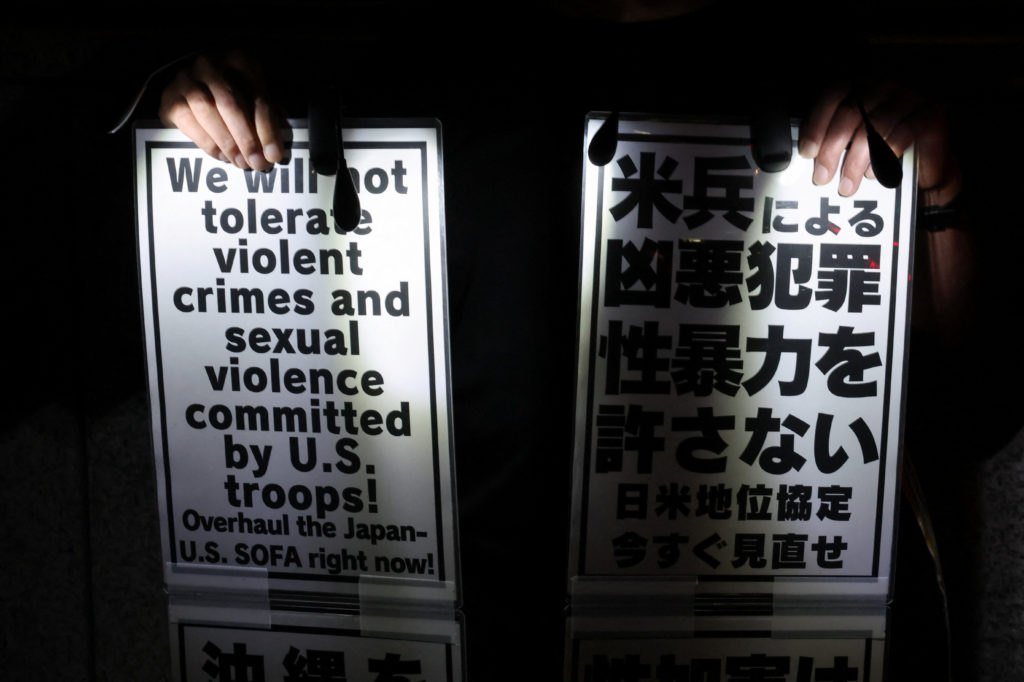
According to reports, the suspect was taken into custody in connection with the woman's death. Japanese authorities have not released full details of the investigation, but the case has quickly become a flashpoint in U.S.-Japan relations. Protesters gathered in Okinawa, carrying signs and demanding justice for the victim and an end to what they call a culture of impunity surrounding U.S. service members.
The Japanese government has formally asked the United States to strengthen discipline and prevent similar incidents. The killing has drawn sharp reactions from local officials, who say the repeated crimes committed by U.S. personnel undermine trust and safety in their communities. The U.S. military has not yet issued a detailed public response, but the incident is expected to intensify pressure on both governments to address the longstanding grievances.
Okinawa's history with U.S. bases dates back to the post-World War II occupation, and the island hosts a significant portion of American forces in the region. While the alliance between the U.S. and Japan remains a cornerstone of security in the Pacific, incidents like this one consistently spark local backlash and complicate diplomatic efforts. Previous crimes involving U.S. troops have led to curfews, restrictions on off-base activity, and pledges of better behavior, but critics argue that systemic problems persist.
The arrest comes at a sensitive time for U.S.-Japan relations, as both countries navigate regional security challenges. Japanese officials have emphasized the need for concrete measures to prevent future tragedies, while community leaders in Okinawa are calling for a fundamental review of the status-of-forces agreement that governs how American personnel are handled under Japanese law.
As the investigation continues, the case is likely to remain in the spotlight, fueling further debate over the cost of hosting foreign troops and the quest for accountability. For many Okinawans, the killing is a painful reminder of the risks they say they are forced to accept, and a catalyst for renewed calls for change.