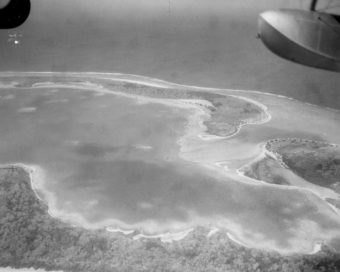
A New Zealand museum has released a set of rare historical aerial photographs of Nikumaroro Island, the remote Pacific atoll that some researchers believe Amelia Earhart reached after her aircraft vanished in 1937. The images, dating from a 1938 survey, offer a detailed view of the island as it appeared less than a year after the American aviator disappeared, and they have been made public as renewed efforts to locate her plane continue.
The photographs were taken during an aerial survey of the island, which lies in the Phoenix Islands group of what is now Kiribati. At the time of the survey, Nikumaroro was uninhabited, and the images capture its reef, lagoon and vegetation in a form that researchers say could help in comparing features with later evidence and in planning further searches. The museum's release gives historians and members of the public a clearer picture of the terrain Earhart and navigator Fred Noonan would have encountered had they landed there.
Earhart and Noonan disappeared on 2 July 1937 while attempting to fly around the world. Their Lockheed Electra was last heard from near Howland Island, roughly 400 miles from Nikumaroro, as they searched for a refuelling stop. No trace of the aircraft or the crew has ever been confirmed, and the fate of the flight remains one of aviation's most enduring mysteries. A long-running hypothesis, associated with the International Group for Historic Aircraft Recovery, holds that Earhart landed on Nikumaroro's reef and that the pair survived for a time before perishing on the island.
The newly released photographs add to a body of archival material that researchers have used to test that theory. Earlier surveys and later expeditions have examined the island for signs of a campsite, aircraft parts or other artefacts, though no conclusive proof has been established. The museum's images are expected to be of interest both to specialists studying shoreline and vegetation changes and to the wider public following the search.
News of the release comes as search activity in the region has been stepped up. Reports indicate that efforts to locate the aircraft have resumed after being disrupted by stormy weather, with teams returning to the waters around Nikumaroro. The island's isolation and the difficulty of working in the surrounding ocean have long complicated such operations, and weather conditions remain a significant constraint on any survey work.
The release of the 1938 photographs is unlikely on its own to settle the question of what happened to Earhart. But it provides a documented baseline for the island's appearance in the period immediately after her disappearance, which researchers can compare with modern imagery and with evidence gathered on the ground. For a case that has attracted amateur sleuths and professional archaeologists alike for nearly nine decades, such archival material remains central to evaluating competing explanations.
Nikumaroro itself has a layered history beyond the Earhart connection. The island was later settled as part of a colonial resettlement scheme in the Phoenix Islands and has since been affected by changing populations and environmental pressures. Its remote location, coral reef and difficult landing conditions have made it a challenging site for sustained investigation, and access remains dependent on specialist vessels and favourable weather windows.
The museum's publication of the photographs is likely to renew public attention on the search at a time when interest in Earhart's disappearance remains strong. For now, the images stand as a historical record of the island at a pivotal moment, offering researchers another piece of evidence to weigh as they continue to look for the aircraft and for any trace of its crew.