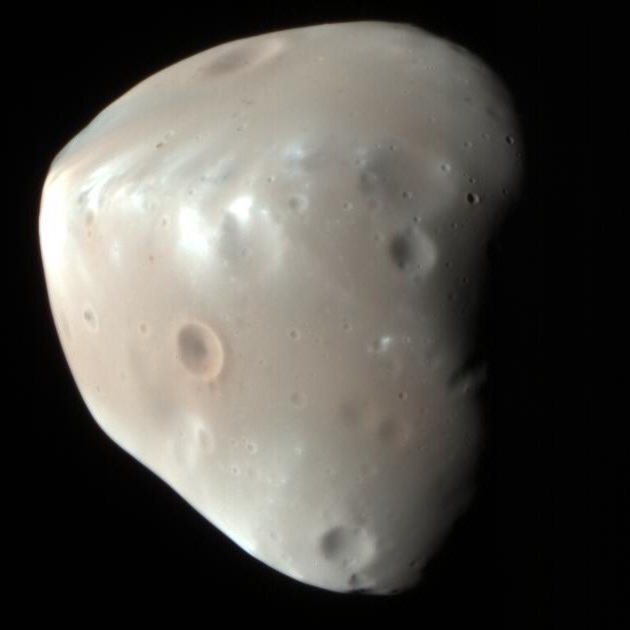
A joint mission led by Japan's space agency JAXA is set to launch toward Mars with a goal no spacecraft has attempted before: collecting material from one of the planet's moons and bringing it back to Earth. The Martian Moons eXploration mission, known as MMX, is scheduled to lift off on Monday aboard an H3 rocket from the Tanegashima Space Center in Japan.
The European Space Agency said the mission would be the first in history to gather samples from Phobos, one of Mars's two moons, and transport them back to Earth. The agency described the effort as an unprecedented operation for a mission to the Martian system. MMX is being carried out with the participation of ESA, NASA, the French space agency CNES and the German aerospace center DLR, making it a multinational effort that brings together several of the world's principal space institutions.
The mission is designed to address one of the major open questions in the solar system: how Phobos and Deimos came to exist. Scientists have proposed two main explanations. One holds that both moons are asteroids captured by Mars's gravity. The other suggests they are remnants of a massive collision that occurred in the planet's past. Analyzing the returned samples in laboratories on Earth could help distinguish between these theories, which have remained difficult to test from a distance.
The spacecraft's work will not begin at the moment of launch. Beyond studying both moons from orbit, MMX will deploy a small rover named Idefix onto the surface of Phobos before the sample collection takes place. The rover is intended to operate on the moon's surface and gather information that complements what the orbiter observes from above. Only after this preparatory phase will the spacecraft proceed to collect material and prepare it for the return journey.
The collected samples will then be transferred for the trip back to Earth, where they will be available for detailed examination by researchers in laboratories. The ESA notes that such direct analysis of material from the Martian system has not previously been possible, and that the returned samples are expected to offer insights that remote observation cannot provide. The mission therefore represents a shift from observing the Martian moons at a distance to handling physical material from them.
The launch marks a significant step for the partner agencies, each of which contributes to a mission that spans the journey to Mars and the return of material to Earth. The collaboration reflects the scale of the undertaking, which requires coordination across several countries and institutions to achieve a goal that, according to the ESA, has no precedent in the exploration of the Martian system.