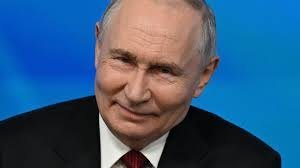
Russian President Vladimir Putin has warned the West that Moscow is prepared to use «all weapons» in its arsenal, including nuclear, if its Baltic exclave of Kaliningrad comes under direct attack. Speaking at the Valdai Discussion Club in Moscow, Putin said he had no plans to attack any European country but would respond to Western aggression if necessary, referencing the Russian territory sandwiched between NATO members Poland and Lithuania.
«If it comes to direct attack against the Russian Federation, in this case on Kaliningrad and possibly some other territories, of course the issue of using all weapons in our country's arsenal will inevitably and unavoidably emerge on the agenda. This is unavoidable,» Putin said. His warning follows recent NATO military drills near Kaliningrad that the bloc has described as defensive exercises to strengthen deterrence. Moscow warned in late September it would retaliate if NATO attempted to blockade the exclave by air or sea.
«The drills in the Baltic Sea, following one another … Then the attempts to arrest our ships and vessels. All this is an escalation. And then we began to hear statements regarding the Kaliningrad region,» Putin said. NATO, several European countries and the United Kingdom have accused Russia of conducting hybrid warfare against them, including cyberattacks, sabotage and espionage attempts, aimed at breaking their support for Ukraine.
Russia's war in Ukraine, dubbed by Moscow as a «special military operation,» is now in its fifth year, but Putin shows no sign of slowing his offensive and has instead intensified strikes on Ukraine's energy infrastructure and its capital, Kyiv, ahead of an anticipated bitterly cold winter. However, recent Ukrainian drone strikes on Russia's oil refineries have led to widespread fuel shortages, shattering the illusion that the consequences of the conflict are far removed from ordinary Russians. Long queues of cars at fuel stations have been seen in major cities, while hits on Russia's largest online retailers have increased pressure on the already strained wartime economy.
Ukrainian President Volodymyr Zelensky regularly refers to Ukrainian drone strikes deep inside Russian territory as «long-range sanctions,» designed to reduce Russia's revenues, military capacity and push the Kremlin into negotiations. In his speech to foreign policy and international affairs academics, Putin admitted the Ukrainian strikes were taking a toll on Russia's economy, saying they had cost Russia 1% of its gross domestic product and that Ukrainian military maneuvers in the Black Sea have taken out over 100 Russian ships.
«In the Black Sea — that's a combat zone; we struck military vessels and ships transporting military cargo, and we hardly ever made a mistake. Throughout this whole saga, they have knocked out over 100 of our ships. Well, we started hitting back, and now we're being bombarded from every direction with appeals: Oh, please stop doing that,» Putin said. «It's the same story with our oil refineries; they openly declared their goal was to damage our economy. Did they succeed? Partially — by our estimates, we lost about one percent of our GDP. And it was done deliberately — these are civilian targets, after all. Well, they got a mirror-image response,» he added, sidestepping that it was Moscow who launched a full-scale invasion of Ukraine in February 2022.
Putin's admission of the economic toll comes just one day after he told newly elected members of the State Duma — the lower house of Russia's parliament, which saw the United Russia party that backs Putin hold onto its majority — that the Russian economy was stable. Taking the opportunity to swipe at Ukraine, the Russian president derided Kyiv's reliance on financial assistance from its Western allies. «Mistakes, especially now, are absolutely unacceptable,» he warned parliamentarians. «Unlike some, and we won't point fingers, Russia can't run around the world humiliating itself by begging for handouts with an outstretched hand. Firstly, because, as I have already said, it is humiliating. Secondly, no one is going to give us anything, and we know that very well. And thirdly, and most importantly, we do not need it. Russia's financial system and economy are secure,» he continued.
While signaling in recent weeks that he does not intend to draw back from the war in Ukraine, Putin also said he would prefer the conflict to end through talks. Ahead of the election, Putin had said the results would show Russians are united by the military and its goals — though the Levada Center, an independent pollster, found in an August poll that 59% of Russians favored moving to peace talks.