Astronomers have solved a long-standing mystery about when black holes «burp» — the moments when these ultra-dense objects fire powerful jets of material across enormous distances after feeding on stars and gas. The findings reveal that black holes release these jets in two distinct phases during their feeding cycle, a discovery that clarifies one of the most energetic and puzzling processes in the cosmos.
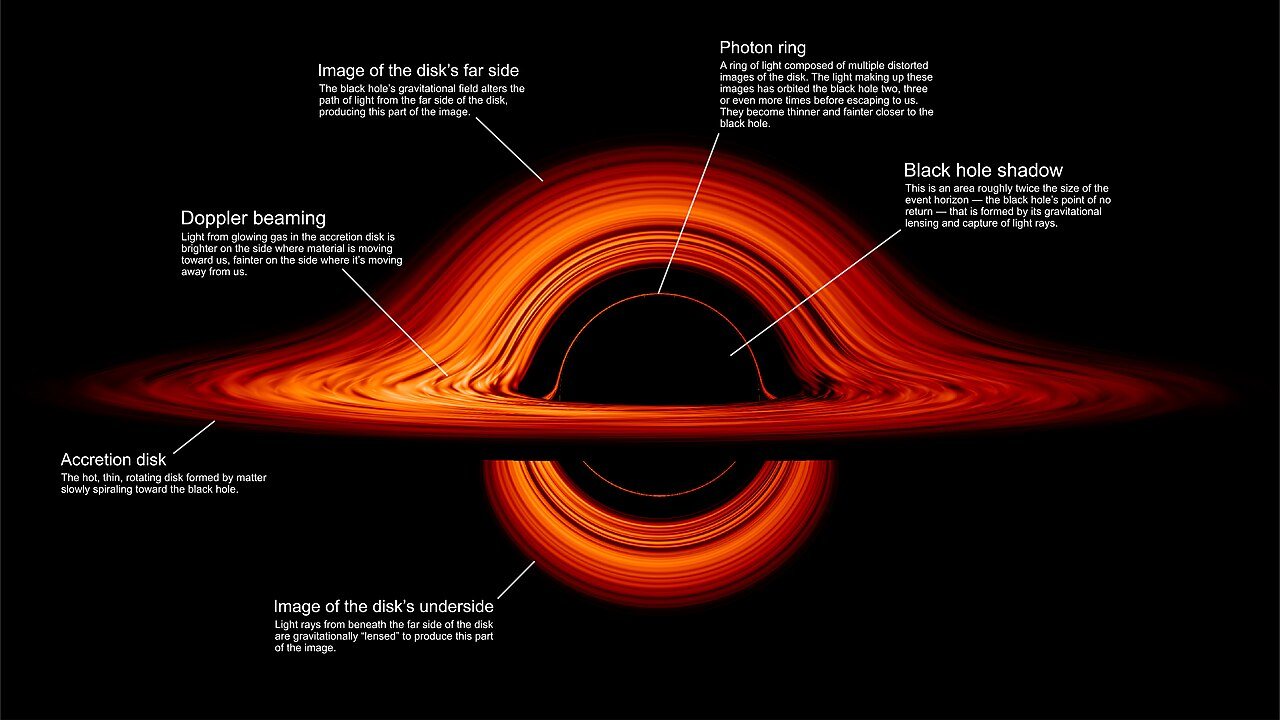
Black holes are regions of space so densely compact that beyond a certain boundary, known as the event horizon, their gravitational pull is too strong for light or matter to escape. Anything crossing that threshold would need to travel faster than the speed of light to break free — an impossibility under known physics. Yet despite their reputation as cosmic vacuum cleaners, black holes do not consume everything quietly. When they feed, they can eject jets of particles at near-light speeds, blasting material far into surrounding space.
The new research indicates that these outbursts are not random. Instead, they follow a two-stage pattern tied to how the black hole pulls in matter. In the first phase, the black hole draws in material from its surroundings, building up a disk of superheated gas and dust. In the second phase, some of that material is redirected and flung outward as jets. The transition between these phases determines when the «burp» occurs, offering a clearer timeline for when and why these jets appear.
Scientists describe black holes as «very messy eaters» because they do not absorb all the matter they attract. A significant fraction can be accelerated and expelled, creating the jets that astronomers observe across vast distances. These jets can stretch for thousands of light-years and influence the evolution of entire galaxies by heating surrounding gas and triggering or suppressing star formation.
The discovery helps resolve a key question in astrophysics: why some black holes appear to burp intermittently rather than continuously. By linking the timing of the jets to specific stages in the feeding process, the findings provide a framework for predicting when these outbursts will happen. That could improve models of how black holes grow and how they interact with their host galaxies over cosmic timescales.
The research adds to a broader effort to understand the life cycles of black holes, from their formation to their most violent episodes. While the event horizon marks a point of no return, the material that escapes before crossing it can shape the universe in ways that are only now becoming clear. The two-phase feeding cycle offers a new piece of that puzzle, showing that even the most extreme objects in nature follow patterns that scientists can observe and explain.