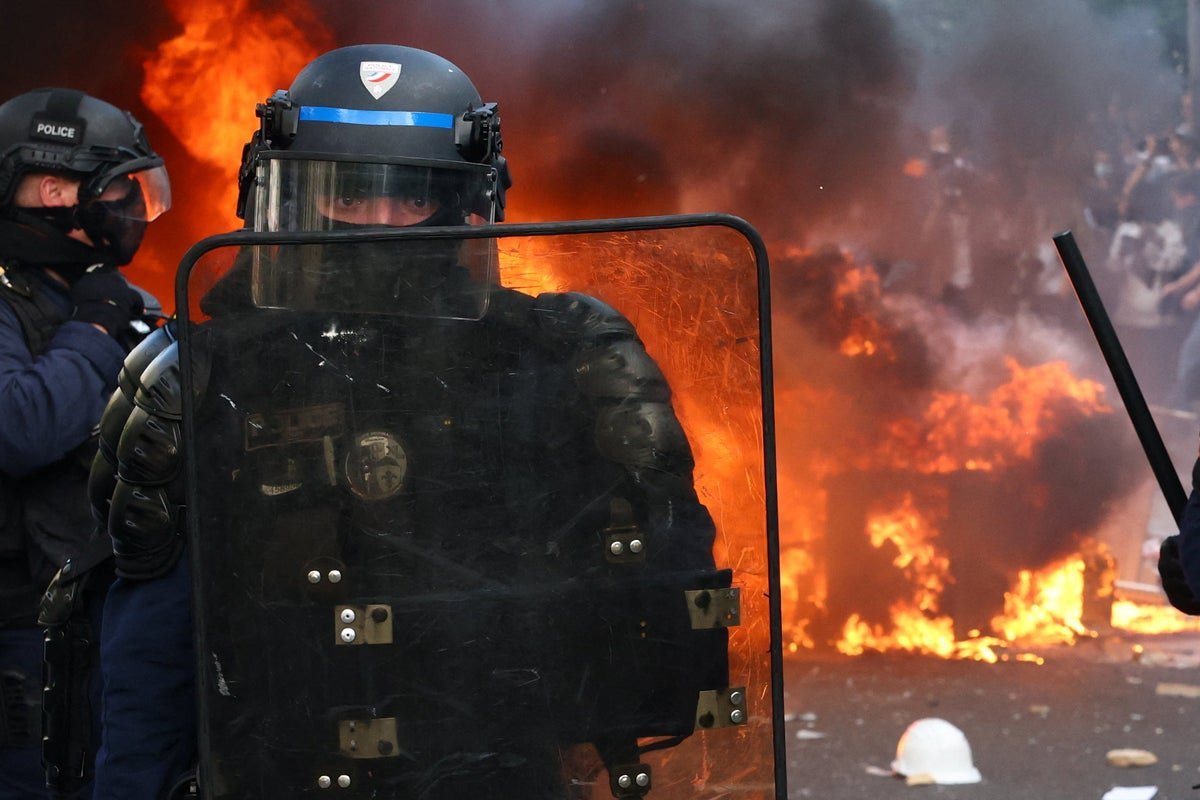
A quarter of a million people marched across France in support of students protesting education reform, as demonstrations intensified and a baby was hospitalized after being struck by a firework. The protests, described by local media as some of the most significant in recent years, saw barricades set ablaze and police deploying tear gas against crowds in Paris and other cities.
The infant was hospitalized following the firework incident, according to reports from the ground. The circumstances surrounding the injury were not immediately clear, but it underscored the escalating volatility of a day that authorities had anticipated would be the largest yet in a wave of school demonstrations. Protesters were said to have been given what local media described as an «endless supply of projectiles,» contributing to running clashes with security forces.
Police fired tear gas at demonstrators in the capital as the scale of the turnout exceeded expectations. The marches were organized in support of students demanding education reform, a movement that has rapidly gained momentum across the country. The demonstrations represent the biggest single day of school-related protests in the current cycle, drawing crowds that spanned multiple cities and united students, educators, and sympathizers.
The protests have been building for days, with students expressing anger over proposed changes to the education system. The specific grievances center on reform measures that demonstrators argue will undermine access to quality schooling and place undue pressure on students and teachers alike. As the movement has grown, it has attracted broader support from labor groups and political organizations, transforming what began as a campus-based action into a nationwide phenomenon.
In Paris, the atmosphere grew tense as evening approached. Barricades were erected in several neighborhoods, and fires were lit, sending plumes of smoke over parts of the city. Riot police moved to disperse crowds, using tear gas and other crowd-control measures. The scenes echoed previous periods of social unrest in France, though the current wave is distinct in its focus on education policy and its heavy involvement of young people.
The scale of the turnout — a quarter of a million people nationwide — signals that the movement has tapped into a deep well of public discontent. While the immediate trigger is education reform, the protests have also become a channel for broader frustrations about economic opportunity, social mobility, and the direction of national policy. Analysts note that student-led movements in France have historically had the potential to galvanize wider opposition and force government concessions.
Authorities have not yet released a full accounting of injuries or arrests. The hospitalized baby remains the most serious known casualty of the day's events. Local media reported that projectiles were readily available to protesters, suggesting a level of organization and preparation that has alarmed officials. The government has yet to issue a formal response to the latest escalation.
The protests are expected to continue, with student groups calling for further action if their demands are not addressed. The coming days will test whether the movement can sustain its momentum and whether the government will engage in dialogue or adopt a harder line. For now, the images of burning barricades and tear gas in Paris have drawn international attention, highlighting the intensity of a dispute that shows no sign of resolution.
As night fell, the situation remained fluid. Emergency services attended to the injured, while police worked to clear remaining protesters from key locations. The full impact of the day's events — both on the education debate and on the broader political landscape — will become clearer in the aftermath. What is already evident is that the student protests have become a major national story, one that has brought a quarter of a million people into the streets and forced the country to confront demands it can no longer ignore.