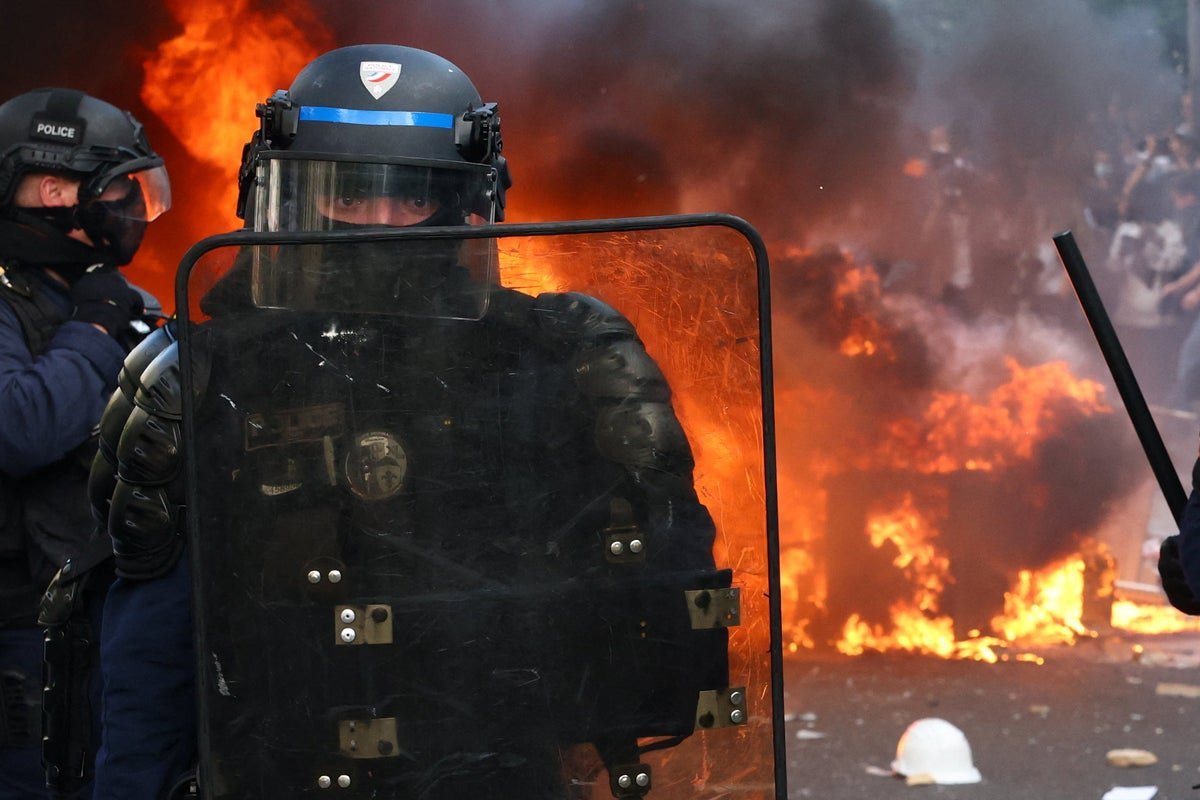
A quarter of a million people marched across France in support of student protests against education reform, as demonstrations escalated into violent clashes that left a baby hospitalized after being struck by a firework. Barricades were set ablaze in several cities and local media reported that protesters had access to an «endless supply of projectiles,» according to accounts cited by British outlets covering the unrest.
The protests, described as unprecedented in scale, have been driven by student anger over proposed changes to the education system. Police clashed with demonstrators in Paris, firing tear gas on what officials called the biggest day of school demonstrations in recent memory. The unrest has spread beyond the capital, with blockades and street protests reported in multiple French cities.
The hospitalization of an infant struck by a firework underscored the growing danger surrounding the demonstrations. Details about the baby's condition were not immediately available, but the incident marked a sharp escalation in the physical toll of the protests. Local media described chaotic scenes as barricades burned and police struggled to contain crowds.
The scale of the mobilization — a quarter of a million people — represents a significant challenge for the French government, which has faced mounting pressure over its education policies. Student groups have called for the withdrawal of reforms they say would undermine public education and worsen conditions for pupils and teachers alike.
Police responded with tear gas and other crowd-control measures as protesters hurled projectiles. The interior ministry has not released a full tally of injuries or arrests, but the day's events were widely characterized as the most intense since the protest movement began.
The demonstrations echo earlier waves of social unrest in France, where street protests have repeatedly forced policy reversals. The involvement of students, often a galvanizing force in French politics, adds to the political stakes for the government. Education reform has become a flashpoint, with unions and student organizations vowing to continue until their demands are met.
Observers noted that the protests have drawn support from a broad cross-section of society, not just students. The marches reflect deeper anxieties about the direction of public services and the government's reform agenda. As night fell, scattered clashes continued in some areas, though the full extent of the damage remained unclear.
The coming days will test whether the government can calm tensions or whether the movement will grow further. With barricades still smoldering and a hospitalized infant as a stark reminder of the risks, the protests show no sign of fading. Both sides appear entrenched, setting the stage for a prolonged standoff over the future of French education.