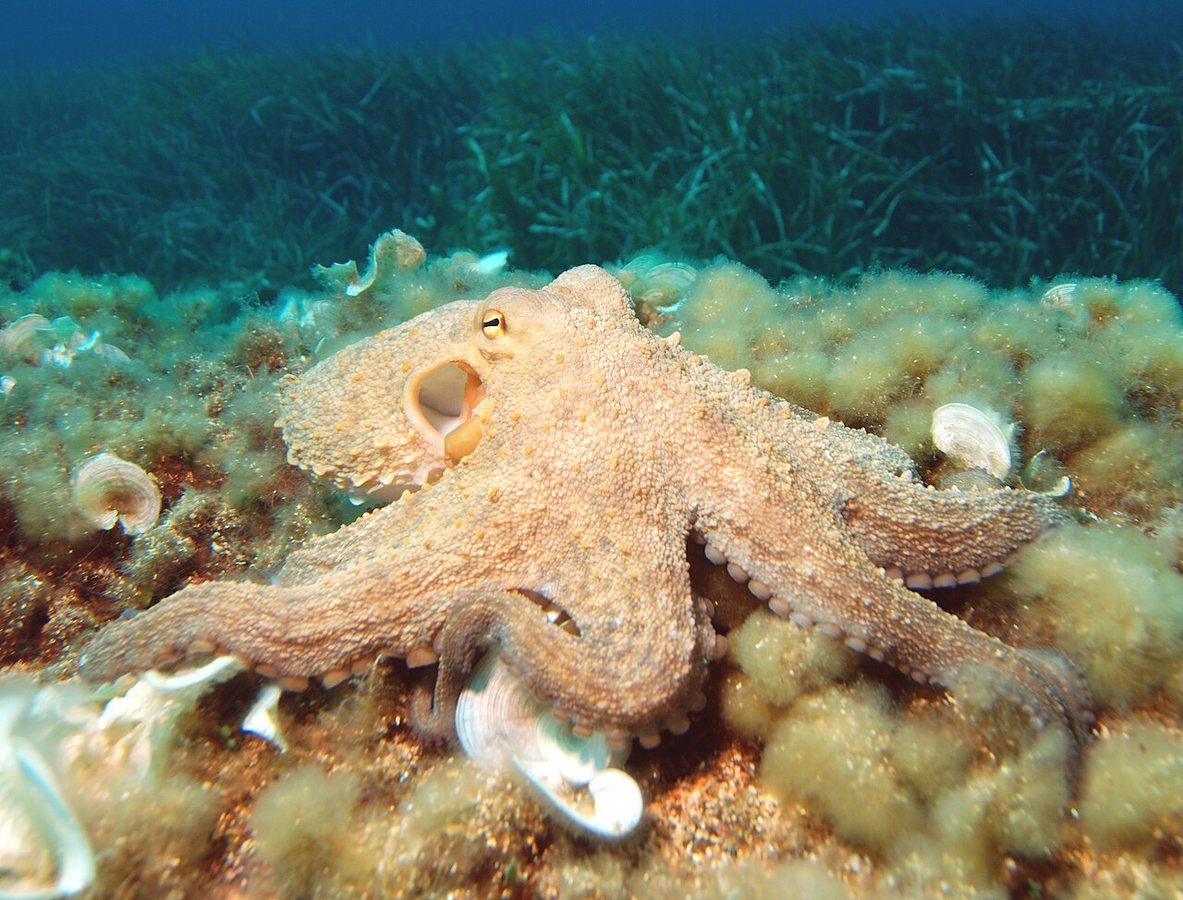
The octopus manages one of the animal kingdom's most unusual circulatory systems: it has three hearts, no lungs, and blue blood. The arrangement allows the animal to move, hunt, and survive in the ocean without ever breathing air.
Two of those hearts are branchial hearts, which pump deoxygenated blood through the gills. The third, called the systemic heart, sends oxygenated blood to the rest of the body. Because the blood uses hemocyanin, a copper-containing protein, instead of the iron-based hemoglobin found in vertebrates, it appears blue when oxygenated.
Gills serve as the octopus equivalent of lungs. As water passes over the gill surfaces, oxygen diffuses into the blood and carbon dioxide moves out. This system works well in water but would not function on land, which is one reason octopuses remain marine animals.
The three-heart design comes with a trade-off. When an octopus swims by jetting water, the systemic heart stops beating temporarily, reducing blood flow and causing rapid fatigue. That is why many octopuses prefer crawling along the seafloor with their arms rather than swimming long distances. The branchial hearts continue to work, but the interruption in systemic circulation limits sustained exertion.
Blue blood is not unique to octopuses. It appears in other cephalopods, including squid and cuttlefish, as well as in horseshoe crabs and some arthropods. Hemocyanin is less efficient than hemoglobin at carrying oxygen in warm, acidic conditions, but it performs well in cold ocean water where oxygen solubility is higher.
The octopus also has a decentralized nervous system, with two-thirds of its neurons located in its arms. That anatomy allows each arm to process information and respond to stimuli with considerable independence, even as the central brain coordinates overall behavior. The circulatory system supports this active, predatory lifestyle by delivering oxygen to tissues throughout the body.
Understanding how octopuses manage oxygen transport offers a window into how marine animals adapt to their environments. Their reliance on gills, copper-based blood, and multiple hearts reflects millions of years of evolution in the ocean, where dissolved oxygen is limited and body plans must meet the demands of both rest and sudden movement.