France’s PISA 2025 results are striking because they turn a long-running concern about education into a measurable low point. Fifteen-year-olds averaged 458 points in mathematics and 456 in reading, the weakest French results in those subjects since PISA began in 2000. Science was more resilient at 483.
The immediate temptation is to treat the numbers as a ranking story. The more useful reading is as a systems memo. PISA tests 15-year-olds near the end of compulsory education and asks them to use knowledge rather than simply reproduce a lesson. In France, 6,501 students at 289 schools sat the assessment, representing a national population of roughly 768,200 teenagers.
The distribution shows why a single policy lever is unlikely to be enough. Sixty-four percent of French students reached at least Level 2 in mathematics and 67% did so in reading. Only 5% were top performers in each domain. A reform that focuses only on the weakest students would miss the fact that advanced performance is also thin. A reform aimed only at elite achievement would leave a large basic-skills problem untouched.
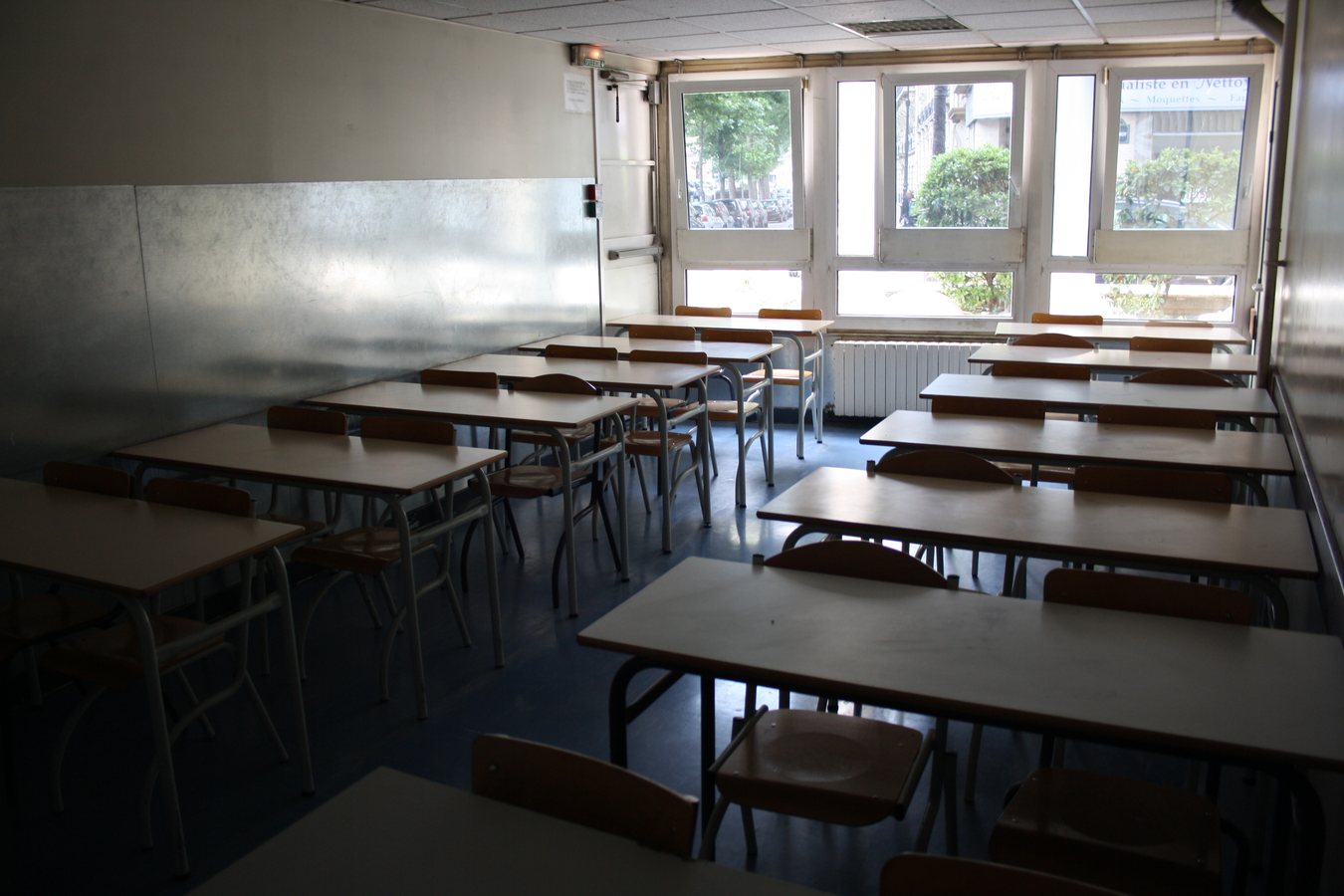
The classroom context complicates the picture further. Almost half of French students said noise and disorder occur in most or all of their science lessons, compared with 31% across the OECD. More than a third reported that classmates do not listen when the teacher is speaking. Those responses are not a direct measure of instructional quality, but they describe the environment in which instruction must compete for attention.
Family engagement also shifted. The share of French students saying their parents ask at least weekly what they did at school fell to 63% from 74% in 2022. Weekly discussions about problems encountered at school also became less common. At age 15, greater independence is expected, but the data raise a practical question: are adolescents being asked to manage more of their learning at the same moment that schools are finding it harder to hold their attention?
France is not an outlier in the direction of travel. More than 760,000 students in 91 countries and economies took part in PISA 2025, and OECD-average performance fell to record lows across the three core subjects. About one in five students in OECD countries were low performers in all three. That broader decline gives France company, but not comfort.
Education Minister Édouard Geffray has said the French results are worrying and has argued that the country should have questioned the structure and methods of the collège years earlier. That is a significant shift in emphasis. France has repeatedly debated class sizes, curricula, exams and resources; the new discussion is increasingly about the difficult transition between childhood and late adolescence, where students are expected to become independent learners while navigating a far more fragmented attention environment.
No PISA table can tell a ministry exactly what to do. The assessment is diagnostic, not a prescription. It can show where performance changed and how different groups report their experience of school. It cannot establish that one technology, one teaching method or one family behavior produced the fall.
The value of France’s case is therefore in what happens next. If reforms improve classroom conditions, reinforce reading and mathematical reasoning, and give schools more capacity to intervene before students disengage, future PISA rounds should show changes across the proficiency distribution. If the scores remain stuck, France will have evidence that the problem is deeper than the policies currently on the table. The 2025 result is not the end of the argument. It is an unusually clear starting point.