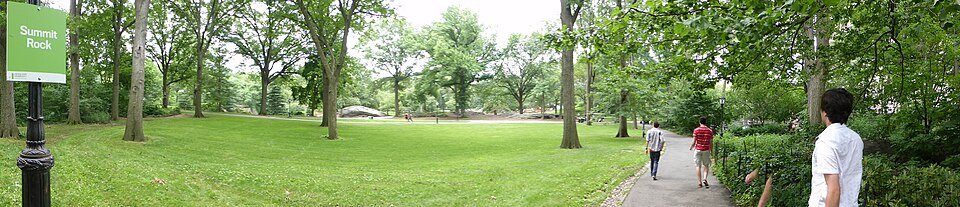
Cities create their own climate. Asphalt, concrete and dark roofs absorb heat during the day and release it slowly, producing urban heat islands that can make extreme weather more dangerous for people and wildlife. A global analysis of 1,039 cities finds that urban greening is strongly associated with lower heat exposure for birds — and with greater bird diversity.
Researchers compared the amount and quality of green space with estimates of how strongly urban bird communities were exposed to extreme heat. Cities with more extensive or better-performing vegetation showed reductions of roughly 23% to 34% in heat exposure, depending on the metric used. Modelling suggested that expanding green cover by a relatively modest amount could produce some of the largest improvements in many cities.
Vegetation changes urban temperature through shade and evapotranspiration. Trees intercept solar radiation before it heats buildings or pavement, while water released by leaves cools the surrounding air as it evaporates. Green areas also provide places where birds can escape direct sun, find water and forage when exposed surfaces become dangerously hot.
Heat is only one part of the biodiversity effect. Larger and more structurally complex green spaces can supply nesting sites, insects, fruits and connectivity between habitat patches. That helps explain why green-space quality was associated not only with thermal protection but with higher species diversity.
The study is observational at a global scale, so it cannot prove that adding a specific number of trees will produce the same percentage change in every city. Climate, building density, native vegetation, irrigation and the bird species present all modify the outcome. Green space can also be distributed unequally, with wealthier neighborhoods receiving more canopy and cooling than poorer areas.
For urban planning, the result supports treating biodiversity and heat adaptation as linked goals rather than separate programs. A shaded corridor connecting parks can cool streets for residents while also giving birds a safer route between habitat patches. Native plantings can provide food and nesting resources while reducing the irrigation demand of ornamental landscaping.
Design details matter. A lawn exposed to full sun does not provide the same thermal refuge as mature canopy, and a small isolated patch may support fewer species than connected vegetation. The study's emphasis on quality as well as quantity reflects that difference.
As heat extremes intensify, cities will become important refuges or traps depending on how they are built. Birds offer a visible indicator of that choice. The analysis suggests that urban greening can reduce one of the most immediate climate stresses while supporting a wider range of species — a case in which adaptation for human neighborhoods and conservation for wildlife can be designed into the same physical space.