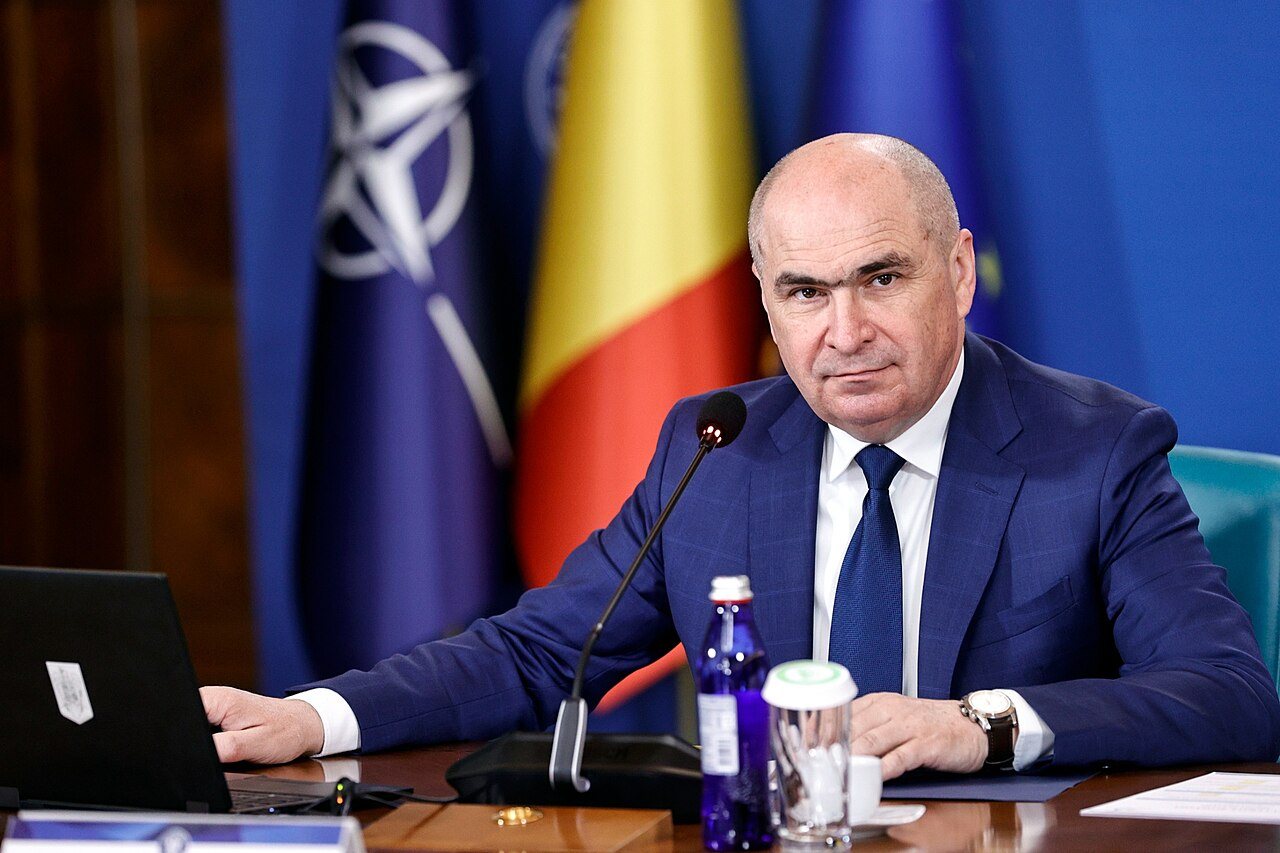
Romania’s interim government has turned political continuity into an economic variable. At a Sept. 8 meeting in Bucharest, foreign investors told interim Prime Minister Ilie Bolojan that changes in the government’s composition could weaken the pace of reforms, public-spending control and the path toward a lower budget deficit.
The delegation at Victoria Palace included representatives of J.P. Morgan, foreign-owned companies and international financial institutions. The agenda covered public finances, the deficit outlook, the state’s financing costs, the absorption of European funds and the continuation of fiscal consolidation.
Markets do not price political instability in the abstract. They price its transmission into borrowing costs, tax policy, reform delays, investment approvals and the credibility of budget assumptions. Romania’s current transition is therefore being watched as a test of whether a change in political authority also means a change in the fiscal trajectory.
According to the government account, investors acknowledged measures taken over the past year to reduce the deficit and control public spending. They argued, however, that those gains need to be consolidated and that predictability in economic and fiscal policy remains essential for medium- and long-term investment decisions.
A fiscal consolidation programme usually requires measures that produce political costs before they deliver financial benefits. Spending controls, administrative restructuring and prioritisation of investment can all generate resistance. When a government is temporary or politically fragile, investors may question whether the next cabinet will continue the same measures or reopen them.
Bolojan responded by saying Romania urgently needs a fully empowered government and a responsible prime minister capable of carrying the consolidation process through the coming years. He also emphasised tighter public-spending control, greater efficiency in public administration and the prioritisation of investments.
European money is the other major route through the equation. Bolojan said the government would try to maximise absorption of the grant component of the National Recovery and Resilience Plan by the end of the year. For Romania, those funds are not only a development resource. They can support investment while the state is simultaneously trying to reduce fiscal imbalances.
That creates a two-track policy challenge. Bucharest needs to restrain recurrent spending without choking investment, and it needs to improve state capacity precisely while asking the public administration to become leaner and more efficient. Poor execution on either side can undermine the other: delayed reforms threaten European funds, while weak investment can make fiscal adjustment more painful for growth.
The presence of Finance Minister Alexandru Nazare and State Treasury director Ștefan Nanu at the meeting underlined the financing dimension. Investors are interested in more than headline deficit numbers. They follow the government’s funding calendar, debt costs, access to markets and the credibility of the institutions implementing the budget.
Romania’s political transition therefore intersects with several routes at once: capital flows, EU funds, sovereign financing and corporate investment decisions. A government crisis can slow legislation or appointments, but the economic cost appears when those delays alter the timetable of reforms or raise uncertainty around fiscal policy.
The meeting also shows why investor confidence is not the same as investor optimism. The delegation reportedly recognised progress while warning that the results remain fragile. Confidence can be maintained through continuity, but it can also be lost if political change creates doubts about spending discipline or the deficit path.
The next signal will come from the formation of a fully empowered government and its first budgetary decisions. If the new executive preserves the fiscal timetable, prioritises investment and keeps PNRR implementation moving, the transition may remain primarily political. If reform milestones slip, political instability will begin to travel through the financial routes investors were warning about.